
Business
B.C. Climate Crisis: Rising Costs and New EV Targets Announced

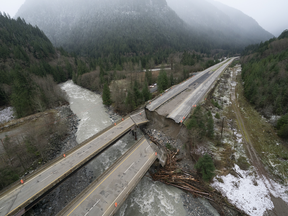
Recent developments in British Columbia (B.C.) highlight escalating costs associated with climate-related disasters while the province revises its electric vehicle (EV) sales targets. A new report underscores the unsustainable financial burden of these disasters, as momentum builds at the COP30 climate summit for a comprehensive strategy to transition away from fossil fuels.
Financial Impact of Climate Disasters in Canada
The Institute for Catastrophic Loss Reduction has reported that the costs associated with natural disasters in Canada, including floods and wildfires, have reached an average of $9.2 billion annually over the past four decades. This figure represents approximately three percent of Canada’s construction spending, equating to two weeks’ worth of annual expenditures. The report warns that if the current growth rate of disaster costs, estimated at 9.4 percent per year, continues, it could escalate to one month of construction spending by 2038.
Several factors contribute to these rising costs, including uninsured losses to residential and commercial properties, business interruptions, and damages to critical infrastructure. The report emphasizes that these figures do not account for the broader social costs associated with climate change, which are difficult to quantify but significant nonetheless.
B.C. Revises Electric Vehicle Sales Targets
In a significant policy shift, B.C. will no longer mandate that all new vehicles sold be zero-emission by 2035. Energy Minister Adrian Dix announced that a new legislative proposal will be introduced in spring 2024 to adjust these targets, acknowledging that current goals are unrealistic given declining electric vehicle sales across North America.
The province initially set ambitious targets in 2019, aiming for 100 percent of new light-duty vehicles to be zero-emission by 2035. However, Dix noted that factors such as the cessation of federal EV rebate programs have negatively impacted sales. He stated, “People will know that those current targets, which are at 90 percent by 2030, and 100 percent by 2035, are no longer realistic.” The government plans to work with Ottawa to establish new targets that align with current market conditions.
Global Climate Emergency and Local Health Concerns
As B.C. grapples with these challenges, the urgency of addressing climate change remains paramount. According to the United Nations Intergovernmental Panel on Climate Change (IPCC), human activities, particularly fossil fuel consumption, are the primary drivers of climate change. The panel warns that the window to limit global warming to 1.5°C above pre-industrial levels is rapidly closing.
Data from NASA indicates that atmospheric carbon dioxide levels have increased by 50 percent over the past 200 years, with current measurements at 424.87 parts per million. The consequences of this rise are severe, with the past decade marking the warmest years on record, significantly impacting ecosystems and human health.
The B.C. Centre for Disease Control has launched a new initiative, Ecolens.ca, inviting residents to share personal stories about how climate change has affected their health. The aim is to gather insights that will assist scientists and health professionals in developing effective adaptation strategies.
Calls for Action at COP30
As world leaders convene at COP30 in Brazil, discussions are intensifying regarding a global roadmap for transitioning away from fossil fuels. Countries including the Marshall Islands, Colombia, and the United Kingdom are advocating for a structured approach to this transition, emphasizing the need for concrete commitments and financial support for adaptation measures.
Climate philanthropist Bill Gates has called for increased funding for adaptation projects, which are projected to require between $310 billion and $365 billion annually by 2035. These figures far exceed the $40 billion per year target set at COP26. As negotiations continue, many developing nations are expressing concern that without adequate funding, efforts to adapt to climate change will be ineffective.
Meanwhile, Pope Leo XIV has urged global leaders to take decisive action, stating that climate change is accelerating faster than political will. He emphasized the importance of solidarity in combating climate challenges, highlighting the vulnerability faced by millions due to extreme weather events.
As B.C. and global leaders confront the realities of climate change, the need for innovative solutions and collaborative efforts has never been more critical. The outcomes of these discussions will likely shape the future of both local and global environmental policies.

Meta Plans Major Layoffs as AI Costs Surge

Alberta’s Referendum Could Pave Way for U.S. Statehood

Minooka District 201 Plans Enhanced Bilingual Support for Students

Canmore Approves Multiple Development Permits for New Projects

Remembering Bradly Castillo Shearsmith: A Life of Friendship and Joy

BIS Urges Watchdogs to Integrate Synthetic Risk Transfers in Stress Tests

Teva Transforms: Shifting Focus from Generics to Branded Success

Apple Launches AirPods Max 2 with Enhanced Audio Features

Ontario Ends Funding for Seven Supervised Injection Sites

Toyoake City Proposes Daily Two-Hour Smartphone Use Limit

Pedestrian Fatally Injured in Esquimalt Collision on August 14

B.C. Review Reveals Urgent Need for Rare-Disease Drug Reforms

Dark Adventure Game “Bye Sweet Carole” Set for October Release

Konami Revives Iconic Metal Gear Solid Delta Ahead of Release

Victoria’s Pop-Up Shop Shines Light on B.C.’s Wolf Cull

Jimmy Lai’s Defense Challenges Charges Under National Security Law

Snapmaker U1 Color 3D Printer Redefines Speed and Sustainability

Apple Expands Self-Service Repair Program to Canada
-
 Science11 months ago
Toyoake City Proposes Daily Two-Hour Smartphone Use Limit
-
 Top Stories11 months ago
Pedestrian Fatally Injured in Esquimalt Collision on August 14
-
 Health11 months ago
B.C. Review Reveals Urgent Need for Rare-Disease Drug Reforms
-
 Technology11 months ago
Dark Adventure Game “Bye Sweet Carole” Set for October Release
-
 Technology11 months ago
Konami Revives Iconic Metal Gear Solid Delta Ahead of Release
-
 Lifestyle11 months ago
Victoria’s Pop-Up Shop Shines Light on B.C.’s Wolf Cull
-
 World11 months ago
Jimmy Lai’s Defense Challenges Charges Under National Security Law
-
 Technology11 months ago
Snapmaker U1 Color 3D Printer Redefines Speed and Sustainability
-
 Technology11 months ago
Apple Expands Self-Service Repair Program to Canada
-

 Technology11 months ago
AION Folding Knife: Redefining EDC Design with Premium Materials
-

 Technology11 months ago
Solve Today’s Wordle Challenge: Hints and Answer for August 19
-

 Business11 months ago
Gordon Murray Automotive Unveils S1 LM and Le Mans GTR at Monterey