
World
Canada’s Bovaer Faces Scrutiny Amid Health Concerns in Europe

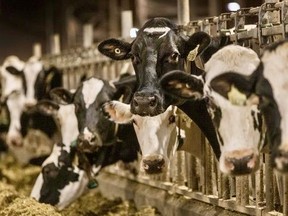
Canada’s approval of Bovaer in early 2024 was celebrated as a significant step towards reducing methane emissions from livestock. This feed additive, which aims to lower methane production in dairy and beef cattle, received endorsements from both Health Canada and the Canadian Food Inspection Agency (CFIA) after thorough assessments. For many, this marked a promising intervention that could deliver climate benefits while maintaining agricultural productivity.
Recent reports from Europe, however, have raised concerns regarding the safety and efficacy of Bovaer. Farmers in Denmark have temporarily halted its use due to unexplained health issues within their herds. Similarly, Norway’s largest dairy cooperative has suspended pilot programs, prioritizing caution as national authorities investigate. Although no regulatory body has confirmed a direct link between Bovaer and these health issues, the incidents spotlight the complexities of agricultural innovation, reminding stakeholders that real farms often present unpredictable challenges that laboratory settings may not capture.
Despite these troubling reports, the scientific evidence supporting Bovaer remains robust. Controlled studies indicate that this additive can reduce enteric methane emissions by between 20% to 30% in dairy cattle and up to 45% in beef feedlot animals, depending on dosage and diet. Given that livestock contribute approximately 14% of Canada’s total methane emissions, a tool capable of achieving such reductions is not insignificant.
Nevertheless, the landscape for Bovaer in Canada is unclear. While it is available for use by any dairy or beef producer, the actual adoption rates remain low, and comprehensive national data on its utilization is lacking. To accurately assess environmental benefits, as well as potential risks, it is crucial to monitor animal health outcomes and track the real-world performance of Bovaer across various production systems. Canada cannot depend solely on industry press releases or anecdotal farmer accounts to gauge the impact of a technology with such national significance.
Moreover, a more pressing question arises: Are climate-focused additives being introduced faster than the underlying economics of Canadian livestock farming can support? The situation with Bovaer highlights broader issues in agricultural innovation within the country. Unlike Europe, Canada lacks a national mandate for methane reduction in livestock and does not have dedicated funding tied to feed additive adoption. Additionally, the absence of a structured public reporting system for on-farm results signals a disconnect between policy goals and practical implementation.
This gap between ambition and execution should not lead to the abandonment of Bovaer. The science behind 3-NOP, the active ingredient in Bovaer, demonstrates its potential when used correctly. Nonetheless, the enthusiasm for such technologies must be accompanied by transparency and caution. Disregarding the experiences of farmers in other countries would be a disservice, and assuming Canada is exempt from similar challenges would be misguided.
Innovation in agriculture should not be a hurried endeavor. It requires a disciplined, evidence-driven approach that takes into account the realities faced by farmers, safeguards consumer interests, and enhances the competitiveness of Canadian food production. The recent reports from Europe serve as a reminder of the importance of fostering confidence among those who adopt new technologies. A lack of transparency regarding Bovaer’s use may only breed skepticism within the industry and among consumers alike.
To move forward effectively, Canada should prioritize investment in monitoring, data collection, and open communication about the impacts of Bovaer and similar innovations. Listening to farmers and understanding their needs is essential, rather than imposing top-down directives. Ultimately, every climate intervention should be grounded in the principle that innovation should empower producers to thrive, not merely help governments meet targets.
As noted by Sylvain Charlebois, director of the Agri-Food Analytics Lab at Dalhousie University, the focus should be on fostering an agricultural landscape where both producers and consumers can benefit from advancements in climate technology.

Meta Plans Major Layoffs as AI Costs Surge

Alberta’s Referendum Could Pave Way for U.S. Statehood

Minooka District 201 Plans Enhanced Bilingual Support for Students

Canmore Approves Multiple Development Permits for New Projects

Remembering Bradly Castillo Shearsmith: A Life of Friendship and Joy

BIS Urges Watchdogs to Integrate Synthetic Risk Transfers in Stress Tests

Teva Transforms: Shifting Focus from Generics to Branded Success

Apple Launches AirPods Max 2 with Enhanced Audio Features

Ontario Ends Funding for Seven Supervised Injection Sites

Toyoake City Proposes Daily Two-Hour Smartphone Use Limit

Pedestrian Fatally Injured in Esquimalt Collision on August 14

B.C. Review Reveals Urgent Need for Rare-Disease Drug Reforms

Dark Adventure Game “Bye Sweet Carole” Set for October Release

Konami Revives Iconic Metal Gear Solid Delta Ahead of Release

Victoria’s Pop-Up Shop Shines Light on B.C.’s Wolf Cull

Jimmy Lai’s Defense Challenges Charges Under National Security Law

Snapmaker U1 Color 3D Printer Redefines Speed and Sustainability

Apple Expands Self-Service Repair Program to Canada
-
 Science11 months ago
Toyoake City Proposes Daily Two-Hour Smartphone Use Limit
-
 Top Stories11 months ago
Pedestrian Fatally Injured in Esquimalt Collision on August 14
-
 Health11 months ago
B.C. Review Reveals Urgent Need for Rare-Disease Drug Reforms
-
 Technology11 months ago
Dark Adventure Game “Bye Sweet Carole” Set for October Release
-
 Technology11 months ago
Konami Revives Iconic Metal Gear Solid Delta Ahead of Release
-
 Lifestyle11 months ago
Victoria’s Pop-Up Shop Shines Light on B.C.’s Wolf Cull
-
 World11 months ago
Jimmy Lai’s Defense Challenges Charges Under National Security Law
-
 Technology11 months ago
Snapmaker U1 Color 3D Printer Redefines Speed and Sustainability
-
 Technology11 months ago
Apple Expands Self-Service Repair Program to Canada
-

 Technology11 months ago
AION Folding Knife: Redefining EDC Design with Premium Materials
-

 Technology11 months ago
Solve Today’s Wordle Challenge: Hints and Answer for August 19
-

 Business11 months ago
Gordon Murray Automotive Unveils S1 LM and Le Mans GTR at Monterey