
Science
ACTO Highlights Link Between Housing and Gender-Based Violence

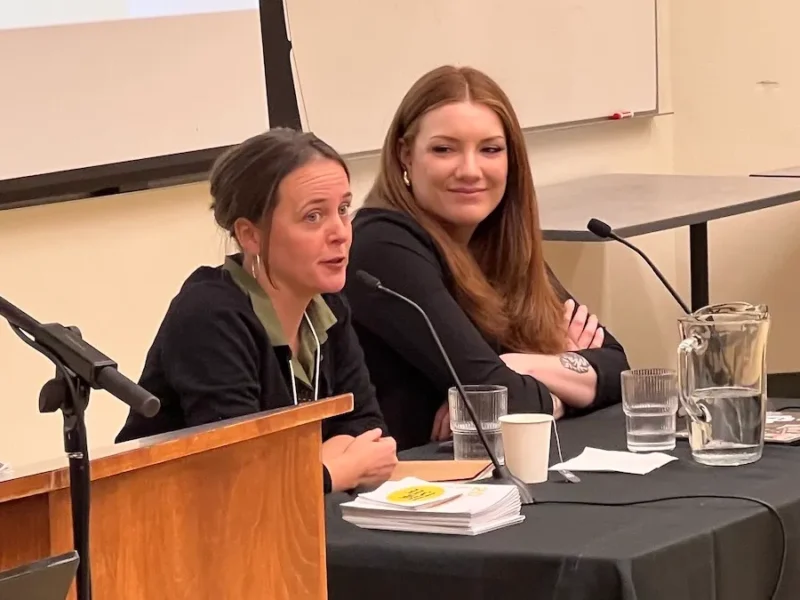
The Advocacy Centre for Tenants Ontario (ACTO) has joined community advocates to observe the global 16 Days of Activism Against Gender-Based Violence (GBV), emphasizing the urgent need to address the intersection of housing security and violence against women and marginalized communities. This awareness coincides with National Housing Day on November 22, 2023, a day dedicated to highlighting the ongoing challenges related to housing inequity.
The connection between housing and GBV is often overlooked, yet for many survivors, these issues are deeply intertwined. Survivors frequently find themselves in hazardous situations where their housing security is tied to their abuser, creating a precarious existence. They are faced with life-altering choices: remain in a violent environment or risk homelessness. Many experience prolonged cycles of violence and instability, which can stretch for years, severely impairing their ability to recover and thrive.
Gender-based violence disproportionately affects women, girls, and gender-diverse individuals, often leaving them vulnerable to eviction and homelessness. ACTO’s research indicates that the Ontario housing system is inadequately equipped to support these survivors. Landlords often refuse to remove the abusive party from shared leases, and shelters are frequently at capacity, forcing many to return to unsafe living conditions. The eviction processes at the Landlord and Tenant Board often fail to consider the nuances of financial abuse and coercive control, further jeopardizing the safety of survivors.
Many survivors are caught in what ACTO describes as a cycle of housing abuse. This term encapsulates the legal, financial, and structural barriers that further victimise individuals already facing violence. A poignant account from a survivor highlighted this grim reality: “It’s an awful, vicious, vicious, vicious circle,” illustrating how the system not only fails to protect them but actively exacerbates their suffering. Survivors often find themselves responsible for damages caused by their abuser, losing access to their own rent deposits, which compounds their vulnerability.
The connection between housing instability and a heightened risk of violence, including femicide, is well-documented. Survivors in ACTO’s research expressed despair over their situations, with one stating, “Where are we allowed to exist? Please tell me, where am I allowed to exist? Nowhere.” Another emphasized the transformative power of secure housing, saying, “I really can’t overstate…the power of having my own home.”
Calls for Systemic Change
There is an urgent need for systemic reform to protect survivors and break the cycle of housing abuse. ACTO advocates for comprehensive changes across all levels of government, calling for GBV to be recognized as an epidemic. Such a declaration would serve to underscore the severity of survivors’ experiences in legal settings, influencing decisions made in courts and tribunals.
Increased and stable funding is necessary to expand housing and support services tailored for survivors, with a particular emphasis on Indigenous-led initiatives. Additionally, the Residential Tenancies Act, 2006 must be revised to offer better protection for survivors, addressing the vulnerabilities that lead to eviction notices.
ACTO also calls for the establishment of mechanisms that prioritize stable housing for survivors. Currently, there is no effective system in place for survivors wishing to remain in their homes while removing their abuser from the lease. The existing housing framework fails to take into account the realities faced by tenant survivors.
Survivors seek fundamental rights: a safe home, a stable future, and a life free from violence. ACTO’s message is clear: it is time to acknowledge the direct link between the housing crisis and GBV. As one survivor articulated, “This isn’t living; it is certainly not thriving. It’s hardly even living.”
The call for action is urgent and necessary. Both the housing and GBV crises must be viewed through a unified lens to ensure that survivors receive the protection and resources they need to rebuild their lives.

Meta Plans Major Layoffs as AI Costs Surge

Alberta’s Referendum Could Pave Way for U.S. Statehood

Minooka District 201 Plans Enhanced Bilingual Support for Students

Canmore Approves Multiple Development Permits for New Projects

Remembering Bradly Castillo Shearsmith: A Life of Friendship and Joy

BIS Urges Watchdogs to Integrate Synthetic Risk Transfers in Stress Tests

Teva Transforms: Shifting Focus from Generics to Branded Success

Apple Launches AirPods Max 2 with Enhanced Audio Features

Ontario Ends Funding for Seven Supervised Injection Sites

Toyoake City Proposes Daily Two-Hour Smartphone Use Limit

Pedestrian Fatally Injured in Esquimalt Collision on August 14

B.C. Review Reveals Urgent Need for Rare-Disease Drug Reforms

Dark Adventure Game “Bye Sweet Carole” Set for October Release

Konami Revives Iconic Metal Gear Solid Delta Ahead of Release

Victoria’s Pop-Up Shop Shines Light on B.C.’s Wolf Cull

Jimmy Lai’s Defense Challenges Charges Under National Security Law

Snapmaker U1 Color 3D Printer Redefines Speed and Sustainability

Apple Expands Self-Service Repair Program to Canada
-
 Science12 months ago
Toyoake City Proposes Daily Two-Hour Smartphone Use Limit
-
 Top Stories12 months ago
Pedestrian Fatally Injured in Esquimalt Collision on August 14
-
 Health12 months ago
B.C. Review Reveals Urgent Need for Rare-Disease Drug Reforms
-
 Technology12 months ago
Dark Adventure Game “Bye Sweet Carole” Set for October Release
-
 Technology12 months ago
Konami Revives Iconic Metal Gear Solid Delta Ahead of Release
-
 Lifestyle12 months ago
Victoria’s Pop-Up Shop Shines Light on B.C.’s Wolf Cull
-
 World12 months ago
Jimmy Lai’s Defense Challenges Charges Under National Security Law
-
 Technology12 months ago
Snapmaker U1 Color 3D Printer Redefines Speed and Sustainability
-
 Technology12 months ago
Apple Expands Self-Service Repair Program to Canada
-

 Technology12 months ago
AION Folding Knife: Redefining EDC Design with Premium Materials
-

 Technology12 months ago
Solve Today’s Wordle Challenge: Hints and Answer for August 19
-

 Business12 months ago
Gordon Murray Automotive Unveils S1 LM and Le Mans GTR at Monterey