
World
Women Defy Hijab Laws as Iran Faces Growing Discontent

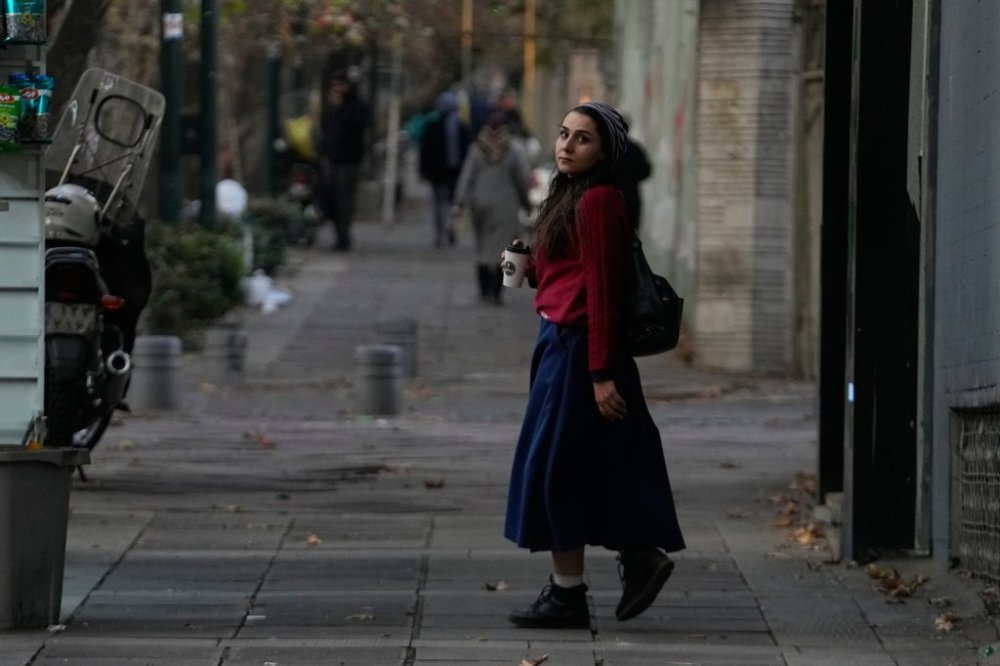
TEHRAN, Iran — Women across Iran are increasingly defying the country’s mandatory hijab laws, a significant shift in a society long characterized by strict enforcement of dress codes. This cultural evolution has emerged in the wake of the tragic death of Mahsa Amini in 2022, which ignited widespread protests and a renewed push for women’s rights.
As visitors arrive in Tehran, they may initially notice only fleeting glimpses of this change—a passenger in a car or a pedestrian navigating the city’s notorious traffic. However, in the cooler northern neighborhoods along Vali-e Asr Street, a different picture unfolds. Women sporting a variety of hairstyles, from brown and black to blonde and gray, are now a common sight, suggesting a growing resistance against the hijab mandate.
The shift in public behavior comes after decades of enforcement by conservative clerics and hard-line politicians who have upheld the hijab laws since the 1979 Islamic Revolution. According to Holly Dagres, a senior fellow at the Washington Institute for Near East Policy, the current environment feels unimaginable compared to the late 1990s, when even a single strand of hair could lead to reprimands from morality police.
The Iranian government issued a three-day visa for journalists to attend a summit featuring Abbas Araghchi, Iran’s Foreign Minister, amidst ongoing tensions regarding Tehran’s nuclear program. Although access to broader reporting was limited, the visit provided a valuable opportunity to witness firsthand the evolving social landscape in Iran since previous visits in 2018 and 2019.
During these intervening years, Iran has faced numerous challenges, including protests over economic conditions, the impact of the coronavirus pandemic, and a brief conflict with Israel. The hijab rule has remained a contentious issue, with the government struggling to maintain compliance amid growing public dissent.
For years, enforcement was rigorous, with police and the paramilitary Basij force monitoring women’s attire closely. While many women previously pushed their scarves back as a subtle act of defiance, outright removal of the hijab was a rare act of rebellion. Recent observations, however, reveal a dramatic shift.
In Tajrish Square, situated at the base of the Alborz Mountains, young girls often shed their hijabs after school, darting between cars and sharing laughter. Women of all ages are seen without head coverings at the bustling Tajrish Bazaar and near the Imamzadeh Saleh shrine, while police officers appear untroubled by their presence. At the upscale Espinas Palace Hotel, multiple women walk past signs requesting adherence to the hijab, a stark sign of changing attitudes even in a traditionally conservative city.
Despite the more liberal environment in northern Tehran, signs of the ongoing conflict are also present. An apartment building shows clear remnants of an Israeli strike, a reminder of the broader geopolitical tensions impacting daily life in Iran. Within the government, calls for stricter enforcement of hijab laws continue to come from hard-liners, yet reformist President Masoud Pezeshkian advocates for individual choice.
In a recent interview with NBC News, Pezeshkian stated, “Human beings have a right to choose,” reflecting a growing sentiment among some officials. Meanwhile, the 86-year-old Supreme Leader Ayatollah Ali Khamenei has largely remained silent on the issue, allowing for a relative relaxation of enforcement amid the current socio-economic turmoil.
Economic pressures mount as the Iranian rial trades at over 1 million to $1 USD, leading to widespread dissatisfaction among the populace. An unpublished survey from the state-linked Iranian Students Polling Agency highlights this discontent, revealing a significant gap between the government’s narrative and public sentiment.
“Years of economic hardship, inflation, currency volatility, unemployment, and public frustration over environmental and social challenges have sharply eroded trust in institutions,” noted the National Iranian American Council. The fear of another government crackdown looms large, particularly after a history of violent responses to protests over economic grievances and social freedoms.
For many Iranians, the struggle for personal freedom continues to be fraught with anxiety. An Iranian woman who recently emigrated to Canada shared her experiences, noting, “All of my life I had to wear hijab… It made me feel a lack of confidence.” This sentiment resonates across a society grappling with both internal and external pressures.
As Iran navigates these tumultuous waters, the evolving attitudes towards the hijab represent not only a cultural shift but also a broader response to years of discontent. The streets of Tehran tell a story of resilience and change, even as the future remains uncertain for a nation caught between tradition and modernity.

Fem Tech: A New Frontier in Women’s Health or Corporate Exploitation?

Ottawa Charge Coach Carla MacLeod Reveals Breast Cancer Diagnosis

French Firm Atelier Bois d’ici Launches Family-Friendly Tiny XXL Home

Moss Street Market Faces Disruption from Custodian Shortage

Arms Producers Surge to Record Revenue of $679 Billion in 2024

Surrey Schools Honors 243 Retirees at Celebratory Dinner

Ontario’s Healthcare Faces Crisis: Lessons from UK’s Privatization

Thanksgiving Mass Unites Community in Spirit of Gratitude

Wabanaki Artifacts Spark Innovative Collaboration at UNB

Toyoake City Proposes Daily Two-Hour Smartphone Use Limit

B.C. Review Reveals Urgent Need for Rare-Disease Drug Reforms

Pedestrian Fatally Injured in Esquimalt Collision on August 14

Dark Adventure Game “Bye Sweet Carole” Set for October Release

Jimmy Lai’s Defense Challenges Charges Under National Security Law

Victoria’s Pop-Up Shop Shines Light on B.C.’s Wolf Cull

Konami Revives Iconic Metal Gear Solid Delta Ahead of Release

Apple Expands Self-Service Repair Program to Canada

Snapmaker U1 Color 3D Printer Redefines Speed and Sustainability
-
 Science3 months ago
Toyoake City Proposes Daily Two-Hour Smartphone Use Limit
-
 Health3 months ago
B.C. Review Reveals Urgent Need for Rare-Disease Drug Reforms
-
 Top Stories3 months ago
Pedestrian Fatally Injured in Esquimalt Collision on August 14
-
 Technology3 months ago
Dark Adventure Game “Bye Sweet Carole” Set for October Release
-
 World3 months ago
Jimmy Lai’s Defense Challenges Charges Under National Security Law
-
 Lifestyle3 months ago
Victoria’s Pop-Up Shop Shines Light on B.C.’s Wolf Cull
-
 Technology3 months ago
Konami Revives Iconic Metal Gear Solid Delta Ahead of Release
-
 Technology3 months ago
Apple Expands Self-Service Repair Program to Canada
-
 Technology3 months ago
Snapmaker U1 Color 3D Printer Redefines Speed and Sustainability
-

 Technology3 months ago
AION Folding Knife: Redefining EDC Design with Premium Materials
-

 Technology3 months ago
Solve Today’s Wordle Challenge: Hints and Answer for August 19
-

 Business3 months ago
Gordon Murray Automotive Unveils S1 LM and Le Mans GTR at Monterey