
Top Stories
Alberta and B.C. Eye New Pipeline Despite Environmental Concerns

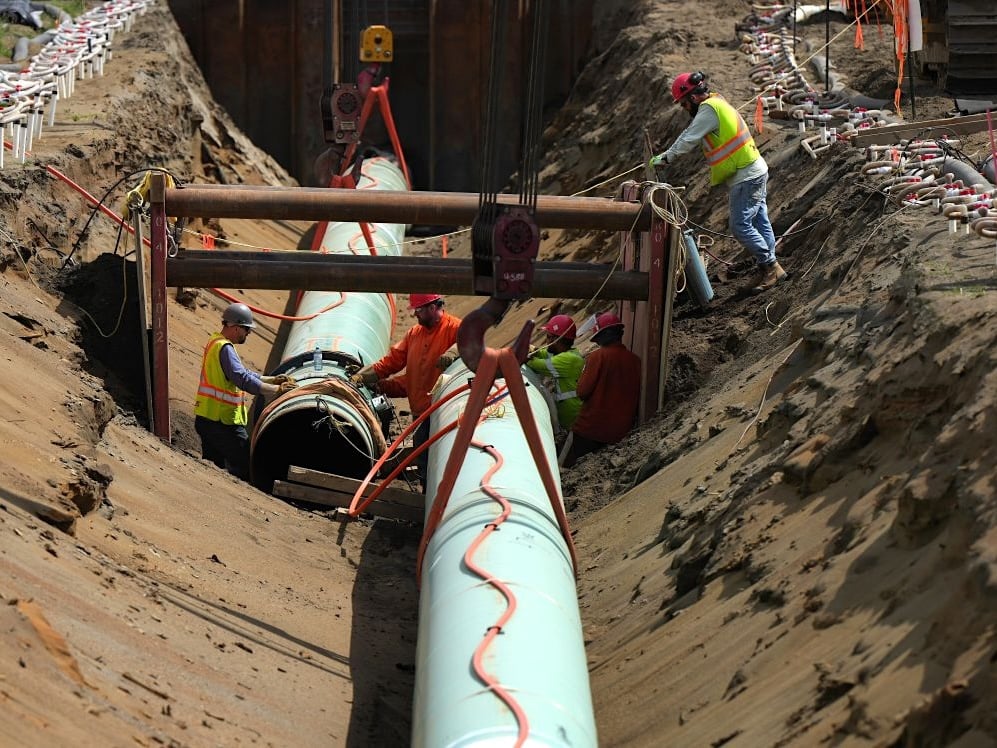
Prime Minister Mark Carney and Alberta Premier Danielle Smith have unveiled ambitious plans for a new pipeline project intended to transport bitumen from Alberta to British Columbia’s northwest coast. The proposal, which lacks a defined route or specific proponent, aims to deliver a staggering one million barrels of oil per day. Both leaders assert that the project will catalyze economic growth in a nation grappling with various challenges.
In the wake of this announcement, oilsands advocate Robbie Picard suggested the pipeline be named the Spirit Bear Pipeline, citing the spirit bear as a symbol of resilience and balance between nature and industry. However, not everyone shares this optimistic view.
To gain a clearer perspective on the implications of this proposal, I spoke with David Hughes, a respected energy analyst and geologist with over three decades of experience at the Geological Survey of Canada. Hughes, who approaches the subject with a critical eye, believes that another pipeline is unnecessary. He recalls the widespread consensus, including his own, that the Northern Gateway project—scrapped over concerns about environmental risks—was ill-advised. This previous project aimed to transport half a million barrels daily, crossing numerous waterways and challenging terrains.
The current proposal, by contrast, seeks to exceed those ambitions. However, it faces significant logistical hurdles. The proposed route would lead to Kitimat, situated on a fiord known for its hazardous waters. According to Environment Canada, the Hecate Strait, which Kitimat opens into, is recognized as the most perilous body of water on the Canadian coast. The existing tanker ban, in place for over fifty years, would have to be reconsidered to facilitate this ambitious plan.
The Carney-Smith memorandum outlines a vision that includes not only increased oil transport but also a focus on reducing greenhouse gas emissions through a technology called carbon capture and storage (CCS). This method, although touted as a solution, relies heavily on energy and water resources, raising questions about its feasibility.
Hughes describes this initiative as part of a broader pattern he terms the “Great Fossil Fuel Blowout.” Since the mid-19th century, humanity has consumed nearly 1.6 trillion barrels of oil, with the last three decades accounting for a disproportionate share. He warns that continuing down this path will lead to a future where remaining oil reserves are increasingly difficult to extract, exacerbated by the climate crisis.
The proposed pipeline could potentially increase oilsands production to five million barrels per day, further straining an already taxed environment. Hughes highlights that the extraction process is energy-intensive; it typically requires two to four barrels of fossil-fuel-heated steam to produce one barrel of bitumen. As a result, the environmental costs associated with expanding the oilsands operations are likely to rise substantially.
Moreover, ownership of the oilsands has shifted considerably. The so-called “Big Five” companies—Husky, Cenovus, Imperial, Suncor, and Canadian Natural Resources—control around 80 percent of the bitumen production, with significant foreign investment involved. For instance, Exxon Mobil owns a majority stake in Imperial, indicating that the benefits of the pipeline may not be felt broadly within Canada.
The potential financial implications of building a new pipeline are daunting. Previous cost estimates for similar projects have been substantial; Kinder Morgan abandoned the Trans Mountain project when costs approached $8 billion, leading to a government bailout that ultimately cost taxpayers over $34 billion. Hughes estimates that constructing the new pipeline could range from $30 billion to $40 billion, potentially more due to inflation and rising material costs.
In addition to financial concerns, the environmental liability associated with oilsands extraction is critical. The Alberta Energy Regulator has estimated cleanup costs for oilsands sites could reach between $57 billion and nearly double that amount. With Alberta’s current financial security program holding only $1 billion for these liabilities, Hughes argues against supporting pipeline expansions without a credible plan for addressing environmental impacts.
Finally, the emissions stemming from Canada’s oil and gas industry currently account for approximately 30 percent of the nation’s carbon footprint. Hughes’ research indicates that reaching net-zero emissions by 2050 is a daunting challenge, especially without significant investments in nuclear power or scalable carbon capture technologies, which have historically struggled to meet expectations.
As Canada grapples with these pressing issues, Hughes advocates for a reassessment of energy consumption habits. He notes that Canadians consume over four times the global average per capita, with the country’s energy use dramatically surpassing levels from the 1800s.
The implications of these choices will undoubtedly affect future generations, as Hughes poignantly reflects, “I have four grandchildren who will feel it.” As the political discourse around energy continues, the need for a sustainable path forward becomes increasingly urgent.

Meta Plans Major Layoffs as AI Costs Surge

Alberta’s Referendum Could Pave Way for U.S. Statehood

Minooka District 201 Plans Enhanced Bilingual Support for Students

Canmore Approves Multiple Development Permits for New Projects

Remembering Bradly Castillo Shearsmith: A Life of Friendship and Joy

BIS Urges Watchdogs to Integrate Synthetic Risk Transfers in Stress Tests

Teva Transforms: Shifting Focus from Generics to Branded Success

Apple Launches AirPods Max 2 with Enhanced Audio Features

Ontario Ends Funding for Seven Supervised Injection Sites

Toyoake City Proposes Daily Two-Hour Smartphone Use Limit

Pedestrian Fatally Injured in Esquimalt Collision on August 14

B.C. Review Reveals Urgent Need for Rare-Disease Drug Reforms

Dark Adventure Game “Bye Sweet Carole” Set for October Release

Konami Revives Iconic Metal Gear Solid Delta Ahead of Release

Victoria’s Pop-Up Shop Shines Light on B.C.’s Wolf Cull

Jimmy Lai’s Defense Challenges Charges Under National Security Law

Snapmaker U1 Color 3D Printer Redefines Speed and Sustainability

Apple Expands Self-Service Repair Program to Canada
-
 Science11 months ago
Toyoake City Proposes Daily Two-Hour Smartphone Use Limit
-
 Top Stories11 months ago
Pedestrian Fatally Injured in Esquimalt Collision on August 14
-
 Health11 months ago
B.C. Review Reveals Urgent Need for Rare-Disease Drug Reforms
-
 Technology11 months ago
Dark Adventure Game “Bye Sweet Carole” Set for October Release
-
 Technology11 months ago
Konami Revives Iconic Metal Gear Solid Delta Ahead of Release
-
 Lifestyle11 months ago
Victoria’s Pop-Up Shop Shines Light on B.C.’s Wolf Cull
-
 World11 months ago
Jimmy Lai’s Defense Challenges Charges Under National Security Law
-
 Technology11 months ago
Snapmaker U1 Color 3D Printer Redefines Speed and Sustainability
-
 Technology11 months ago
Apple Expands Self-Service Repair Program to Canada
-

 Technology11 months ago
AION Folding Knife: Redefining EDC Design with Premium Materials
-

 Technology11 months ago
Solve Today’s Wordle Challenge: Hints and Answer for August 19
-

 Business11 months ago
Gordon Murray Automotive Unveils S1 LM and Le Mans GTR at Monterey