
Science
Astronomers Discover Hidden Supernova Progenitor with JWST

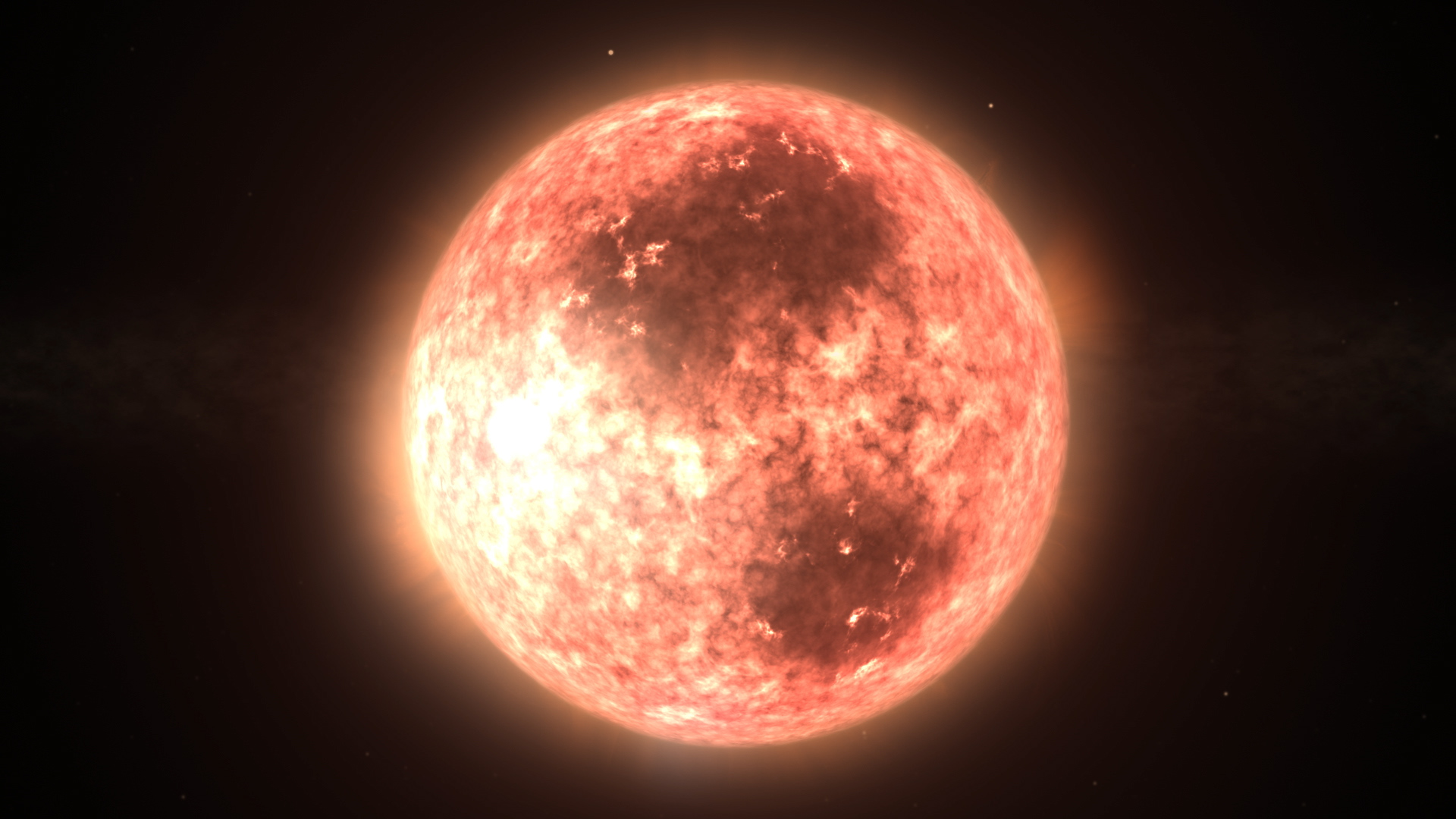
A groundbreaking discovery has emerged from the James Webb Space Telescope (JWST), revealing a hidden supernova progenitor star obscured by dust. This finding may provide crucial insights into the elusive nature of massive red supergiant stars, which theoretical models suggest are responsible for most supernovae. Despite their predicted prevalence, these stars have been rarely observed prior to their explosive demise.
Scientists from Northwestern University conducted this analysis, which indicates that the supernovae may not be absent but rather concealed by significant amounts of interstellar dust. Lead scientist Charlie Kilpatrick remarked on the significance of the study, stating, “For multiple decades, we have been trying to determine exactly what the explosions of red supergiant stars look like.” He added that the JWST offers unprecedented data quality, allowing researchers to accurately identify the type of red supergiant that exploded and its surrounding environment.
First Detection of a Dusty Progenitor Star
The astronomers detected the supernova, designated SN2025pht, on June 29, 2025, with light traveling from the nearby galaxy NGC 1637, approximately 40 million light-years from Earth. By comparing images from the Hubble Space Telescope and the JWST taken before and after the explosion, the researchers successfully identified SN2025pht’s progenitor star. The findings were striking; the star shone about 100,000 times brighter than the Sun, yet was largely obscured by dust, making it appear over 100 times dimmer in visible light.
The thick dust veil altered the star’s appearance, giving it a surprisingly red hue. Red supergiants, among the largest stars in the universe, are known to explode as Type II supernovae when their cores collapse, leaving behind either a neutron star or a black hole. A familiar example of such a star is Betelgeuse, a prominent reddish star in the constellation Orion.
Understanding the Role of Dust in Star Visibility
The substantial dust surrounding the progenitor star offers a potential explanation for the challenges astronomers face in locating red supergiant progenitors. Typically, massive stars that ultimately explode as supernovae are among the brightest objects in the night sky, suggesting they should be easily detectable. However, researchers hypothesize that the most massive stars are often the dustiest, with layers of dust significantly dimming their light.
This new JWST study supports that hypothesis. Alongside the discovery of the dust, the composition was unexpectedly rich in carbon, differing from the usual oxygen-rich, silicate dust typically associated with red supergiants. This indicates that powerful convection processes within the star’s final years may have brought carbon from its core to the surface, altering the type of dust produced.
The implications of this discovery extend beyond just one star. It marks a new era for astronomers studying the life cycles of massive stars. By observing light across the near- and mid-infrared spectrum, the JWST can uncover previously hidden stars and provide critical information about how the universe’s most massive stars live and die.
The research is detailed in The Astrophysical Journal Letters, titled “The Type II SN 2025pht in NGC 1637: A red supergiant with carbon-rich circumstellar dust as the first JWST detection of a supernova progenitor star.” The team is now actively searching for other red supergiants that may soon explode as supernovae.
Future observations with NASA’s upcoming Nancy Grace Roman Space Telescope may further enhance this search. Roman’s advanced resolution and sensitivity will allow astronomers to detect these stars and potentially observe their variability as they expel large quantities of dust in their final stages.
This remarkable finding not only sheds light on the life and death of stars but also opens new avenues for understanding the universe’s most dynamic phenomena.

Meta Plans Major Layoffs as AI Costs Surge

Alberta’s Referendum Could Pave Way for U.S. Statehood

Minooka District 201 Plans Enhanced Bilingual Support for Students

Canmore Approves Multiple Development Permits for New Projects

Remembering Bradly Castillo Shearsmith: A Life of Friendship and Joy

BIS Urges Watchdogs to Integrate Synthetic Risk Transfers in Stress Tests

Teva Transforms: Shifting Focus from Generics to Branded Success

Apple Launches AirPods Max 2 with Enhanced Audio Features

Ontario Ends Funding for Seven Supervised Injection Sites

Toyoake City Proposes Daily Two-Hour Smartphone Use Limit

Pedestrian Fatally Injured in Esquimalt Collision on August 14

B.C. Review Reveals Urgent Need for Rare-Disease Drug Reforms

Dark Adventure Game “Bye Sweet Carole” Set for October Release

Konami Revives Iconic Metal Gear Solid Delta Ahead of Release

Victoria’s Pop-Up Shop Shines Light on B.C.’s Wolf Cull

Jimmy Lai’s Defense Challenges Charges Under National Security Law

Snapmaker U1 Color 3D Printer Redefines Speed and Sustainability

Apple Expands Self-Service Repair Program to Canada
-
 Science12 months ago
Toyoake City Proposes Daily Two-Hour Smartphone Use Limit
-
 Top Stories12 months ago
Pedestrian Fatally Injured in Esquimalt Collision on August 14
-
 Health12 months ago
B.C. Review Reveals Urgent Need for Rare-Disease Drug Reforms
-
 Technology12 months ago
Dark Adventure Game “Bye Sweet Carole” Set for October Release
-
 Technology12 months ago
Konami Revives Iconic Metal Gear Solid Delta Ahead of Release
-
 Lifestyle12 months ago
Victoria’s Pop-Up Shop Shines Light on B.C.’s Wolf Cull
-
 World12 months ago
Jimmy Lai’s Defense Challenges Charges Under National Security Law
-
 Technology12 months ago
Snapmaker U1 Color 3D Printer Redefines Speed and Sustainability
-
 Technology12 months ago
Apple Expands Self-Service Repair Program to Canada
-

 Technology12 months ago
AION Folding Knife: Redefining EDC Design with Premium Materials
-

 Technology12 months ago
Solve Today’s Wordle Challenge: Hints and Answer for August 19
-

 Business12 months ago
Gordon Murray Automotive Unveils S1 LM and Le Mans GTR at Monterey