
World
Disinformation Campaigns Exploit South Korea’s Political Crisis

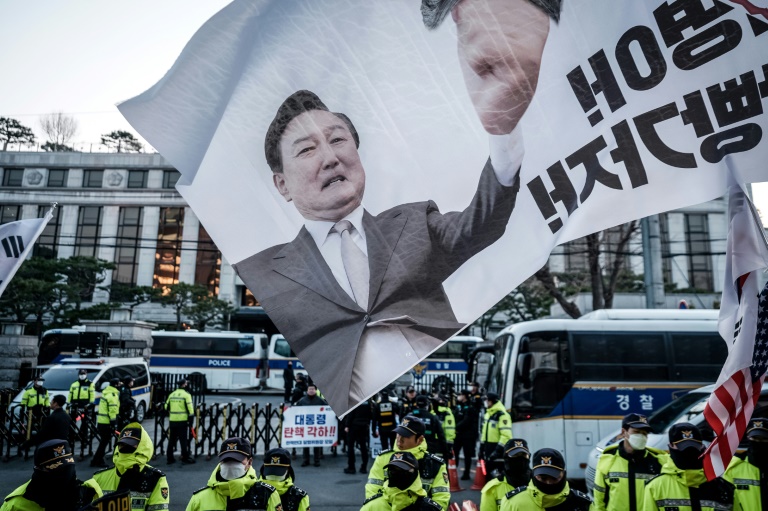
Last year, South Korea experienced one of its most significant political crises in decades, largely fueled by disinformation against China. Following the failed attempt by President Yoon Suk Yeol to impose martial law, a narrative emerged that Beijing was manipulating events from the shadows. Supporters of Yoon accused China of infiltrating protests, financing efforts to impeach him, and swaying public opinion ahead of the June snap election that resulted in the opposition leader Lee Jae Myung taking office.
During a televised address in December 2022, Yoon intensified these suspicions, asserting that “forces linked to North Korea and China are threatening our democracy from within.” Yet a review by AFP Fact Check discovered a lack of substantial evidence backing these claims, such as alleged arrests of “99 Chinese spies” or Chinese-funded protests. Experts argue that this narrative reflects domestic political rivalries and a longstanding anti-China sentiment in South Korea.
Roots of Disinformation
The anti-China rhetoric gained traction on right-wing forums, amplified by YouTubers and echoed by lawmakers. Following Yoon’s impeachment, claims circulated that the National Election Commission (NEC) had detained “99 Chinese spies” who were subsequently flown to Okinawa by the US military. Investigations revealed that the images associated with this claim were misattributed, depicting Chinese fishermen detained for illegal fishing in 2016. Both the NEC and US Forces Korea denounced the reports as “entirely false,” yet the rumor persisted, even being mentioned in court proceedings.
As the Constitutional Court deliberated on Yoon’s removal, misinformation targeting the judiciary escalated. A doctored image of Chief Justice Moon Hyung-bae purportedly swearing allegiance to a Chinese flag circulated online, despite the original photo showing him with South Korea’s flag. Following the Court’s unanimous decision to oust Yoon in April 2023, conspiracy theories emerged among his supporters, claiming judicial compromise. Public trust in the court plummeted, with surveys indicating that distrust exceeded 40 percent.
Political Manipulation and Cultural Resentment
The political landscape shifted further after Lee’s election victory, reviving anti-China themes. False claims spread that The Guardian had reported Chinese assistance in Lee’s win. The original article referenced concerns about Chinese influence in democracies, without mentioning South Korea specifically. This distortion gained traction, with conservative lawmakers alleging significant involvement of Chinese nationals in pro-impeachment rallies.
Tensions escalated in August 2023 when the Justice Ministry announced a visa-free program for Chinese group tourists. Former Prime Minister Hwang Kyo-ahn claimed it was a strategy to facilitate voter fraud in upcoming elections. The NEC clarified that only foreigners with at least three years of permanent residency were eligible to vote in local elections. Nonetheless, misinformation spread that all Chinese nationals could enter South Korea without passports or health checks.
This climate of disinformation has not only impacted South Korean politics but reflects broader global trends, according to Ha Nam-suk, a professor at the University of Seoul. He noted that rising anti-China sentiment has become a tool for political factions seeking to consolidate power. As Yoon’s political relevance waned, hard-liners in South Korea found a new enemy to rally against, transforming general anti-China feelings into a more pronounced ideological campaign.
The implications of this disinformation extend beyond South Korea, highlighting a troubling trend where political narratives are shaped by cultural and historical grievances. As nations grapple with the challenges posed by misinformation, the South Korean experience offers a cautionary tale of how political crises can be exacerbated by the manipulation of public sentiment.

Meta Plans Major Layoffs as AI Costs Surge

Alberta’s Referendum Could Pave Way for U.S. Statehood

Minooka District 201 Plans Enhanced Bilingual Support for Students

Canmore Approves Multiple Development Permits for New Projects

Remembering Bradly Castillo Shearsmith: A Life of Friendship and Joy

BIS Urges Watchdogs to Integrate Synthetic Risk Transfers in Stress Tests

Teva Transforms: Shifting Focus from Generics to Branded Success

Apple Launches AirPods Max 2 with Enhanced Audio Features

Ontario Ends Funding for Seven Supervised Injection Sites

Toyoake City Proposes Daily Two-Hour Smartphone Use Limit

Pedestrian Fatally Injured in Esquimalt Collision on August 14

B.C. Review Reveals Urgent Need for Rare-Disease Drug Reforms

Dark Adventure Game “Bye Sweet Carole” Set for October Release

Konami Revives Iconic Metal Gear Solid Delta Ahead of Release

Victoria’s Pop-Up Shop Shines Light on B.C.’s Wolf Cull

Jimmy Lai’s Defense Challenges Charges Under National Security Law

Snapmaker U1 Color 3D Printer Redefines Speed and Sustainability

Apple Expands Self-Service Repair Program to Canada
-
 Science11 months ago
Toyoake City Proposes Daily Two-Hour Smartphone Use Limit
-
 Top Stories11 months ago
Pedestrian Fatally Injured in Esquimalt Collision on August 14
-
 Health11 months ago
B.C. Review Reveals Urgent Need for Rare-Disease Drug Reforms
-
 Technology11 months ago
Dark Adventure Game “Bye Sweet Carole” Set for October Release
-
 Technology11 months ago
Konami Revives Iconic Metal Gear Solid Delta Ahead of Release
-
 Lifestyle11 months ago
Victoria’s Pop-Up Shop Shines Light on B.C.’s Wolf Cull
-
 World11 months ago
Jimmy Lai’s Defense Challenges Charges Under National Security Law
-
 Technology11 months ago
Snapmaker U1 Color 3D Printer Redefines Speed and Sustainability
-
 Technology11 months ago
Apple Expands Self-Service Repair Program to Canada
-

 Technology11 months ago
AION Folding Knife: Redefining EDC Design with Premium Materials
-

 Technology11 months ago
Solve Today’s Wordle Challenge: Hints and Answer for August 19
-

 Business11 months ago
Gordon Murray Automotive Unveils S1 LM and Le Mans GTR at Monterey