
Education
N.W.T. Education System Faces Challenges After Teacher Program Cuts

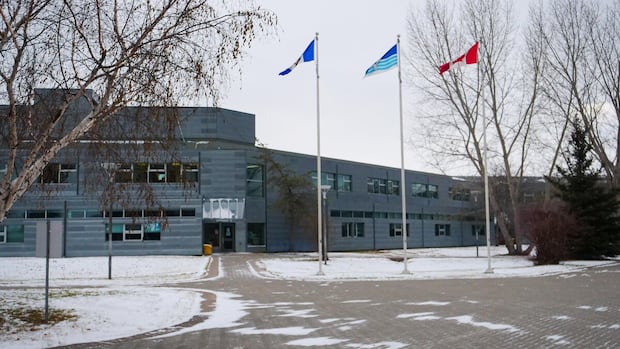
The suspension of the teacher training program at Aurora College, implemented in 2017, has had lasting repercussions on the education system in the Northwest Territories (N.W.T.). With the territory remaining the only region in Canada without such a program, local communities are feeling the impact of reduced opportunities for Indigenous individuals to teach in their own communities.
Joni Tsatchia, a graduate of the last cohort of the program, emphasized the significance of this training. She noted that it enabled her to pursue her career while remaining close to her support network in Wekweètì. “I didn’t have to leave down south with my kids and leave my support system,” Tsatchia explained. The program allowed her to maintain her cultural ties while gaining professional skills, an experience she believes is crucial for connecting with the students she taught.
Since 2017, the N.W.T. has seen a decline in the number of Indigenous teachers available in schools. The program’s suspension has contributed to a noticeable gap in the education workforce, particularly among northern Indigenous educators. According to Souhail Soujah, superintendent of the South Slave Divisional Education Council (SSDEC), the absence of local teacher training has hindered the recruitment of new Indigenous teachers. “Indigenous people are well represented in support staff positions but are significantly lacking in teaching positions,” he stated.
The suspension was originally justified by the territory’s then-education minister, who cited low enrollment and graduation rates. This decision sparked intense community pushback, reflecting the vital role that Indigenous educators play in their communities. Valentina de Krom, who served as the head of the program just before its suspension, described the moment as shocking. She had hoped to implement changes recommended by a review of the program in 2021, which aimed to enhance support for graduates.
The program’s flexibility allowed students to balance their education with other responsibilities, such as family and work. de Krom believes that local teachers possess a unique understanding of the culture and needs of their communities. “You have teachers that are hired locally that understand the culture, understand the people, understand the children,” she noted. The reliance on teachers from outside the region poses challenges in addressing the specific needs of local students.
In light of the program’s suspension, efforts have been made to integrate Indigenous learning into the curriculum. Graham Arts, assistant superintendent for curriculum and learning at Yellowknife Education District No. 1, expressed the importance of having a teacher education program based in the North. “If we could have more people who are from the North, trained in the North, that could only be a plus for everyone,” he stated.
As the situation stands, the future of the teacher training program remains uncertain. Dr. Angela James, president of Aurora College, indicated that there are plans to renew the program by 2027, contingent upon securing adequate funding. The N.W.T. education community continues to advocate for the reinstatement of local teacher training, emphasizing the profound impact it has on both the educational landscape and the broader community.
While there has been some growth in the number of certified northern Indigenous educators—rising from 72 in 2020 to 96 in 2024—these figures do not reflect the challenges faced in hiring Indigenous teachers since the program’s closure. Moreover, the recent migration to an online teacher certification system has complicated the verification of these numbers.
The ongoing discussion surrounding the teacher training program highlights a crucial need for educational reform in the N.W.T. As the territory grapples with its unique challenges, the reinstatement of a localized teacher training program could play an essential role in shaping a more inclusive and representative educational environment for future generations.

Australia Enacts Social Media Ban for Under-16s to Combat Harm

BC Lawmakers Propose Increased Access to Nicotine Pouches

Location Feature on X Platform Fuels Political Controversy

Alberta and B.C. Eye New Pipeline Despite Environmental Concerns

Brian Walshe’s Trial Begins in Wife Ana’s Disappearance Case

Brandon University Hosts Holiday Events and Performances This Week

Fem Tech: A New Frontier in Women’s Health or Corporate Exploitation?

Ottawa Charge Coach Carla MacLeod Reveals Breast Cancer Diagnosis

French Firm Atelier Bois d’ici Launches Family-Friendly Tiny XXL Home

Toyoake City Proposes Daily Two-Hour Smartphone Use Limit

B.C. Review Reveals Urgent Need for Rare-Disease Drug Reforms

Pedestrian Fatally Injured in Esquimalt Collision on August 14

Dark Adventure Game “Bye Sweet Carole” Set for October Release

Jimmy Lai’s Defense Challenges Charges Under National Security Law

Victoria’s Pop-Up Shop Shines Light on B.C.’s Wolf Cull

Konami Revives Iconic Metal Gear Solid Delta Ahead of Release

Apple Expands Self-Service Repair Program to Canada

Snapmaker U1 Color 3D Printer Redefines Speed and Sustainability
-
 Science3 months ago
Toyoake City Proposes Daily Two-Hour Smartphone Use Limit
-
 Health3 months ago
B.C. Review Reveals Urgent Need for Rare-Disease Drug Reforms
-
 Top Stories3 months ago
Pedestrian Fatally Injured in Esquimalt Collision on August 14
-
 Technology3 months ago
Dark Adventure Game “Bye Sweet Carole” Set for October Release
-
 World3 months ago
Jimmy Lai’s Defense Challenges Charges Under National Security Law
-
 Lifestyle3 months ago
Victoria’s Pop-Up Shop Shines Light on B.C.’s Wolf Cull
-
 Technology3 months ago
Konami Revives Iconic Metal Gear Solid Delta Ahead of Release
-
 Technology3 months ago
Apple Expands Self-Service Repair Program to Canada
-
 Technology3 months ago
Snapmaker U1 Color 3D Printer Redefines Speed and Sustainability
-

 Technology3 months ago
AION Folding Knife: Redefining EDC Design with Premium Materials
-

 Technology3 months ago
Solve Today’s Wordle Challenge: Hints and Answer for August 19
-

 Business3 months ago
Gordon Murray Automotive Unveils S1 LM and Le Mans GTR at Monterey