
Health
New Guidelines Urge Doctors to Expand Access to HIV Prevention Medications

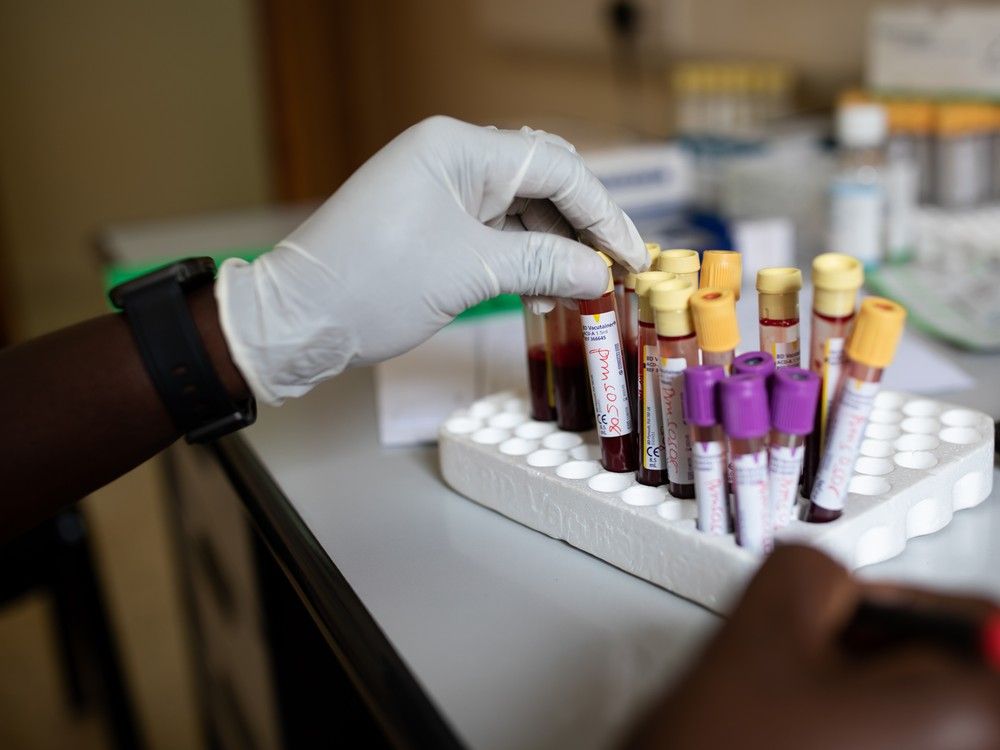
A coalition of physicians across Canada has introduced new guidelines aimed at improving access to medications that prevent HIV infection. The guidelines emphasize the need for healthcare providers to actively promote these medications, which include pre-exposure prophylaxis (PrEP) and post-exposure prophylaxis (PEP).
On March 4, 2024, the Public Health Agency of Canada reported **1,826 new HIV diagnoses** in 2024, a slight decrease compared to previous years. Federal Health Minister **Marjorie Michel** described this drop as a “small decline” after several years of increasing cases. Notably, provinces like **Manitoba** and **Saskatchewan** continue to experience rates three to four times higher than the national average.
“We know HIV remains a concern in Canada — with disproportionate impacts felt among populations experiencing health and social inequities,” Michel stated alongside the Minister of Indigenous Services.
New Recommendations to Combat HIV
The clinical guideline, published in the **Canadian Medical Association Journal**, consists of **31 recommendations** and **10 good practices** for prescribing antiretroviral medications to prevent HIV infections. **Dr. Darrell Tan**, the lead author and a physician-scientist at St. Michael’s Hospital, noted that **19 physicians** dedicated their time over the past three years to develop these guidelines based on the latest research.
Since the last guidelines were issued in **2017**, the variety of available PrEP and PEP options has significantly expanded. The new recommendations seek to reverse the troubling trend of rising HIV infections in Canada, as the country aims to eliminate HIV as a public health threat by **2030**. Tan expressed concern that the country is “not at all on track to reach that ambitious target.”
The new data indicates a shift from the continuous increase in diagnoses since **2021**, when over **1,450** new cases were reported. In **2022**, the figure rose to **1,800**, followed by **2,434** in **2023**. Notably, the 2024 report does not include data from **Quebec**, which recorded **476 new cases** in 2023.
Dr. **Sean Rourke**, a scientist at the MAP Centre for Urban Health Solutions, cautioned that the 2024 decrease may not be substantial. “I think PrEP has incredible potential, but we’re not seeing the benefits of that yet,” he said.
Addressing Health Disparities
The guidelines emphasize that “deep historical and structural inequities” have hindered access to PrEP and PEP for certain populations. According to the report, more than one-third of new infections occur in women, while **38 percent** are in gay, bisexual, and other men who have sex with men. Additionally, **25 percent** of new cases are among people who inject drugs, with Indigenous communities particularly affected.
Tan expressed disappointment with the lack of public health messaging surrounding PrEP and PEP, which he believes contributes to stigma. “Almost everyone in Canada knows unequivocally that public health authorities think that influenza vaccination is something that they would support,” he remarked. “It’s a failure of public health and authorities to push the message out in a positive way.”
The Public Health Agency of Canada aims to lead the prevention and control of sexually transmitted and blood-borne infections through its guidelines for health professionals. In its directive, the agency refers to the HIV PrEP guidelines developed by the **Canadian Institutes of Health Research’s** Canadian HIV Trials Network.
The new guideline explicitly states that healthcare providers should prescribe PrEP to individuals requesting it, regardless of whether they disclose their HIV risk factors. This approach counters the tendency for “gatekeeping” access to these crucial medications. The guideline highlights that many individuals may hesitate to disclose risk behaviors due to shame or mistrust stemming from systemic issues like homophobia, transphobia, and racism.
Dr. **Ameeta Singh**, a member of the guideline committee, emphasized that the intention is to lower barriers to accessing PrEP. She urged healthcare professionals across various specialties, including primary care and reproductive health, to actively offer these medications when risk factors are identified.
The expanding options for PrEP are also noted, including daily and “on-demand” pills, as well as a long-acting injectable medication approved by Health Canada in **2024**, which is administered every two months. Singh highlighted the importance of the injectable option for individuals who inject drugs and may face challenges with daily adherence.
“The next step is for policymakers to make implementing this guidance a priority,” she stated.
Rourke expressed a desire for the guidelines to better address outreach to high-risk communities, particularly Indigenous populations in the Prairies. These communities accounted for **19.6 percent** of new HIV diagnoses in **2023**, despite representing only **5 percent** of the population, according to the **Communities, Alliances and Networks** organization, which focuses on HIV issues within an Indigenous context.
He noted that existing initiatives, such as an HIV testing program launched in **March 2024** for underserved communities in the Prairies, have already tested more than **15,000** individuals. Rourke emphasized that addressing established health inequities requires sustained efforts. “It doesn’t happen on its own. And that’s the problem,” he concluded.

Two Affordable Canadian Stocks for New Investors to Consider

Support 13 Metro Vancouver Charities on Giving Tuesday

Astronomers Discover Hidden Supernova Progenitor with JWST

New Guidelines Urge Doctors to Expand Access to HIV Prevention Medications

Innovative Holiday Home Redefines Living in Australian Bush

CHEK Announces Re-Air Dates for Santa Claus Parade After Stream Issues

Food Bank of Waterloo Region Prepares for Impactful Giving Tuesday

Jake Vaadeland Dominates Saskatchewan Country Music Awards

Gravel Pit Discoveries Reveal Ice Age Artifacts in Manitoba

Toyoake City Proposes Daily Two-Hour Smartphone Use Limit

B.C. Review Reveals Urgent Need for Rare-Disease Drug Reforms

Pedestrian Fatally Injured in Esquimalt Collision on August 14

Dark Adventure Game “Bye Sweet Carole” Set for October Release

Jimmy Lai’s Defense Challenges Charges Under National Security Law

Victoria’s Pop-Up Shop Shines Light on B.C.’s Wolf Cull

Konami Revives Iconic Metal Gear Solid Delta Ahead of Release

Apple Expands Self-Service Repair Program to Canada

Snapmaker U1 Color 3D Printer Redefines Speed and Sustainability
-
 Science3 months ago
Toyoake City Proposes Daily Two-Hour Smartphone Use Limit
-
 Health4 months ago
B.C. Review Reveals Urgent Need for Rare-Disease Drug Reforms
-
 Top Stories4 months ago
Pedestrian Fatally Injured in Esquimalt Collision on August 14
-
 Technology3 months ago
Dark Adventure Game “Bye Sweet Carole” Set for October Release
-
 World3 months ago
Jimmy Lai’s Defense Challenges Charges Under National Security Law
-
 Lifestyle3 months ago
Victoria’s Pop-Up Shop Shines Light on B.C.’s Wolf Cull
-
 Technology3 months ago
Konami Revives Iconic Metal Gear Solid Delta Ahead of Release
-
 Technology3 months ago
Apple Expands Self-Service Repair Program to Canada
-
 Technology3 months ago
Snapmaker U1 Color 3D Printer Redefines Speed and Sustainability
-

 Technology3 months ago
AION Folding Knife: Redefining EDC Design with Premium Materials
-

 Technology3 months ago
Solve Today’s Wordle Challenge: Hints and Answer for August 19
-

 Business3 months ago
Gordon Murray Automotive Unveils S1 LM and Le Mans GTR at Monterey