
Science
Australia Implements Social Media Ban for Under-16s After Tragedy

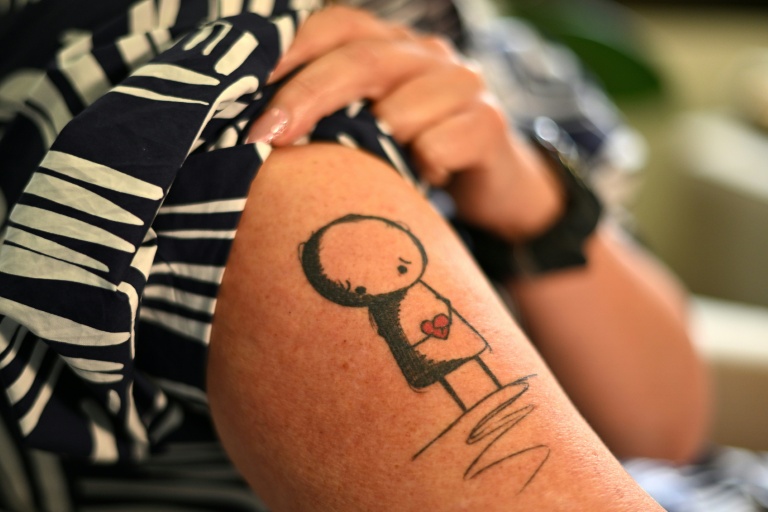
Mia Bannister has turned her grief into action following the tragic loss of her teenage son, Ollie, who died by suicide after struggling with anorexia and online bullying. In response to his experiences, the Australian government has enacted groundbreaking legislation that will ban children under the age of 16 from accessing major social media platforms, including TikTok, Instagram, and Facebook, starting on December 10, 2023. Companies that fail to comply with this new law face fines of up to $32 million.
Mia reflects on her son with a poignant tribute inked on her skin. “He was my best friend,” she shared with AFP, her voice tinged with sorrow as she described the tattoo of a mother holding a cracked red heart. “He was my world.” Ollie experienced severe online bullying and was exposed to harmful content across various platforms, which exacerbated his eating disorder. Mia recalls the vibrant spark that dimmed as her son’s condition worsened.
When Ollie initially sought solace on social media, Mia was unaware of the potential dangers. As a single parent juggling work and home responsibilities, she admits, “I didn’t really understand what platforms he was on and how they worked.” She holds social media companies accountable for the unregulated and unchecked content that can impact vulnerable users. “When parents hand their child a phone, we hand them the greatest weapon we could hand them,” she stated.
Legislation Details and Reactions
The Australian government’s decision comes amid growing concern over the mental health of young people. According to a survey conducted by Mission Australia, approximately 97 percent of teenagers reported using social media daily, with nearly half spending over three hours online. In contrast, those who limited their use to fewer than three hours showed improved well-being and social connections.
While the government aims to reshape children’s online habits, questions arise about the law’s enforcement and how age verification will be established. Critics, including tech companies, argue that the legislation lacks clarity and could have unintended consequences. Ten platforms, including Discord, Pinterest, and WhatsApp, will not be subject to the ban, although authorities reserve the right to enforce compliance across all platforms.
Some experts caution that such blanket bans may not effectively enhance online safety. Catherine Page Jeffery, a lecturer at the University of Sydney, expressed concern that the legislation could limit young people’s opportunities and hinder their digital literacy development. “Rather than banning young people, I would prefer to see greater safety obligations placed on platforms,” she said.
Impact on Young Users and Families
For many youths, social media serves as a vital tool for self-expression and skill development. Twelve-year-old Ava Chanel Jones exemplifies this, using Instagram to showcase her cheerleading, dancing, and modeling pursuits. Her mother, Zoe, manages Ava’s account, which has grown to over 11,400 followers. The platform has provided Ava opportunities for brand promotions and even led to the launch of her clothing line.
As the legislation approaches, Zoe finds herself concerned about its implications. “I’m her parent — it’s my responsibility to protect her the best that I can when she’s on social media,” she stated. Different platforms may implement the new age restrictions in various ways, leaving many families unsure about the future of their children’s online activities.
Julie Inman Grant, Australia’s eSafety Commissioner, asserts that age restrictions represent a potent solution to online harm, though she acknowledges that there is no swift resolution to the issues at hand.
Mia Bannister continues to share Ollie’s story through her charity, which advocates for awareness of eating disorders in boys and the potential impact of social media legislation. “I do it for him, and I do it for all the other children out there: the lost children and the ones that we’re all going to save,” she said, channeling her heartbreak into a mission to protect others.
As Australia prepares to implement this significant change, the balance between safeguarding children and allowing them to thrive in a digital landscape remains a complex challenge with far-reaching implications.

Australia Implements Social Media Ban for Under-16s After Tragedy

Seniors Take Action: Effective Strategies to Prevent Falls

W.J. Mouat Hawks Fall Short in 3A Provincial Final Against Tweedsmuir

Hong Kong Student Demands Inquiry After Fatal Fire Incident

Brandon University Hosts Events Celebrating Arts and Community

Australia Enacts Social Media Ban for Under-16s to Combat Harm

BC Lawmakers Propose Increased Access to Nicotine Pouches

Location Feature on X Platform Fuels Political Controversy

Alberta and B.C. Eye New Pipeline Despite Environmental Concerns

Toyoake City Proposes Daily Two-Hour Smartphone Use Limit

B.C. Review Reveals Urgent Need for Rare-Disease Drug Reforms

Pedestrian Fatally Injured in Esquimalt Collision on August 14

Dark Adventure Game “Bye Sweet Carole” Set for October Release

Jimmy Lai’s Defense Challenges Charges Under National Security Law

Victoria’s Pop-Up Shop Shines Light on B.C.’s Wolf Cull

Konami Revives Iconic Metal Gear Solid Delta Ahead of Release

Apple Expands Self-Service Repair Program to Canada

Snapmaker U1 Color 3D Printer Redefines Speed and Sustainability
-
 Science3 months ago
Toyoake City Proposes Daily Two-Hour Smartphone Use Limit
-
 Health3 months ago
B.C. Review Reveals Urgent Need for Rare-Disease Drug Reforms
-
 Top Stories3 months ago
Pedestrian Fatally Injured in Esquimalt Collision on August 14
-
 Technology3 months ago
Dark Adventure Game “Bye Sweet Carole” Set for October Release
-
 World3 months ago
Jimmy Lai’s Defense Challenges Charges Under National Security Law
-
 Lifestyle3 months ago
Victoria’s Pop-Up Shop Shines Light on B.C.’s Wolf Cull
-
 Technology3 months ago
Konami Revives Iconic Metal Gear Solid Delta Ahead of Release
-
 Technology3 months ago
Apple Expands Self-Service Repair Program to Canada
-
 Technology3 months ago
Snapmaker U1 Color 3D Printer Redefines Speed and Sustainability
-

 Technology3 months ago
AION Folding Knife: Redefining EDC Design with Premium Materials
-

 Technology3 months ago
Solve Today’s Wordle Challenge: Hints and Answer for August 19
-

 Business3 months ago
Gordon Murray Automotive Unveils S1 LM and Le Mans GTR at Monterey