
Science
Guelph Researcher Explores Amazonian Microbiomes and Family Roots

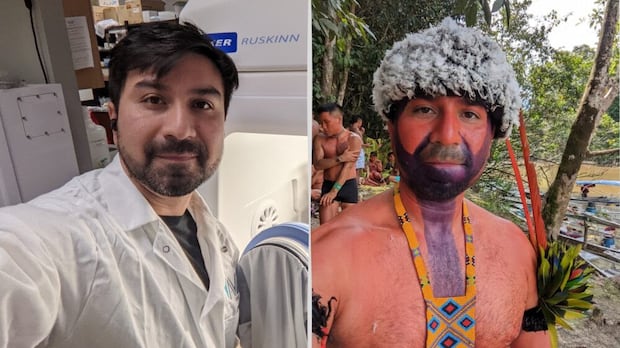
A researcher from the University of Guelph is gaining insights into health by studying the microbiomes of the Yanomami community in the Amazon rainforest. David Good, a PhD candidate, is exploring the unique bacteria present in human feces from this semi-nomadic group, which is known for having one of the most diverse microbiomes globally. His research not only aims to understand health benefits but also connects him to his family heritage.
Good’s interest in microbiomes was sparked by a personal journey to the Amazon, where he sought to reconnect with his mother’s Yanomami roots. “As I was learning about the language, the culture, the way of life, hunting, gathering and foraging, I was introduced to the microbiome field,” he explained. This experience allowed him to appreciate his heritage through a different perspective, blending his Western upbringing with the traditions of the Yanomami community.
Addressing Historical Exploitation in Research
Good is acutely aware of the historical exploitation that Indigenous communities have faced in research contexts. He expressed concern about how previous researchers have extracted knowledge and resources without providing equitable benefits to the communities involved. “I work on the back of the controversies of biopiracy, exploitation, extraction from previous researchers,” he stated.
To counteract this trend, Good collaborates closely with Yanomami community members to ensure that the research is beneficial to them. One of the initiatives he has launched is a new learning centre that empowers Yanomami individuals to engage in scientific research. This centre provides the tools necessary for community members to collect samples and understand the implications of microbial diversity loss. “That will allow us to train the Yanomami on how to collect samples,” Good noted, emphasizing the importance of inclusivity in research.
Understanding Microbial Diversity and Health
Good’s research is supervised by Emma Allen-Vercoe, a professor and Canada Research Chair at the University of Guelph. She highlighted the significance of Good’s approach, which contrasts sharply with past methodologies that often overlooked the agency of Indigenous peoples. “They followed all the protocols … but they didn’t really consider the agency of the people themselves. And that’s something that we need to correct,” she remarked.
The implications of this research extend beyond the Yanomami community. Allen-Vercoe explained how studying the microbiomes of individuals who have not been exposed to industrialized lifestyles can shed light on the changes in gut bacteria over time. “Over a very short period of time, evolutionarily speaking, as the industrial age got going, we changed our lifestyles quite dramatically,” she said. This shift has significant consequences for health, particularly concerning chronic inflammatory and autoimmune disorders.
By examining the microbiomes of the Yanomami, researchers hope to gain a deeper understanding of the links between gut health and overall well-being. Good’s work not only seeks to uncover the health benefits of microbial diversity but also aims to ensure that Indigenous communities are acknowledged and supported in the research process.
In summary, Good’s project is a compelling blend of scientific inquiry and cultural connection. His commitment to ethical research practices and community involvement sets a new standard in the field, paving the way for a more equitable approach to studying Indigenous knowledge and health.

Australia Implements Social Media Ban for Under-16s After Tragedy

Seniors Take Action: Effective Strategies to Prevent Falls

W.J. Mouat Hawks Fall Short in 3A Provincial Final Against Tweedsmuir

Hong Kong Student Demands Inquiry After Fatal Fire Incident

Brandon University Hosts Events Celebrating Arts and Community

Australia Enacts Social Media Ban for Under-16s to Combat Harm

BC Lawmakers Propose Increased Access to Nicotine Pouches

Location Feature on X Platform Fuels Political Controversy

Alberta and B.C. Eye New Pipeline Despite Environmental Concerns

Toyoake City Proposes Daily Two-Hour Smartphone Use Limit

B.C. Review Reveals Urgent Need for Rare-Disease Drug Reforms

Pedestrian Fatally Injured in Esquimalt Collision on August 14

Dark Adventure Game “Bye Sweet Carole” Set for October Release

Jimmy Lai’s Defense Challenges Charges Under National Security Law

Victoria’s Pop-Up Shop Shines Light on B.C.’s Wolf Cull

Konami Revives Iconic Metal Gear Solid Delta Ahead of Release

Apple Expands Self-Service Repair Program to Canada

Snapmaker U1 Color 3D Printer Redefines Speed and Sustainability
-
 Science3 months ago
Toyoake City Proposes Daily Two-Hour Smartphone Use Limit
-
 Health3 months ago
B.C. Review Reveals Urgent Need for Rare-Disease Drug Reforms
-
 Top Stories3 months ago
Pedestrian Fatally Injured in Esquimalt Collision on August 14
-
 Technology3 months ago
Dark Adventure Game “Bye Sweet Carole” Set for October Release
-
 World3 months ago
Jimmy Lai’s Defense Challenges Charges Under National Security Law
-
 Lifestyle3 months ago
Victoria’s Pop-Up Shop Shines Light on B.C.’s Wolf Cull
-
 Technology3 months ago
Konami Revives Iconic Metal Gear Solid Delta Ahead of Release
-
 Technology3 months ago
Apple Expands Self-Service Repair Program to Canada
-
 Technology3 months ago
Snapmaker U1 Color 3D Printer Redefines Speed and Sustainability
-

 Technology3 months ago
AION Folding Knife: Redefining EDC Design with Premium Materials
-

 Technology3 months ago
Solve Today’s Wordle Challenge: Hints and Answer for August 19
-

 Business3 months ago
Gordon Murray Automotive Unveils S1 LM and Le Mans GTR at Monterey