
Technology
Rike Predator Redefines EDC Knife Design with Innovative Craftsmanship

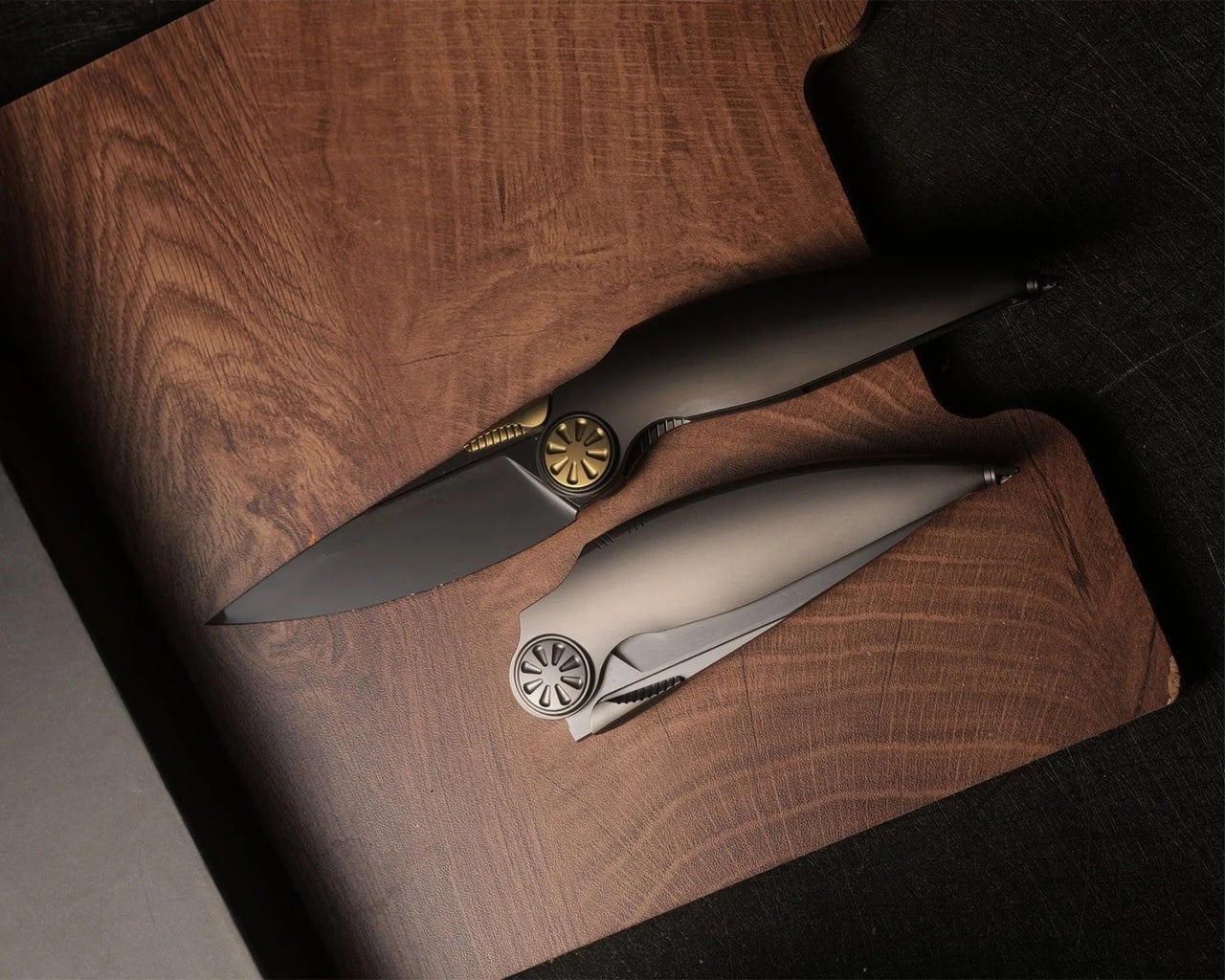
The launch of the Rike Predator knife marks a significant advancement in everyday carry (EDC) knife design. Created by designer Richard Wu, this knife embodies a unique blend of industrial precision and organic aesthetics, challenging traditional notions of knife construction. The Predator distinguishes itself through its innovative use of 6AL4V titanium, a material typically reserved for aerospace applications, which contributes to its lightweight and robust profile.
Innovative Design and Construction
At first glance, the Rike Predator appears to defy conventional manufacturing methods. Wu employs five-axis precision milling to produce curves that evoke organic forms, making the knife seem almost alive. This approach avoids the pitfalls of biomimicry, where designs often mimic specific natural objects. Instead, the Predator’s handle triggers a sense of familiarity without directly referencing any particular biological model. This ambiguity creates a compelling visual tension that sets the knife apart from more conventional designs.
The construction process further enhances this illusion. What begins as a rectangular titanium billet transforms into an elegantly flowing handle devoid of visible screws, seams, or hardware. The knife’s presentation side reveals nothing but unblemished titanium, which suggests that it could have been formed from a single piece of material. This seamless appearance reflects Wu’s confidence in his design, allowing the engineering to remain invisible while still performing efficiently.
A Balance of Functionality and Aesthetics
The Predator’s design philosophy extends to its operational features as well. Wu has ingeniously integrated the frame lock mechanism directly into the handle, eliminating the need for additional components that would disrupt the knife’s fluid form. This innovative approach further blurs the lines between the knife’s various parts, creating a cohesive object that challenges traditional knife assembly norms.
The blade of the Rike Predator is crafted from Böhler M390 steel, a premium material renowned for its exceptional edge retention and corrosion resistance. Measuring 3.74 inches, the drop-point blade is versatile enough for everyday tasks while maintaining a non-intimidating profile. This combination of high-quality materials ensures that the knife is not only aesthetically pleasing but also highly functional.
Wu’s design choices also introduce a striking visual contrast in the two-tone gunmetal variant of the knife. The gold-finished pivot and thumb studs stand out against the dark titanium, creating a dialogue between the components that enhances the overall aesthetic. This deliberate contrast showcases the relationship between materials, allowing users to appreciate both the knife’s design and its functionality.
The Predator invites users into a more engaging interaction with their tool. Unlike many modern knives equipped with assisted opening mechanisms, the Predator requires direct manual participation to deploy the blade. This design choice transforms the act of opening the knife into a deliberate ritual, emphasizing the connection between the user and the tool. It speaks to a demographic that values mindfulness and intentionality in their daily interactions with objects.
Understanding the Value Proposition
With a price tag of $455 for the standard finish and $485 for the darker variant, the Rike Predator demands justification beyond typical branding strategies. The knife’s integral construction, which involves machining from a solid titanium billet, explains a substantial portion of the cost. This process is material-intensive and time-consuming, resulting in significant waste but ultimately yielding a uniquely crafted product.
While the Predator performs admirably as a cutting tool, it does not necessarily outperform less expensive knives in terms of functionality. However, its value lies in its artistic and industrial design. Some buyers may use the Predator for everyday tasks, while others may appreciate it as a sculptural piece, valuing the thought and design innovation behind it.
Ultimately, the Rike Predator appeals to a range of users, from those seeking a reliable EDC tool to collectors who appreciate high-quality craftsmanship. Both groups recognize the significance of owning a knife that embodies a commitment to design excellence and material innovation. As the landscape of knife design continues to evolve, the Rike Predator positions itself as a noteworthy example of what the future of EDC knives may hold.

Fem Tech: A New Frontier in Women’s Health or Corporate Exploitation?

Ottawa Charge Coach Carla MacLeod Reveals Breast Cancer Diagnosis

French Firm Atelier Bois d’ici Launches Family-Friendly Tiny XXL Home

Moss Street Market Faces Disruption from Custodian Shortage

Arms Producers Surge to Record Revenue of $679 Billion in 2024

Surrey Schools Honors 243 Retirees at Celebratory Dinner

Ontario’s Healthcare Faces Crisis: Lessons from UK’s Privatization

Thanksgiving Mass Unites Community in Spirit of Gratitude

Wabanaki Artifacts Spark Innovative Collaboration at UNB

Toyoake City Proposes Daily Two-Hour Smartphone Use Limit

B.C. Review Reveals Urgent Need for Rare-Disease Drug Reforms

Pedestrian Fatally Injured in Esquimalt Collision on August 14

Dark Adventure Game “Bye Sweet Carole” Set for October Release

Jimmy Lai’s Defense Challenges Charges Under National Security Law

Victoria’s Pop-Up Shop Shines Light on B.C.’s Wolf Cull

Konami Revives Iconic Metal Gear Solid Delta Ahead of Release

Apple Expands Self-Service Repair Program to Canada

Snapmaker U1 Color 3D Printer Redefines Speed and Sustainability
-
 Science3 months ago
Toyoake City Proposes Daily Two-Hour Smartphone Use Limit
-
 Health3 months ago
B.C. Review Reveals Urgent Need for Rare-Disease Drug Reforms
-
 Top Stories3 months ago
Pedestrian Fatally Injured in Esquimalt Collision on August 14
-
 Technology3 months ago
Dark Adventure Game “Bye Sweet Carole” Set for October Release
-
 World3 months ago
Jimmy Lai’s Defense Challenges Charges Under National Security Law
-
 Lifestyle3 months ago
Victoria’s Pop-Up Shop Shines Light on B.C.’s Wolf Cull
-
 Technology3 months ago
Konami Revives Iconic Metal Gear Solid Delta Ahead of Release
-
 Technology3 months ago
Apple Expands Self-Service Repair Program to Canada
-
 Technology3 months ago
Snapmaker U1 Color 3D Printer Redefines Speed and Sustainability
-

 Technology3 months ago
AION Folding Knife: Redefining EDC Design with Premium Materials
-

 Technology3 months ago
Solve Today’s Wordle Challenge: Hints and Answer for August 19
-

 Business3 months ago
Gordon Murray Automotive Unveils S1 LM and Le Mans GTR at Monterey