
World
F-35 Outperforms Gripen in 2021 Military Capabilities Assessment

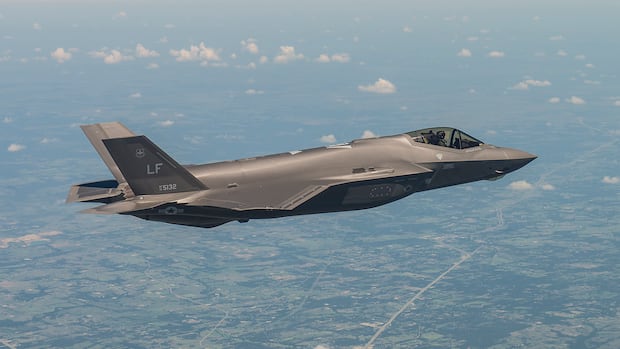
The American-built F-35 fighter jet significantly outperformed its Swedish competitor, the Gripen, in a 2021 military capabilities assessment conducted by the Canadian Department of National Defence (DND). The evaluation, which focused on the jets’ ability to defend North America and succeed in various military missions, revealed that the F-35 achieved a remarkable score of 95 percent, translating to 57.1 points out of 60. In stark contrast, the Gripen-E scored only 33 percent, earning 19.8 points out of 60.
The results indicate a significant gap in scoring, particularly in “mission performance” and the aircraft’s upgrade potential over its operational lifespan. While the DND has not publicly commented on the specific scoring, it confirmed that its review of the F-35 acquisition remains ongoing. These findings, revealed by Radio-Canada, may offer insight into the Canadian government’s decision to proceed with the F-35 purchase, despite previous electoral promises to refrain from it.
David Perry, president of the Canadian Global Affairs Institute, noted that the assessment clearly identifies a “winner by a mile.” He emphasized that the results dispel any ambiguity about the aircraft’s capabilities. Similarly, Justin Massie, a defence expert at the Université du Québec à Montréal, pointed out that the Gripen’s performance was “systematically inferior” to the F-35, raising questions about Canada’s military strategy as it considers purchasing fewer F-35s in favor of Gripens.
The stark difference in capabilities has led some experts to argue that the DND’s findings confirm there is no real competition between the F-35 and the Gripen or other aircraft previously considered for the Canadian contract. Yvan Blondin, a retired lieutenant-general of the Royal Canadian Air Force, emphasized that the F-35 excels in stealth and its ability to integrate information from various military assets. “When you compare them, they’re not even close,” he stated, asserting the F-35’s status as the world’s best fighter jet.
Despite the F-35’s advantages, retired officer Charles “Duff” Sullivan cautioned that the air force’s long-standing preference for the F-35 may have influenced the competition’s criteria. He noted ongoing development delays within the F-35 program, which could impact Canada’s acquisition of promised capabilities.
In 2022, Canada awarded a contract worth over $27 billion for 88 F-35 jets to Lockheed Martin after determining both aircraft met its minimum requirements. However, following the imposition of U.S. President Donald Trump’s trade policies, the Canadian government initiated a review of the F-35 purchase. Mélanie Joly, the Minister of Industry, indicated that the government is considering a switch to the Gripen if Lockheed Martin fails to enhance the contract’s economic benefits for Canada.
The Gripen manufacturer, Saab, expressed disappointment that they had not previously seen the competition’s final scores. Nevertheless, they defended the Gripen as a state-of-the-art aircraft designed for adaptability and rapid upgrades. Marcus Wandt, a Gripen pilot and Saab’s vice-president for technology, argued that the Gripen is easier to maintain, particularly in challenging conditions, and is engineered for relevance over time.
Lockheed Martin has refrained from commenting specifically on the assessment results but maintains that the F-35 remains the best choice for Canada. Currently, Canada has placed a firm order for 16 F-35s, with the potential for a mixed fleet that could include Gripens assembled domestically.
The government’s interest in Saab’s promise to create 10,000 jobs for assembling fighter jets in Canada underscores the ongoing discussions about economic benefits. Lockheed Martin has pledged more than $15 billion in benefits over the life of the contract, emphasizing the job creation and skills development that come with participation in the F-35 program.
Amid ongoing reviews and deliberations, experts like Massie argue that Canada should prioritize evaluating military needs over job creation promises. He stated that the focus should remain on assessing whether a supplementary fleet could effectively address the country’s long-term military requirements. Meanwhile, Blondin suggested that any consideration of a mixed fleet should be a longer-term strategy, particularly as the next generation of combat drones emerges.
As Canada navigates its options, the balance between advancing military capabilities and ensuring economic benefits remains a critical focus in the ongoing discussions surrounding its fighter jet procurement strategy.

Fem Tech: A New Frontier in Women’s Health or Corporate Exploitation?

Ottawa Charge Coach Carla MacLeod Reveals Breast Cancer Diagnosis

French Firm Atelier Bois d’ici Launches Family-Friendly Tiny XXL Home

Moss Street Market Faces Disruption from Custodian Shortage

Arms Producers Surge to Record Revenue of $679 Billion in 2024

Surrey Schools Honors 243 Retirees at Celebratory Dinner

Ontario’s Healthcare Faces Crisis: Lessons from UK’s Privatization

Thanksgiving Mass Unites Community in Spirit of Gratitude

Wabanaki Artifacts Spark Innovative Collaboration at UNB

Toyoake City Proposes Daily Two-Hour Smartphone Use Limit

B.C. Review Reveals Urgent Need for Rare-Disease Drug Reforms

Pedestrian Fatally Injured in Esquimalt Collision on August 14

Dark Adventure Game “Bye Sweet Carole” Set for October Release

Jimmy Lai’s Defense Challenges Charges Under National Security Law

Victoria’s Pop-Up Shop Shines Light on B.C.’s Wolf Cull

Konami Revives Iconic Metal Gear Solid Delta Ahead of Release

Apple Expands Self-Service Repair Program to Canada

Snapmaker U1 Color 3D Printer Redefines Speed and Sustainability
-
 Science3 months ago
Toyoake City Proposes Daily Two-Hour Smartphone Use Limit
-
 Health3 months ago
B.C. Review Reveals Urgent Need for Rare-Disease Drug Reforms
-
 Top Stories3 months ago
Pedestrian Fatally Injured in Esquimalt Collision on August 14
-
 Technology3 months ago
Dark Adventure Game “Bye Sweet Carole” Set for October Release
-
 World3 months ago
Jimmy Lai’s Defense Challenges Charges Under National Security Law
-
 Lifestyle3 months ago
Victoria’s Pop-Up Shop Shines Light on B.C.’s Wolf Cull
-
 Technology3 months ago
Konami Revives Iconic Metal Gear Solid Delta Ahead of Release
-
 Technology3 months ago
Apple Expands Self-Service Repair Program to Canada
-
 Technology3 months ago
Snapmaker U1 Color 3D Printer Redefines Speed and Sustainability
-

 Technology3 months ago
AION Folding Knife: Redefining EDC Design with Premium Materials
-

 Technology3 months ago
Solve Today’s Wordle Challenge: Hints and Answer for August 19
-

 Business3 months ago
Gordon Murray Automotive Unveils S1 LM and Le Mans GTR at Monterey