
World
Rafah Border Crossing Reopens Amid Confusion and Delays

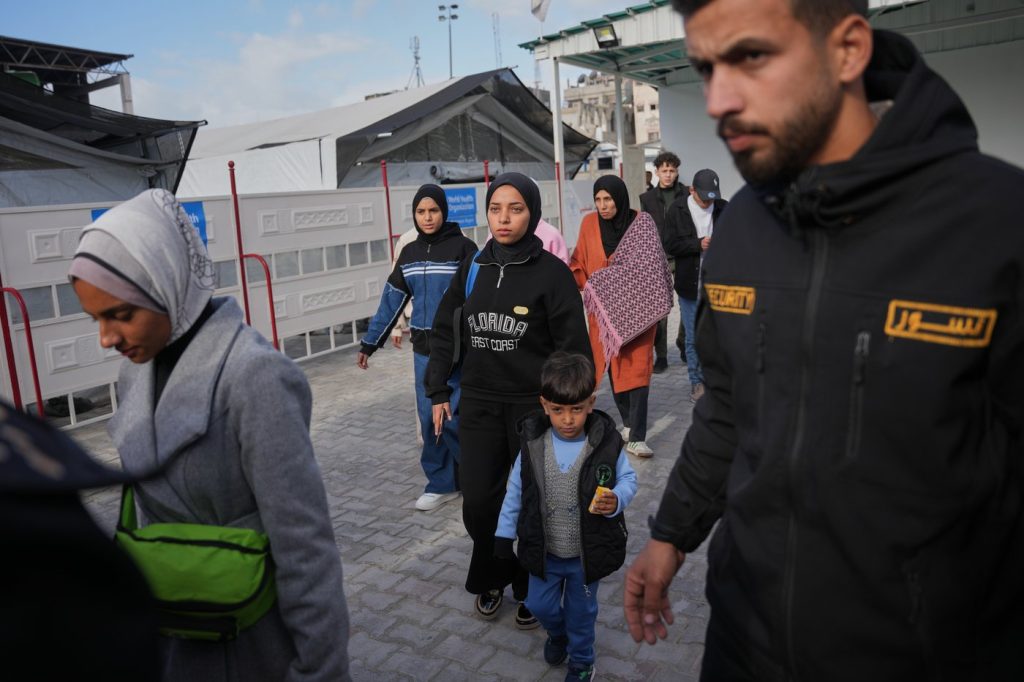
The Rafah border crossing between the Gaza Strip and Egypt reopened this week, providing a crucial connection after years of conflict. Palestinian officials described the reopening as a “window of hope,” particularly as a fragile ceasefire deal progresses. However, despite initial optimism, the reality at the crossing has been marred by disagreements over entry criteria, significant delays, and troubling reports from travelers regarding their treatment by Israeli soldiers.
Since the reopening, only a limited number of people have successfully crossed in both directions. According to negotiated restrictions involving Israeli, Egyptian, Palestinian, and international officials, a mere 50 individuals were permitted to return to Gaza each day, along with 50 medical patients and their companions. In the first four days of operations, only 36 medical patients left for Egypt, accompanied by 62 companions, as reported by the United Nations. This stands in stark contrast to the nearly 20,000 individuals in Gaza seeking urgent medical care unavailable in the territory, highlighting the dire situation.
Challenges and Reports of Mistreatment
The Rafah crossing serves as Gaza’s only link to the outside world not under Israeli control. It was seized by Israel in May 2024, and restrictions on traffic were already severe prior to its recent reopening. Several women returning to Gaza recounted their experiences involving harsh treatment from both Israeli authorities and an Israeli-backed armed group, known as Abu Shabab.
Rana al-Louh, who returned after fleeing to Egypt with her wounded sister, described a grueling interrogation process that lasted over six hours. She alleged that she was blindfolded and handcuffed while being questioned about her reasons for returning. “I told them I returned to Palestine because my husband and kids are there,” al-Louh stated, recounting that Israeli interrogators claimed Gaza belonged to Israel and warned of the potential for renewed conflict. In response to these allegations, Israel’s military denied any incidents of mistreatment or improper conduct by security forces.
The extended questioning process delayed al-Louh’s return until nearly 02:00 on Thursday, creating significant backlogs. U.N. human rights officials later highlighted a “consistent pattern of ill-treatment, abuse, and humiliation” by Israeli military forces. Ajith Sunghay, the U.N. human rights chief for the occupied Palestinian territories, remarked, “After two years of utter devastation, being able to return to their families and what remains of their homes in safety and dignity is the bare minimum.”
Operational Issues and Delays
Officials involved in negotiating the Rafah reopening acknowledged that the initial phase of operations would serve as a pilot program. If successful, the number of permitted crossings could increase. However, challenges quickly emerged. On the first day of reopening, Israeli officials reported approving 71 patients and companions to leave Gaza while allowing 46 Palestinians to enter. Despite this, the World Health Organization could arrange transportation for only 12 people that day, forcing many patients to remain behind.
Israeli authorities stipulated that no Palestinians could enter Gaza until all departures were finalized. This led to a situation where only 12 individuals were allowed to cross back into Gaza, requiring others to wait overnight on the Egyptian side of the border. Subsequent days saw slight improvements, with 40 individuals crossing in and out each day, but delays continued as returning travelers often brought excess baggage or prohibited items, complicating the process further.
The situation at the Rafah crossing remains fluid, and while some individuals expressed gratitude for the opportunity to return home, the journey has been fraught with challenges. Siham Omran, who had been away from her family for 20 months, described her return as “a journey of suffering.” She expressed relief at finally being back, stating, “Thank God we have returned to our country, our homes, and our homeland.”
The complexities surrounding the Rafah border crossing illustrate the ongoing humanitarian crisis in the Gaza Strip and the significant obstacles that remain for those seeking to access essential services and reunite with their families.

Marcus Lewis Outlines Bold Plans for U.S. House Campaign

DeKalb County Community Foundation Appoints Kyle White as Manager

Scientists Harness Carrot Waste to Cultivate Sustainable Fungi Protein

British Columbia Paramedics Prepare for Potential Job Action

Innovative DAP-1 Digital Music Player Reimagines Audio Experience

Sentencing Delayed for Sex Offender as Heritage Claims Examined

Rafah Border Crossing Reopens Amid Confusion and Delays

Engaging February Events for All Ages at Plano Public Library

Elk Valley Resources Invests $250,000 in Bummers Flats Restoration

Toyoake City Proposes Daily Two-Hour Smartphone Use Limit

Pedestrian Fatally Injured in Esquimalt Collision on August 14

Dark Adventure Game “Bye Sweet Carole” Set for October Release

B.C. Review Reveals Urgent Need for Rare-Disease Drug Reforms

Victoria’s Pop-Up Shop Shines Light on B.C.’s Wolf Cull

Jimmy Lai’s Defense Challenges Charges Under National Security Law

Konami Revives Iconic Metal Gear Solid Delta Ahead of Release

Snapmaker U1 Color 3D Printer Redefines Speed and Sustainability

Apple Expands Self-Service Repair Program to Canada
-
 Science6 months ago
Toyoake City Proposes Daily Two-Hour Smartphone Use Limit
-
 Top Stories6 months ago
Pedestrian Fatally Injured in Esquimalt Collision on August 14
-
 Technology6 months ago
Dark Adventure Game “Bye Sweet Carole” Set for October Release
-
 Health6 months ago
B.C. Review Reveals Urgent Need for Rare-Disease Drug Reforms
-
 Lifestyle6 months ago
Victoria’s Pop-Up Shop Shines Light on B.C.’s Wolf Cull
-
 World6 months ago
Jimmy Lai’s Defense Challenges Charges Under National Security Law
-
 Technology6 months ago
Konami Revives Iconic Metal Gear Solid Delta Ahead of Release
-
 Technology6 months ago
Snapmaker U1 Color 3D Printer Redefines Speed and Sustainability
-
 Technology6 months ago
Apple Expands Self-Service Repair Program to Canada
-

 Technology6 months ago
AION Folding Knife: Redefining EDC Design with Premium Materials
-

 Technology6 months ago
Solve Today’s Wordle Challenge: Hints and Answer for August 19
-

 Business6 months ago
Gordon Murray Automotive Unveils S1 LM and Le Mans GTR at Monterey