
Technology
Sony Launches Alpha 7 V with Integrated AI for Enhanced Imaging

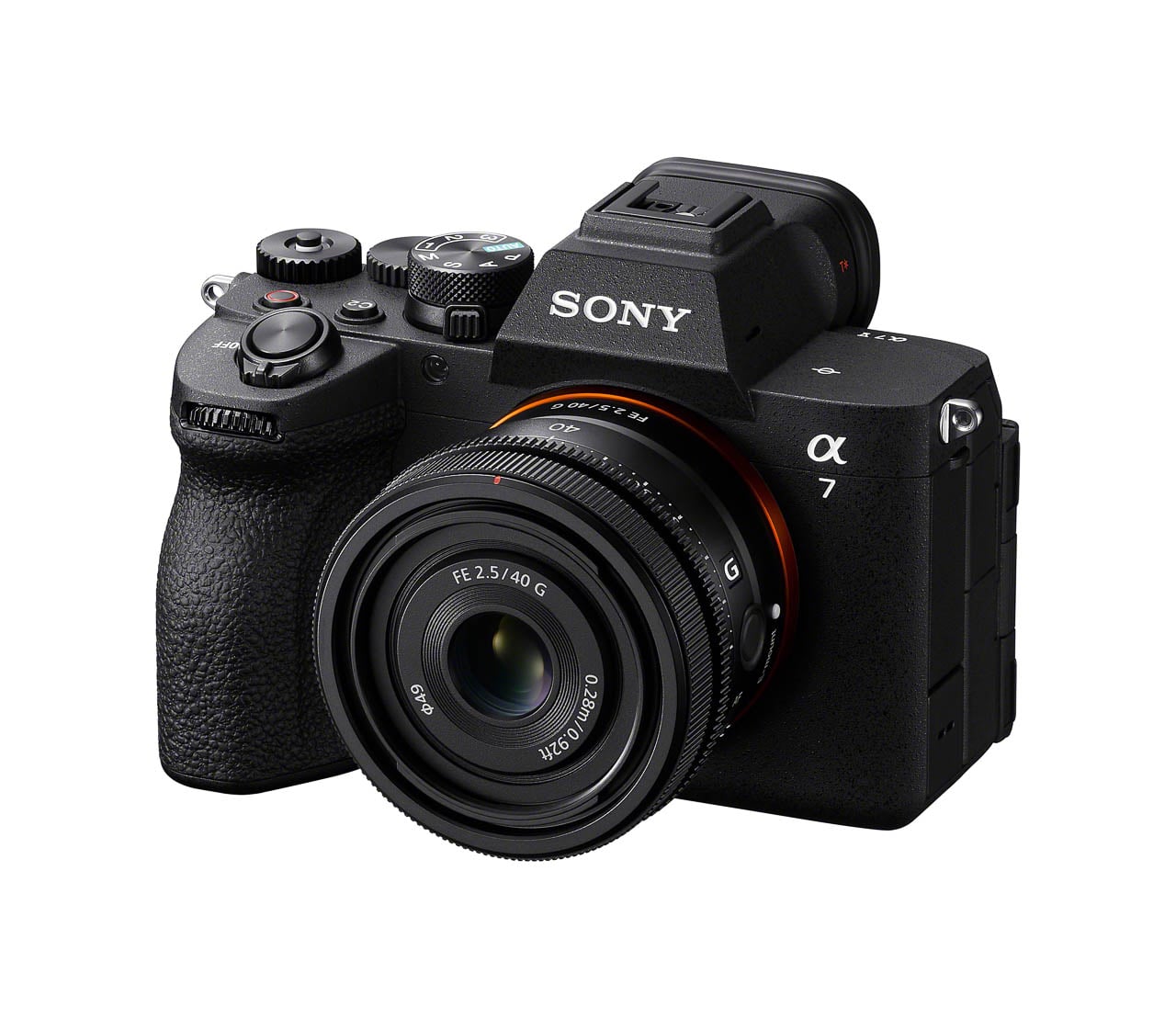
Sony has unveiled the Alpha 7 V, a significant advancement in its line of full-frame mirrorless cameras, integrating artificial intelligence directly into its imaging engine. This fifth-generation model, which is set to launch in December 2025, represents a pivotal shift in performance and capability, as the AI processing unit is now embedded within the BIONZ XR2 imaging engine. This integration allows for enhanced functionality across various imaging tasks, including autofocus, subject recognition, and video performance.
The Alpha 7 V (model ILCE-7M5) features a new partially stacked Exmor RS CMOS sensor, delivering approximately 33 megapixels. Notably, the sensor’s readout speed is 4.5 times faster than its predecessor, the Alpha 7 IV. This rapid readout significantly minimizes rolling shutter distortion during quick movements and enables blackout-free continuous shooting at speeds of up to 30 frames per second, all while maintaining full autofocus and auto-exposure tracking. The camera also supports 14-bit RAW capture at this speed without sacrificing autofocus performance.
Innovative Features and Enhanced Performance
One of the standout features of the Alpha 7 V is the newly developed Pre-Capture function. This innovative capability records up to one second of footage before the shutter is pressed, allowing photographers to capture unpredictable moments with ease. It is particularly useful for capturing dynamic subjects such as pets, children, or sports action. In still image mode, the camera achieves an impressive 16 stops of dynamic range using the mechanical shutter, ensuring detailed tonal reproduction across highlights and shadows.
The Real-time Recognition AF system has received significant upgrades, now capable of identifying a wide range of subjects, including humans, animals, and vehicles. Sony claims a 30% improvement in eye recognition performance compared to the Alpha 7 IV, based on internal testing. With 759 phase-detection points covering 94% of the frame, the autofocus system excels in low-light conditions, functioning down to an exposure value of -4.0.
Additionally, the camera’s color science has been enhanced with AI-driven Auto White Balance, which utilizes deep learning technologies to accurately estimate light sources and adjust color tones accordingly. This feature aims to streamline the post-production process for photographers who often work in varying lighting conditions.
Video capabilities have also expanded significantly with the Alpha 7 V. It introduces 7K oversampled 4K recording at 60 frames per second in full-frame mode, as well as 4K recording at 120 frames per second in APS-C/Super 35mm mode. This full pixel readout ensures high detail in video footage, while the Dynamic Active Mode offers stabilization for handheld shooting. The camera also includes an Auto Framing function that helps maintain optimal subject composition during recording.
Enhanced Usability and Sustainability Initiatives
The Alpha 7 V includes several user-friendly enhancements, such as compatibility with Wi-Fi 6E, dual USB Type-C ports, and a versatile 4-axis multi-angle monitor. The improved grip and adjustable electronic shutter sound contribute to a more comfortable shooting experience. Battery life is rated at approximately 630 shots based on CIPA standards, with a Monitor Low Bright mode for extended use. Thermal management capabilities support extended 4K recording times, approximating 90 minutes at 25°C and 60 minutes at 40°C.
In conjunction with the camera launch, Sony introduced the FE 28-70mm f/3.5-5.6 OSS II lens, designed to complement the Alpha 7 V’s advanced features. This lens supports up to 120 frames per second autofocus and exposure tracking, and continuous shooting at up to 30 frames per second. It addresses previous criticisms regarding sharpness and autofocus speed while maintaining a lightweight profile.
Sony’s commitment to sustainability is reflected in its Road to Zero initiative. Manufacturing facilities for imaging products operate entirely on renewable energy, and the packaging incorporates sustainable materials, including bamboo and post-consumer recycled paper.
The Alpha 7 V body is expected to retail for approximately $2,899 USD (or $3,699 CAD), with the kit including the SEL28702 lens available in February 2026 for around $3,099 USD (or $3,899 CAD). The lens can be purchased separately for approximately $449 USD (or $599 CADSony and authorized dealers across North America.

Sony Launches Alpha 7 V with Integrated AI for Enhanced Imaging

B.C. Implements New Gambling Regulations to Combat Money Laundering

Mark Carney Faces Pressure Amid Growing Job Losses in Canada

Higher Education Leaders Address AI, Funding Challenges at Annual Event

Britannia Mining Solutions Completes Go-Public Transaction

Saskatoon Food Bank Launches Annual Campaign with Generous Support

Profusa Innovates Real-Time Health Monitoring Ahead of 2026

B.C. Implements Witnessed Dosing for Safer Supply Program

Leaked Images Showcase Design of Nubia’s Upcoming Foldables

Toyoake City Proposes Daily Two-Hour Smartphone Use Limit

B.C. Review Reveals Urgent Need for Rare-Disease Drug Reforms

Pedestrian Fatally Injured in Esquimalt Collision on August 14

Dark Adventure Game “Bye Sweet Carole” Set for October Release

Jimmy Lai’s Defense Challenges Charges Under National Security Law

Victoria’s Pop-Up Shop Shines Light on B.C.’s Wolf Cull

Konami Revives Iconic Metal Gear Solid Delta Ahead of Release

Apple Expands Self-Service Repair Program to Canada

Snapmaker U1 Color 3D Printer Redefines Speed and Sustainability
-
 Science3 months ago
Toyoake City Proposes Daily Two-Hour Smartphone Use Limit
-
 Health4 months ago
B.C. Review Reveals Urgent Need for Rare-Disease Drug Reforms
-
 Top Stories4 months ago
Pedestrian Fatally Injured in Esquimalt Collision on August 14
-
 Technology3 months ago
Dark Adventure Game “Bye Sweet Carole” Set for October Release
-
 World3 months ago
Jimmy Lai’s Defense Challenges Charges Under National Security Law
-
 Lifestyle4 months ago
Victoria’s Pop-Up Shop Shines Light on B.C.’s Wolf Cull
-
 Technology4 months ago
Konami Revives Iconic Metal Gear Solid Delta Ahead of Release
-
 Technology4 months ago
Apple Expands Self-Service Repair Program to Canada
-
 Technology3 months ago
Snapmaker U1 Color 3D Printer Redefines Speed and Sustainability
-

 Technology3 months ago
AION Folding Knife: Redefining EDC Design with Premium Materials
-

 Technology4 months ago
Solve Today’s Wordle Challenge: Hints and Answer for August 19
-

 Business4 months ago
Gordon Murray Automotive Unveils S1 LM and Le Mans GTR at Monterey