
World
RCMP Limits Use of Chinese-Made Drones Over Security Concerns

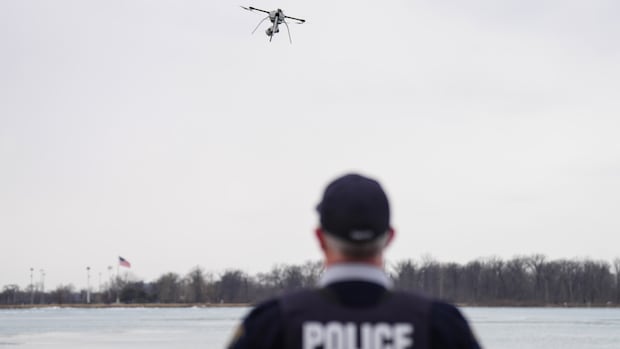
The Royal Canadian Mounted Police (RCMP) has announced a restriction on the use of its fleet of 973 Chinese-made drones, limiting them to non-sensitive operations due to significant security risks. These drones account for approximately 80 percent of the RCMP’s total of 1,230 remotely piloted aircraft systems (RPAS). The decision stems from concerns regarding the drones’ communication and data-transmission systems, which experts indicate may be vulnerable to security breaches.
In a written response to the national security committee of the Senate, the RCMP emphasized that replacing these drones would incur costs exceeding $30 million, with each device valued at about $35,000. The high costs are attributed to the fact that alternatives manufactured outside China are nearly twice as expensive.
Security Concerns Prompt Operational Changes
Experts have raised alarms over the potential risks associated with the RCMP’s reliance on Chinese drones. “Any connected device raises questions about security vulnerabilities,” noted Ygal Bendavid, a professor specialized in operations management at the Université du Québec à Montréal.
In light of these risks, the RCMP has decided to restrict the drones’ in-flight data transmission and dedicate them to operations such as community policing, missing persons investigations, and car thefts. The RCMP has clarified that these drones will not be used for high-stakes operations, including those involving emergency response teams, the protection of dignitaries, and border integrity initiatives, which are managed using 112 drones from France, 96 from the United States, and 24 from Belgium.
Despite the restrictions, the RCMP maintains that the Chinese drones provide significant benefits in terms of cost and efficiency, particularly when compared to traditional aircraft. “The use of RPAS is a cost-effective alternative to deploying a helicopter or fixed-wing aircraft for investigative operations,” the RCMP stated.
Future Considerations for Drone Purchases
The RCMP has indicated that these Chinese drones were acquired prior to the 2023 restrictions on their use. Looking ahead, experts like Wesley Wark from the Centre for International Governance Innovation suggest that the RCMP should take a more strategic approach in future drone acquisitions. Wark remarked that the current situation underscores a need for centralized procurement of drones intended for security purposes, along with rigorous security vulnerability assessments.
“The concern is legitimate, and as a precautionary measure, they have to be careful,” stated Bendavid, highlighting the complexity of verifying the origin of various components in drones. He emphasized the importance of prioritizing Canadian manufacturers and supply chains in future purchases.
As the RCMP navigates this evolving landscape, the implications of its drone policy will be closely monitored, particularly in the context of Canada’s broader relationship with China. The ongoing scrutiny of these security measures reflects a growing awareness of the potential risks involved in using foreign-made technology for critical national operations.

Meta Plans Major Layoffs as AI Costs Surge

Alberta’s Referendum Could Pave Way for U.S. Statehood

Minooka District 201 Plans Enhanced Bilingual Support for Students

Canmore Approves Multiple Development Permits for New Projects

Remembering Bradly Castillo Shearsmith: A Life of Friendship and Joy

BIS Urges Watchdogs to Integrate Synthetic Risk Transfers in Stress Tests

Teva Transforms: Shifting Focus from Generics to Branded Success

Apple Launches AirPods Max 2 with Enhanced Audio Features

Ontario Ends Funding for Seven Supervised Injection Sites

Toyoake City Proposes Daily Two-Hour Smartphone Use Limit

Pedestrian Fatally Injured in Esquimalt Collision on August 14

B.C. Review Reveals Urgent Need for Rare-Disease Drug Reforms

Dark Adventure Game “Bye Sweet Carole” Set for October Release

Konami Revives Iconic Metal Gear Solid Delta Ahead of Release

Victoria’s Pop-Up Shop Shines Light on B.C.’s Wolf Cull

Jimmy Lai’s Defense Challenges Charges Under National Security Law

Snapmaker U1 Color 3D Printer Redefines Speed and Sustainability

Apple Expands Self-Service Repair Program to Canada
-
 Science12 months ago
Toyoake City Proposes Daily Two-Hour Smartphone Use Limit
-
 Top Stories12 months ago
Pedestrian Fatally Injured in Esquimalt Collision on August 14
-
 Health12 months ago
B.C. Review Reveals Urgent Need for Rare-Disease Drug Reforms
-
 Technology12 months ago
Dark Adventure Game “Bye Sweet Carole” Set for October Release
-
 Technology12 months ago
Konami Revives Iconic Metal Gear Solid Delta Ahead of Release
-
 Lifestyle12 months ago
Victoria’s Pop-Up Shop Shines Light on B.C.’s Wolf Cull
-
 World12 months ago
Jimmy Lai’s Defense Challenges Charges Under National Security Law
-
 Technology12 months ago
Snapmaker U1 Color 3D Printer Redefines Speed and Sustainability
-
 Technology12 months ago
Apple Expands Self-Service Repair Program to Canada
-

 Technology12 months ago
AION Folding Knife: Redefining EDC Design with Premium Materials
-

 Technology12 months ago
Solve Today’s Wordle Challenge: Hints and Answer for August 19
-

 Business12 months ago
Gordon Murray Automotive Unveils S1 LM and Le Mans GTR at Monterey