
Science
Armenia Confronts Russian Disinformation Ahead of June Elections

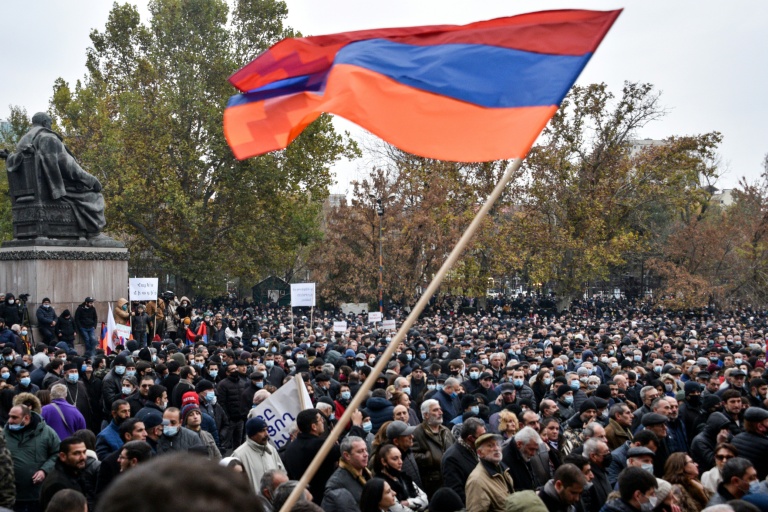
Armenia is grappling with a surge of disinformation as it approaches parliamentary elections scheduled for June 2024. Officials have indicated that these hybrid attacks are largely attributed to Russia, coinciding with Yerevan’s efforts to pivot its foreign policy towards the West while seeking to restore relations with Azerbaijan. This shift follows Armenia’s recent conflicts over the contested Karabakh region, where it has faced significant military setbacks.
The ongoing war in Ukraine has strained Russia’s influence in the region, raising concerns among former Soviet states. Armenia, despite being a formal ally of Russia, has suspended its participation in the Collective Security Treaty Organisation, citing Moscow’s failure to assist during the recent Azerbaijan conflict. Political analysts predict that Prime Minister Nikol Pashinyan‘s party will likely secure a majority in the upcoming elections, even as his pro-Western stance has drawn the ire of Moscow.
Armenia’s foreign intelligence service reported last month that “large-scale malign information operations by external actors” are currently underway. These operations reportedly involve spreading false information and conspiracy theories aimed at influencing voter behavior. The report emphasized that these activities are often orchestrated by foreign state entities, although it did not specify which countries are involved.
Analysts like independent expert Benjamin Matevosyan have noted that Russia’s dissatisfaction with Armenia stems from what it perceives as Pashinyan’s alignment with Western interests, which Moscow views as an anti-Russian initiative. Gegham Vardanyan, from the Media Initiatives Center, observed that the intensity of hybrid information warfare has escalated alongside Armenia’s changing relations with Russia.
Disinformation Tactics and Cultural Ties
Armenia’s intelligence services have highlighted that disinformation efforts aim to undermine peace prospects with Azerbaijan, particularly following a peace agreement initiated last year under the mediation of former US President Donald Trump. While Armenia has sought to distance itself from Russian influence, significant cultural, linguistic, and economic ties remain. Russian state media channels continue to operate within Armenia, alongside outlets like Sputnik that promote Kremlin narratives.
Vardanyan pointed out that disinformation campaigns often utilize “clone sites,” which mimic reputable Western media outlets. For instance, a fabricated French-language website falsely claimed that Paris was dispatching nuclear waste to Armenia. Another misleading site, designed to resemble the credible outlet “Info du jour,” propagated false reports about Pashinyan purchasing an extravagant property in France. Additionally, articles have emerged from Russian and Azerbaijani platforms alleging that officials from the EU monitoring mission in Armenia were spies.
The overarching message in these social media narratives is clear: collaboration with the West is portrayed as a threat to Armenia.
Government Response and External Support
The disinformation wave has provoked strong reactions from government officials. Ararat Mirzoyan, Armenia’s Foreign Minister, emphasized the need to acknowledge the creativity and financial backing of those spreading disinformation. He warned that the challenges posed by these malign actors are likely to escalate as elections draw near, stressing the delicate balance between protecting press freedom and countering disinformation.
While Russia is prominently identified as a source of disinformation, Vardanyan noted that Azerbaijan and its ally Turkey are also implicated in these information attacks. In response to the growing threat, the European Union has allocated €15 million (approximately $17.7 million) to assist Armenia in combating disinformation. Nevertheless, media expert Samvel Martirosyan cautioned that external support could also be exploited by disinformation actors, complicating the situation further.
Armenia finds itself navigating a complex landscape of hybrid warfare, where both external and internal factors contribute to the challenges it faces. As the June elections approach, the struggle against disinformation remains critical, shaping not only the political landscape but also the future of Armenia’s foreign policy.

Meta Plans Major Layoffs as AI Costs Surge

Alberta’s Referendum Could Pave Way for U.S. Statehood

Minooka District 201 Plans Enhanced Bilingual Support for Students

Canmore Approves Multiple Development Permits for New Projects

Remembering Bradly Castillo Shearsmith: A Life of Friendship and Joy

BIS Urges Watchdogs to Integrate Synthetic Risk Transfers in Stress Tests

Teva Transforms: Shifting Focus from Generics to Branded Success

Apple Launches AirPods Max 2 with Enhanced Audio Features

Ontario Ends Funding for Seven Supervised Injection Sites

Toyoake City Proposes Daily Two-Hour Smartphone Use Limit

Pedestrian Fatally Injured in Esquimalt Collision on August 14

B.C. Review Reveals Urgent Need for Rare-Disease Drug Reforms

Dark Adventure Game “Bye Sweet Carole” Set for October Release

Konami Revives Iconic Metal Gear Solid Delta Ahead of Release

Victoria’s Pop-Up Shop Shines Light on B.C.’s Wolf Cull

Jimmy Lai’s Defense Challenges Charges Under National Security Law

Snapmaker U1 Color 3D Printer Redefines Speed and Sustainability

Apple Expands Self-Service Repair Program to Canada
-
 Science11 months ago
Toyoake City Proposes Daily Two-Hour Smartphone Use Limit
-
 Top Stories11 months ago
Pedestrian Fatally Injured in Esquimalt Collision on August 14
-
 Health11 months ago
B.C. Review Reveals Urgent Need for Rare-Disease Drug Reforms
-
 Technology11 months ago
Dark Adventure Game “Bye Sweet Carole” Set for October Release
-
 Technology11 months ago
Konami Revives Iconic Metal Gear Solid Delta Ahead of Release
-
 Lifestyle11 months ago
Victoria’s Pop-Up Shop Shines Light on B.C.’s Wolf Cull
-
 World11 months ago
Jimmy Lai’s Defense Challenges Charges Under National Security Law
-
 Technology11 months ago
Snapmaker U1 Color 3D Printer Redefines Speed and Sustainability
-
 Technology11 months ago
Apple Expands Self-Service Repair Program to Canada
-

 Technology11 months ago
AION Folding Knife: Redefining EDC Design with Premium Materials
-

 Technology11 months ago
Solve Today’s Wordle Challenge: Hints and Answer for August 19
-

 Business11 months ago
Gordon Murray Automotive Unveils S1 LM and Le Mans GTR at Monterey