
World
U.S. and Russia Restart Military Dialogue Amid Ongoing Ukraine Conflict

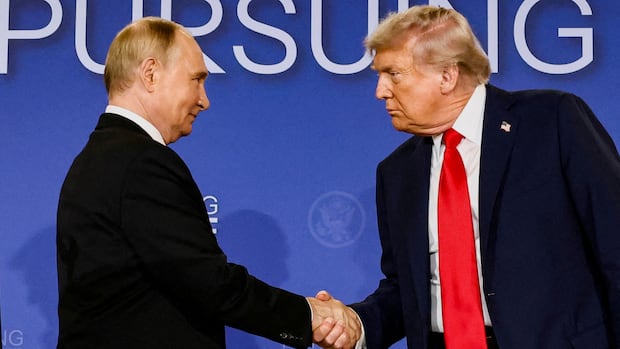
The United States and Russia have agreed to re-establish high-level military-to-military dialogue, a significant step following discussions in Abu Dhabi between senior military officials from both nations. This agreement was confirmed by the United States European Command on February 1, 2025, and comes after meetings involving Gen. Alexus Grynkewich, the commander of U.S. European Command and NATO’s supreme allied commander in Europe.
The resumption of military communication channels, which were suspended in 2021 prior to Russia’s full-scale invasion of Ukraine, aims to provide consistent military dialogue as the involved parties work towards a durable peace. The announcement follows two days of intense negotiations in the capital of the United Arab Emirates, where U.S., Russian, and Ukrainian officials convened to discuss the ongoing conflict.
As discussions progressed, Russia maintained its aggressive stance, increasing attacks on Ukraine’s power infrastructure, which has been a tactic to undermine civilian morale. According to reports, fighting continues along a front line that stretches approximately 1,000 kilometers through eastern and southern Ukraine.
Ukrainian President Volodymyr Zelenskyy revealed in a recent interview that approximately 55,000 Ukrainian troops have died since the onset of the invasion nearly four years ago. He emphasized the necessity for security guarantees from the U.S. and European nations to prevent future Russian aggression, asserting that Ukrainians must feel genuine progress towards peace rather than a scenario where Russia exploits the situation.
Zelenskyy’s remarks came during a period when casualties in Ukraine have surged. The advocacy group Human Rights Watch reported a staggering 31 percent increase in civilian casualties in 2024 compared to the previous year, underscoring the urgent need for effective peace negotiations. The UN Human Rights Monitoring Mission has documented that almost 15,000 Ukrainian civilians have lost their lives and over 40,000 have been injured since the conflict began.
In the backdrop of these discussions, U.S. special envoy Steve Witkoff and U.S. President Donald Trump‘s son-in-law Jared Kushner participated in the talks, further highlighting the international dimension of the negotiations. The presence of such high-profile figures indicates the escalating efforts by the Trump administration to facilitate a resolution between Moscow and Kyiv.
Despite these diplomatic efforts, the situation remains tense. Russian drone strikes continue to pose a significant threat, with recent attacks injuring civilians in Kyiv. Local authorities reported that overnight, Russia launched 183 drones and two ballistic missiles at Ukraine, while Ukrainian air defenses successfully intercepted 95 drones across various regions, including Crimea, which Russia annexed in 2016.
As the discussions in Abu Dhabi unfold, the focus remains on achieving a sustainable resolution to the conflict. Zelenskyy has reiterated the importance of ensuring that any agreements reached do not leave Ukraine vulnerable to further Russian advances. The outcome of these talks could have profound implications not only for Ukraine but for the broader geopolitical landscape in the region.

Meta Plans Major Layoffs as AI Costs Surge

Alberta’s Referendum Could Pave Way for U.S. Statehood

Minooka District 201 Plans Enhanced Bilingual Support for Students

Canmore Approves Multiple Development Permits for New Projects

Remembering Bradly Castillo Shearsmith: A Life of Friendship and Joy

BIS Urges Watchdogs to Integrate Synthetic Risk Transfers in Stress Tests

Teva Transforms: Shifting Focus from Generics to Branded Success

Apple Launches AirPods Max 2 with Enhanced Audio Features

Ontario Ends Funding for Seven Supervised Injection Sites

Toyoake City Proposes Daily Two-Hour Smartphone Use Limit

Pedestrian Fatally Injured in Esquimalt Collision on August 14

B.C. Review Reveals Urgent Need for Rare-Disease Drug Reforms

Dark Adventure Game “Bye Sweet Carole” Set for October Release

Konami Revives Iconic Metal Gear Solid Delta Ahead of Release

Victoria’s Pop-Up Shop Shines Light on B.C.’s Wolf Cull

Jimmy Lai’s Defense Challenges Charges Under National Security Law

Snapmaker U1 Color 3D Printer Redefines Speed and Sustainability

Apple Expands Self-Service Repair Program to Canada
-
 Science1 year ago
Toyoake City Proposes Daily Two-Hour Smartphone Use Limit
-
 Top Stories1 year ago
Pedestrian Fatally Injured in Esquimalt Collision on August 14
-
 Health1 year ago
B.C. Review Reveals Urgent Need for Rare-Disease Drug Reforms
-
 Technology1 year ago
Dark Adventure Game “Bye Sweet Carole” Set for October Release
-
 Technology1 year ago
Konami Revives Iconic Metal Gear Solid Delta Ahead of Release
-
 Lifestyle1 year ago
Victoria’s Pop-Up Shop Shines Light on B.C.’s Wolf Cull
-
 World1 year ago
Jimmy Lai’s Defense Challenges Charges Under National Security Law
-
 Technology1 year ago
Snapmaker U1 Color 3D Printer Redefines Speed and Sustainability
-
 Technology1 year ago
Apple Expands Self-Service Repair Program to Canada
-

 Technology1 year ago
AION Folding Knife: Redefining EDC Design with Premium Materials
-

 Technology1 year ago
Solve Today’s Wordle Challenge: Hints and Answer for August 19
-

 Business1 year ago
Gordon Murray Automotive Unveils S1 LM and Le Mans GTR at Monterey