
Business
Trump Administration Moves to Revoke Biden’s Fuel Economy Standards

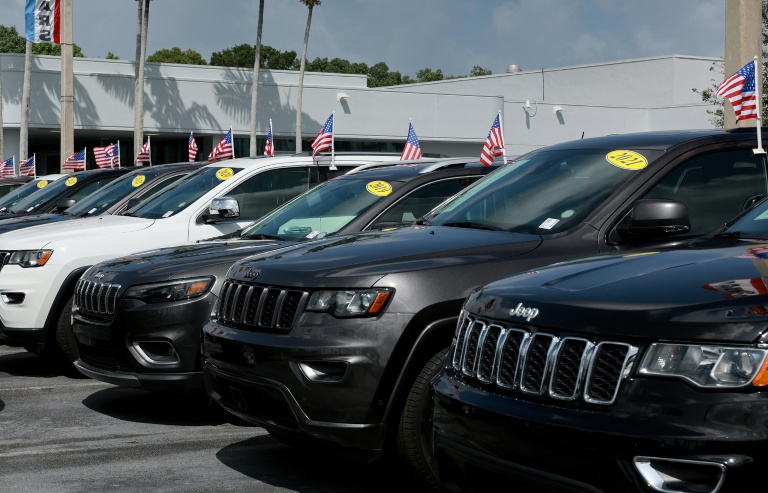
President Donald Trump is set to announce a significant rollback of the fuel economy standards established by his predecessor, Joe Biden. This decision aims to lower vehicle prices, a senior official indicated on March 15, 2024, during a press briefing. The announcement will take place in the Oval Office, where Trump will be joined by executives from major automakers, including Ford, Stellantis, and General Motors. Their presence underscores the importance of industry support for this policy shift.
The White House has stated that Biden’s regulations would have increased the cost of new vehicles by approximately $1,000. Trump’s administration claims that reversing these standards could potentially save American consumers $109 billion. This rollback primarily pertains to the Corporate Average Fuel Economy (CAFE) standards, which have been in place since 1975, following the Arab oil embargo. These regulations dictate the fuel efficiency requirements for vehicles sold in the United States.
While the full details of the rollback are not yet available, the Trump administration has consistently expressed its opposition to the efficiency targets set by Biden. Under Biden’s plan, fuel efficiency was expected to rise by eight percent annually for the model years 2024 and 2025, and by ten percent for 2026, ultimately aiming for over 50 miles per gallon by 2031. In a proposed rule issued in June 2023, the Trump administration argued that the previous administration had incorrectly included electric and hybrid vehicles in its calculations, asserting that the standards would be unrealistic for gasoline-powered vehicles.
Trump has been vocal against what he describes as an electric vehicle (EV) “mandate.” Concurrently, congressional Republicans have moved to eliminate clean energy tax credits in recent legislation, as well as challenge California’s authority to set its own vehicle emissions standards.
Ford CEO Jim Farley expressed support for Trump’s leadership, stating, “As America’s largest auto producer, we appreciate President Trump’s leadership in aligning fuel economy standards with market realities. We can make real progress on carbon emissions and energy efficiency while still giving customers choice and affordability. This is a win for customers and common sense.”
Conversely, Gina McCarthy, a former senior official in the Biden and Obama administrations, criticized the impending changes. She warned that this rollback would hinder the auto industry’s transition to electric vehicles and exacerbate climate change. “If there’s one thing you can count on, it’s that this administration will never act in the best interest of our health or the environment,” she stated. “The rest of the world will continue to innovate and create cleaner cars that people want to buy and drive, while we’re forced to sit in our clunkers, paying more for gas, and pumping out more tailpipe emissions.”
As this announcement unfolds, it will likely generate significant discussion on both economic implications and environmental consequences. The auto industry’s response to these changes will be closely monitored as the shift in policy could reshape the landscape of vehicle production and consumer choices in the coming years.

Three Officers Injured in Gunfire Exchange with Suspect in Omaha

Stay Alert in Meetings: Expert Tips to Combat Sleepiness

Hamm Institute Welcomes Mark P. Mills as Distinguished Fellow

Dimmick School Third Graders Launch ‘Small School, Big Hearts’ Toy Drive

Quantum Computing Breakthrough Promises Faster Drug Development

Nurses Warn of More Manitoba Health Centres Facing Grey-Listing

Algoma Steel’s Planned Layoffs Confirmed by CEO Amid $500M Loan

Palestinian Women Enrich Book Club Amid Ongoing Conflict

Bank of Canada to Announce Final Interest Rate Update for 2025

Toyoake City Proposes Daily Two-Hour Smartphone Use Limit

B.C. Review Reveals Urgent Need for Rare-Disease Drug Reforms

Pedestrian Fatally Injured in Esquimalt Collision on August 14

Dark Adventure Game “Bye Sweet Carole” Set for October Release

Jimmy Lai’s Defense Challenges Charges Under National Security Law

Victoria’s Pop-Up Shop Shines Light on B.C.’s Wolf Cull

Konami Revives Iconic Metal Gear Solid Delta Ahead of Release

Apple Expands Self-Service Repair Program to Canada

Snapmaker U1 Color 3D Printer Redefines Speed and Sustainability
-
 Science3 months ago
Toyoake City Proposes Daily Two-Hour Smartphone Use Limit
-
 Health4 months ago
B.C. Review Reveals Urgent Need for Rare-Disease Drug Reforms
-
 Top Stories4 months ago
Pedestrian Fatally Injured in Esquimalt Collision on August 14
-
 Technology3 months ago
Dark Adventure Game “Bye Sweet Carole” Set for October Release
-
 World3 months ago
Jimmy Lai’s Defense Challenges Charges Under National Security Law
-
 Lifestyle4 months ago
Victoria’s Pop-Up Shop Shines Light on B.C.’s Wolf Cull
-
 Technology4 months ago
Konami Revives Iconic Metal Gear Solid Delta Ahead of Release
-
 Technology4 months ago
Apple Expands Self-Service Repair Program to Canada
-
 Technology4 months ago
Snapmaker U1 Color 3D Printer Redefines Speed and Sustainability
-

 Technology3 months ago
AION Folding Knife: Redefining EDC Design with Premium Materials
-

 Technology4 months ago
Solve Today’s Wordle Challenge: Hints and Answer for August 19
-

 Business4 months ago
Gordon Murray Automotive Unveils S1 LM and Le Mans GTR at Monterey