
Business
Quebec Farmers Unite to Challenge Vermont’s Maple Sugar Monopoly

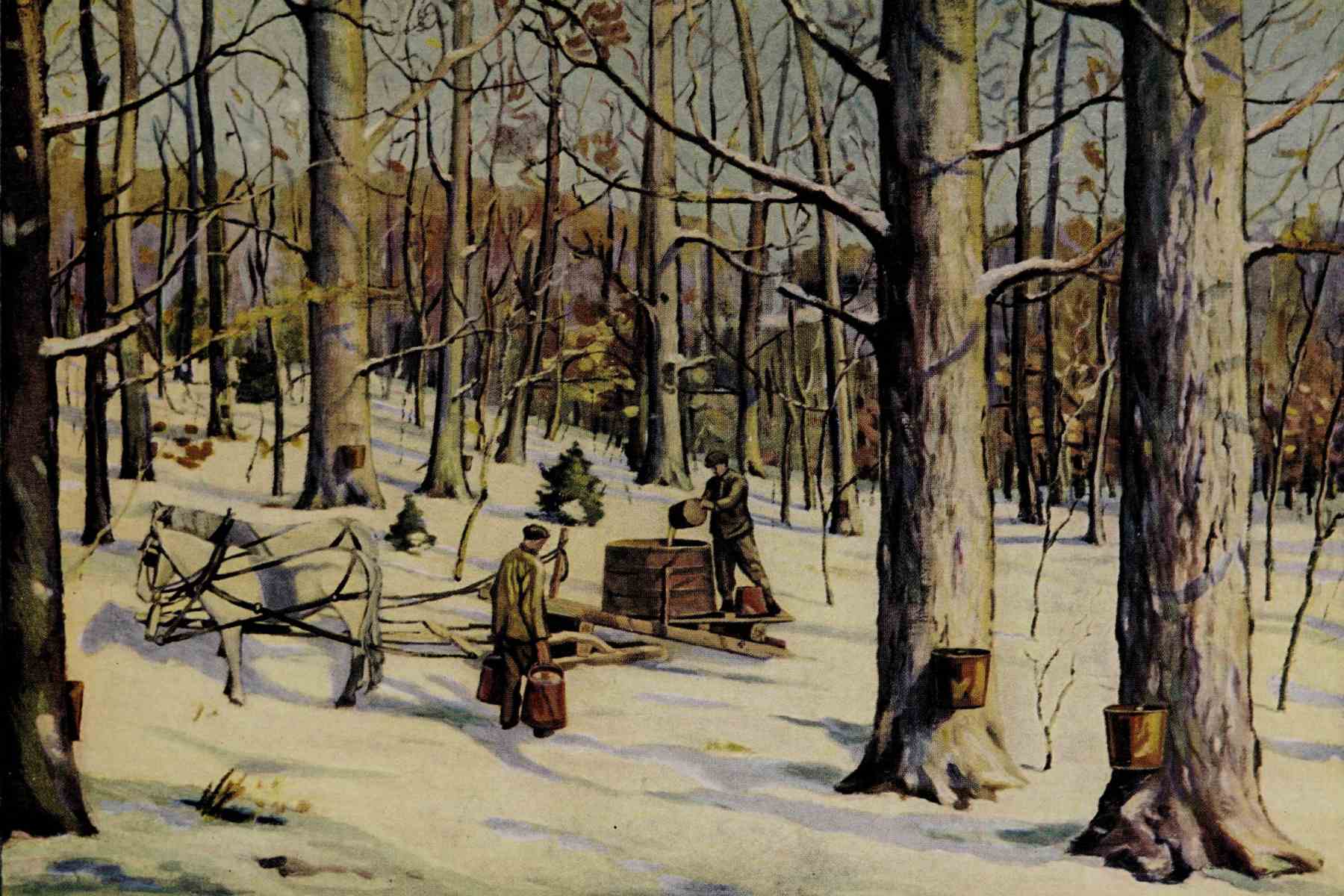
The history of maple syrup production in North America took a significant turn in the 1920s when Quebec farmers banded together to challenge the dominance of Vermont’s George Clinton Cary. Initially welcomed as a buyer, Cary’s monopolistic practices eventually led farmers to unite against him in a bold effort to regain control of their industry.
George Clinton Cary, known as the “Maple Sugar King,” built a vast empire by purchasing maple sugar and syrup from farmers in both the United States and Canada. His business acumen allowed him to corner the market, controlling up to 80 percent of the world’s bulk maple sugar and syrup by the 1920s. Cary’s aggressive pricing strategies left farmers with little leverage, often forcing them to accept prices well below fair market value.
As Cary’s influence grew, so did the discontent among producers. Farmers in Quebec and Vermont realized that their dependence on Cary’s purchasing power was detrimental. In the early 1920s, Vermont maple producers attempted to form a cooperative, but internal conflicts and lack of funding led to its collapse. Despite this setback, farmers understood that collective action was necessary to reclaim their livelihoods.
The turning point came with the leadership of Cyrille Vaillancourt, a visionary from Quebec, who recognized the need for unity among maple syrup producers. Vaillancourt was deeply rooted in the region’s agricultural traditions and had a background that combined business acumen with community service. In 1925, he convened a meeting with a small group of seventeen producers in Plessisville, Quebec, to establish the Company of Sugar and Pure Maple Syrup Producers, known in French as the Société coopérative des producteurs de sucre d’érable.
Vaillancourt’s cooperative aimed to improve the quality of maple syrup and sugar, allowing producers to command higher prices. This initiative was crucial, as the market was flooded with lower-quality products that drove prices down. By promoting the idea of quality over quantity, Vaillancourt sought to change the perception of maple syrup from a cheap commodity to a specialty product.
Despite Cary’s attempts to expand his operations into Canada, including the establishment of a new plant in 1929 in Lennoxville, Quebec, challenges mounted for the Maple Sugar King. The onset of the Great Depression in 1931 severely affected the maple syrup market, leading to Cary’s eventual bankruptcy and the collapse of his business empire.
Vaillancourt seized this opportunity to solidify the cooperative’s position. With the assistance of the Quebec government, he rallied producers to support the cooperative financially, raising $32,000 to sustain operations during the economic crisis. His message resonated with the farmers, emphasizing the importance of unity: “An isolated man is weak, but, linked to others through a cooperative, what a powerhouse he can become!”
Under Vaillancourt’s leadership, the cooperative began to implement quality standards and testing labs, ensuring that the syrup produced met higher expectations. This not only improved the product but also enhanced the reputation of Quebec maple syrup in both domestic and international markets.
Ultimately, the efforts of Vaillancourt and the Quebec cooperative transformed the maple syrup industry. They established a pricing structure that rewarded quality, which significantly boosted the income of farmers. By the time of Vaillancourt’s death in 1969, the cooperative had evolved into a powerful entity within the industry, showcasing the importance of collective action in overcoming monopolistic challenges.
The story of the Quebec farmers’ fight against Cary serves as a testament to the resilience and determination of agricultural communities. Their journey from dependence to empowerment reshaped the maple syrup industry, ensuring that the sweet legacy of maple production in North America continues to thrive.

Meta Plans Major Layoffs as AI Costs Surge

Alberta’s Referendum Could Pave Way for U.S. Statehood

Minooka District 201 Plans Enhanced Bilingual Support for Students

Canmore Approves Multiple Development Permits for New Projects

Remembering Bradly Castillo Shearsmith: A Life of Friendship and Joy

BIS Urges Watchdogs to Integrate Synthetic Risk Transfers in Stress Tests

Teva Transforms: Shifting Focus from Generics to Branded Success

Apple Launches AirPods Max 2 with Enhanced Audio Features

Ontario Ends Funding for Seven Supervised Injection Sites

Toyoake City Proposes Daily Two-Hour Smartphone Use Limit

Pedestrian Fatally Injured in Esquimalt Collision on August 14

B.C. Review Reveals Urgent Need for Rare-Disease Drug Reforms

Dark Adventure Game “Bye Sweet Carole” Set for October Release

Konami Revives Iconic Metal Gear Solid Delta Ahead of Release

Victoria’s Pop-Up Shop Shines Light on B.C.’s Wolf Cull

Jimmy Lai’s Defense Challenges Charges Under National Security Law

Snapmaker U1 Color 3D Printer Redefines Speed and Sustainability

Apple Expands Self-Service Repair Program to Canada
-
 Science12 months ago
Toyoake City Proposes Daily Two-Hour Smartphone Use Limit
-
 Top Stories12 months ago
Pedestrian Fatally Injured in Esquimalt Collision on August 14
-
 Health12 months ago
B.C. Review Reveals Urgent Need for Rare-Disease Drug Reforms
-
 Technology12 months ago
Dark Adventure Game “Bye Sweet Carole” Set for October Release
-
 Technology12 months ago
Konami Revives Iconic Metal Gear Solid Delta Ahead of Release
-
 Lifestyle12 months ago
Victoria’s Pop-Up Shop Shines Light on B.C.’s Wolf Cull
-
 World12 months ago
Jimmy Lai’s Defense Challenges Charges Under National Security Law
-
 Technology12 months ago
Snapmaker U1 Color 3D Printer Redefines Speed and Sustainability
-
 Technology12 months ago
Apple Expands Self-Service Repair Program to Canada
-

 Technology12 months ago
AION Folding Knife: Redefining EDC Design with Premium Materials
-

 Technology12 months ago
Solve Today’s Wordle Challenge: Hints and Answer for August 19
-

 Business12 months ago
Gordon Murray Automotive Unveils S1 LM and Le Mans GTR at Monterey