
Business
Research Unveils Climate Threat to B.C. Cranberry Crops

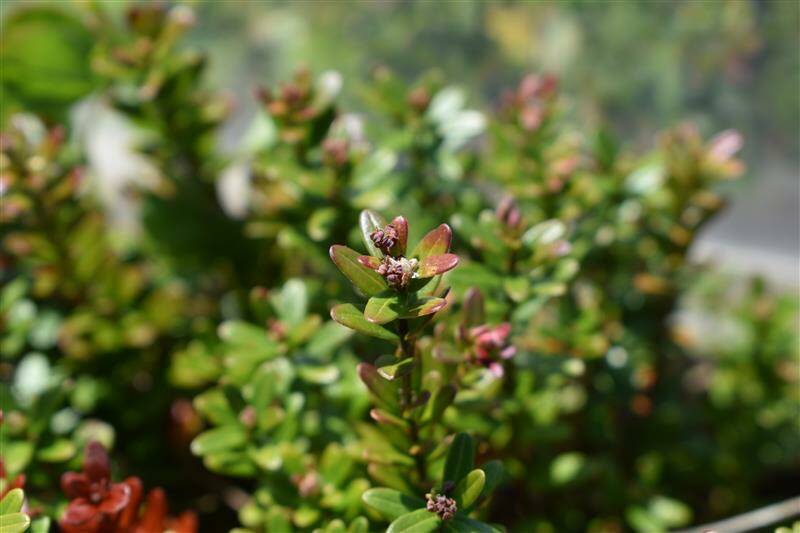
Cranberry crops in British Columbia face significant threats from climate change, according to recent research from the University of the Fraser Valley (UFV). Funded by the B.C. Cranberry Growers Association, the study conducted in the university’s BERRI Lab highlights that warmer temperatures are likely to lead to reduced yields in cranberry production.
Under the guidance of Dr. Lauren Erland, a Canada Research Chair, student Yowana Kanyumwa investigated the effects of temperature on six different cranberry varieties. Using a controlled growing environment that simulated a temperature increase of 2 degrees Celsius, Kanyumwa found that all varieties produced significantly lower yields under these conditions. This outcome supports earlier computer modeling conducted by Dr. Erland in 2022.
Kanyumwa noted, “My research also showed that higher temperatures impacted the size of the cranberry plants. The good news is that the weight and firmness of the berries didn’t see much impact at all.” This finding suggests potential avenues for growers to explore resilient varieties that may withstand changing climatic conditions.
In Canada, cranberries are a significant agricultural product, with the country ranking as the world’s second-largest producer, following the United States. According to a report from Agriculture Canada, approximately 95 percent of Canadian cranberries are cultivated in B.C. and Quebec, with B.C. alone producing 45,988 metric tonnes in 2024. The cranberry industry is crucial to the region’s economy, contributing over $400 million and supporting nearly 3,000 jobs, primarily in rural areas.
The research from UFV does not only highlight the problem but also paves the way for solutions. Kanyumwa’s study will lead to further investigations into the physiological and hormonal responses of cranberry plants to higher temperatures. Dr. Erland explained, “Is there less fruit because the plants are making fewer flowers? Or are there the same number of flowers but they’re not turning into fruit? And what are the internal signals in a plant that are controlling this?”
Understanding these factors may allow researchers to recommend climate-resilient cranberry varieties, field management practices, or even develop new cranberry plants better adapted to warmer temperatures.
The BERRI Lab’s research initiative actively involves undergraduate students from various disciplines, including agriculture, biology, biochemistry, and environmental science. For Kanyumwa, who moved to Canada from Zimbabwe three years ago with little knowledge of cranberries, this project has been transformative. She expressed her enthusiasm, stating, “I’ve always liked being in the field, which is why I picked agriculture, but one of my main goals was to learn how to work in the lab.”
Kanyumwa’s experience reflects a broader educational opportunity provided by the lab, which aims to engage students in practical research. She added, “This project provided the whole research experience, and I discovered that I like the laboratory. I looked forward to getting in there to do the work, and it’s something I would now consider doing as part of a future career.”
As climate challenges continue to emerge, the findings from UFV serve as a critical reminder of the impact of changing weather patterns on important agricultural sectors. With ongoing research, there is potential for innovation that can safeguard the future of cranberry farming in British Columbia and beyond.

Meta Plans Major Layoffs as AI Costs Surge

Alberta’s Referendum Could Pave Way for U.S. Statehood

Minooka District 201 Plans Enhanced Bilingual Support for Students

Canmore Approves Multiple Development Permits for New Projects

Remembering Bradly Castillo Shearsmith: A Life of Friendship and Joy

BIS Urges Watchdogs to Integrate Synthetic Risk Transfers in Stress Tests

Teva Transforms: Shifting Focus from Generics to Branded Success

Apple Launches AirPods Max 2 with Enhanced Audio Features

Ontario Ends Funding for Seven Supervised Injection Sites

Toyoake City Proposes Daily Two-Hour Smartphone Use Limit

Pedestrian Fatally Injured in Esquimalt Collision on August 14

B.C. Review Reveals Urgent Need for Rare-Disease Drug Reforms

Dark Adventure Game “Bye Sweet Carole” Set for October Release

Konami Revives Iconic Metal Gear Solid Delta Ahead of Release

Victoria’s Pop-Up Shop Shines Light on B.C.’s Wolf Cull

Jimmy Lai’s Defense Challenges Charges Under National Security Law

Snapmaker U1 Color 3D Printer Redefines Speed and Sustainability

Apple Expands Self-Service Repair Program to Canada
-
 Science1 year ago
Toyoake City Proposes Daily Two-Hour Smartphone Use Limit
-
 Top Stories1 year ago
Pedestrian Fatally Injured in Esquimalt Collision on August 14
-
 Health1 year ago
B.C. Review Reveals Urgent Need for Rare-Disease Drug Reforms
-
 Technology1 year ago
Dark Adventure Game “Bye Sweet Carole” Set for October Release
-
 Technology1 year ago
Konami Revives Iconic Metal Gear Solid Delta Ahead of Release
-
 Lifestyle1 year ago
Victoria’s Pop-Up Shop Shines Light on B.C.’s Wolf Cull
-
 World1 year ago
Jimmy Lai’s Defense Challenges Charges Under National Security Law
-
 Technology1 year ago
Snapmaker U1 Color 3D Printer Redefines Speed and Sustainability
-
 Technology1 year ago
Apple Expands Self-Service Repair Program to Canada
-

 Technology1 year ago
AION Folding Knife: Redefining EDC Design with Premium Materials
-

 Technology1 year ago
Solve Today’s Wordle Challenge: Hints and Answer for August 19
-

 Business1 year ago
Gordon Murray Automotive Unveils S1 LM and Le Mans GTR at Monterey