
Technology
Canada Joins NASA’s Artemis Program with Lunar Vehicle Initiative

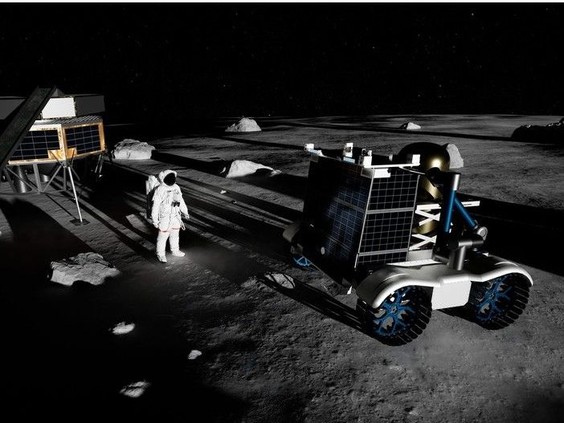
Canada is taking significant steps in the realm of space exploration by contributing key technologies to NASA’s Artemis program, which aims to return humans to the moon after over fifty years. Central to Canada’s involvement is the development of the Lunar Utility Vehicle (LUV), a Canadian-designed mobility platform intended to facilitate both human and robotic activities on the lunar surface.
As the project evolves, a notable shift is emerging in the geographical landscape of Canada’s lunar program. Traditionally associated with major urban centers in Ontario and Quebec, recent developments are highlighting a more diverse contribution from various regions across the country. In November, Mission Control Space Services announced a collaborative partnership with Eagle Flight Network (EFN), an Indigenous-owned space-infrastructure company located in Calgary. This marks EFN as the only organization from western Canada to take part in the LUV’s early development efforts.
The LUV initiative falls under the auspices of the Canadian Space Agency and is part of the Lunar Exploration Accelerator Program (LEAP). This program supports research, technology development, mobility systems, and mission concepts that are integral to the Artemis lunar missions. In July 2025, Mission Control received a contract aimed at advancing various aspects of the LUV’s development. This includes evaluating its mobility, mission profile, and technical options based on size and capability.
The LUV is envisioned as a versatile platform designed to assist astronauts during surface operations, transport equipment, carry scientific instruments, and support missions in the challenging conditions of the lunar south pole. This region poses unique challenges compared to previous lunar landing sites, with low-angle sunlight, extreme temperature variations, and rugged terrain featuring crater rims, shadowed areas, and steep slopes. As such, developing a vehicle capable of functioning reliably in these conditions necessitates extensive engineering and testing on Earth prior to the construction of any mission hardware.
EFN’s role in this initiative is particularly focused on ground-segment considerations. This involves how mission data is transmitted to Earth, ensuring secure routing across Canada, and determining the optimal positioning for future mission support infrastructure. EFN has been actively engaged in the development of Indigenous-hosted ground station sites, as well as mobile ground station systems tailored for applications such as Earth observation, wildfire detection, and satellite communications.
This collaboration not only emphasizes Canada’s growing role in international space exploration but also highlights the importance of inclusivity in technological advancements. The participation of Indigenous organizations in pivotal projects like the LUV development signifies a commitment to diverse contributions in the field of space technology. As Canada continues to push forward in its lunar aspirations, the global community watches with anticipation, eager to see how these efforts will unfold in the coming years.

Meta Plans Major Layoffs as AI Costs Surge

Alberta’s Referendum Could Pave Way for U.S. Statehood

Minooka District 201 Plans Enhanced Bilingual Support for Students

Canmore Approves Multiple Development Permits for New Projects

Remembering Bradly Castillo Shearsmith: A Life of Friendship and Joy

BIS Urges Watchdogs to Integrate Synthetic Risk Transfers in Stress Tests

Teva Transforms: Shifting Focus from Generics to Branded Success

Apple Launches AirPods Max 2 with Enhanced Audio Features

Ontario Ends Funding for Seven Supervised Injection Sites

Toyoake City Proposes Daily Two-Hour Smartphone Use Limit

Pedestrian Fatally Injured in Esquimalt Collision on August 14

B.C. Review Reveals Urgent Need for Rare-Disease Drug Reforms

Dark Adventure Game “Bye Sweet Carole” Set for October Release

Konami Revives Iconic Metal Gear Solid Delta Ahead of Release

Victoria’s Pop-Up Shop Shines Light on B.C.’s Wolf Cull

Jimmy Lai’s Defense Challenges Charges Under National Security Law

Snapmaker U1 Color 3D Printer Redefines Speed and Sustainability

Apple Expands Self-Service Repair Program to Canada
-
 Science1 year ago
Toyoake City Proposes Daily Two-Hour Smartphone Use Limit
-
 Top Stories1 year ago
Pedestrian Fatally Injured in Esquimalt Collision on August 14
-
 Health1 year ago
B.C. Review Reveals Urgent Need for Rare-Disease Drug Reforms
-
 Technology1 year ago
Dark Adventure Game “Bye Sweet Carole” Set for October Release
-
 Technology1 year ago
Konami Revives Iconic Metal Gear Solid Delta Ahead of Release
-
 Lifestyle1 year ago
Victoria’s Pop-Up Shop Shines Light on B.C.’s Wolf Cull
-
 World1 year ago
Jimmy Lai’s Defense Challenges Charges Under National Security Law
-
 Technology1 year ago
Snapmaker U1 Color 3D Printer Redefines Speed and Sustainability
-
 Technology1 year ago
Apple Expands Self-Service Repair Program to Canada
-

 Technology1 year ago
AION Folding Knife: Redefining EDC Design with Premium Materials
-

 Technology1 year ago
Solve Today’s Wordle Challenge: Hints and Answer for August 19
-

 Business1 year ago
Gordon Murray Automotive Unveils S1 LM and Le Mans GTR at Monterey