
Health
Toronto Police Chief Calls for Reform in Mental Health Crisis Response

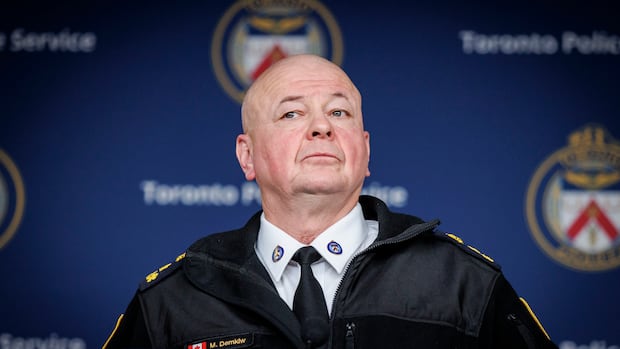
Toronto’s approach to handling mental health crisis calls is under scrutiny following remarks by Myron Demkiw, the city’s police chief. In an interview with CBC Toronto, Demkiw indicated that police should not lead these calls, advocating for a reassessment of the role of law enforcement in mental health emergencies.
For over two decades, the Mobile Crisis Intervention Teams (MCIT) program has paired police officers with mental health nurses to respond to urgent mental health situations. Established in 2000, the program aims to provide immediate mental health assessments and support. Demkiw now suggests that these calls should be led by health professionals, stating, “If mental health is a health issue, then mental health calls should be led by the health sector, and the police should be there to the extent that it’s necessary for safety.”
Demkiw’s comments come amid ongoing discussions about the effectiveness of the MCIT program, particularly following several tragic incidents involving police responses to mental health crises. High-profile cases, such as the deaths of Ejaz Choudry and D’Andre Campbell, have raised concerns about the appropriateness of police involvement in such situations. In response to these incidents, the Toronto Police Service has announced a review of the MCIT program.
The review aims to explore alternative responses to mental health crises. Nadine Ramadan, a spokesperson for the Toronto Police Service, highlighted that the goal is to “make room for alternative non-police response teams.” This would allow law enforcement to focus on violent and high-risk calls while directing non-violent mental health emergencies to the Toronto Community Crisis Service (TCCS), which began operations in 2022.
The TCCS has already managed over 38,000 calls since its inception, with a significant portion of these handled without police intervention. According to city data, 78 percent of TCCS calls transferred from 911 were resolved without police involvement, indicating a growing capacity for mental health professionals to handle crises independently.
Discussions surrounding the future of the MCIT program have sparked mixed reactions. Clayton Campbell, president of the Toronto Police Association, expressed disappointment regarding the lack of consultation regarding potential changes. He emphasized that collaboration between the MCIT and TCCS would be essential in addressing the mental health crisis in the city. “It’s not an either or scenario,” Campbell stated. “When you’re looking at mental health, it’s truly an epidemic in this city. Why remove a tool from the toolbox?”
Conversely, Susan Davis, executive director of the Gerstein Crisis Centre, aligns with Demkiw’s viewpoint. She advocates for a reduction in police involvement in mental health interventions, suggesting that police are not typically at the forefront of health crisis responses. Davis believes that while collaboration is important, the focus should be on non-police solutions for mental health emergencies.
As the Toronto Police Service continues to evaluate the MCIT program, stakeholders are engaged in ongoing consultations to determine the best path forward. Stephanie Sayer, a TPS spokesperson, confirmed that no decisions have been finalized, and discussions with various stakeholders are still in progress.
The potential shift in how mental health crises are managed reflects a growing acknowledgment of the complexities involved. As the city explores new models for crisis intervention, the emphasis remains on ensuring that individuals in distress receive the appropriate support while maintaining public safety.

Meta Plans Major Layoffs as AI Costs Surge

Alberta’s Referendum Could Pave Way for U.S. Statehood

Minooka District 201 Plans Enhanced Bilingual Support for Students

Canmore Approves Multiple Development Permits for New Projects

Remembering Bradly Castillo Shearsmith: A Life of Friendship and Joy

BIS Urges Watchdogs to Integrate Synthetic Risk Transfers in Stress Tests

Teva Transforms: Shifting Focus from Generics to Branded Success

Apple Launches AirPods Max 2 with Enhanced Audio Features

Ontario Ends Funding for Seven Supervised Injection Sites

Toyoake City Proposes Daily Two-Hour Smartphone Use Limit

Pedestrian Fatally Injured in Esquimalt Collision on August 14

B.C. Review Reveals Urgent Need for Rare-Disease Drug Reforms

Dark Adventure Game “Bye Sweet Carole” Set for October Release

Konami Revives Iconic Metal Gear Solid Delta Ahead of Release

Victoria’s Pop-Up Shop Shines Light on B.C.’s Wolf Cull

Jimmy Lai’s Defense Challenges Charges Under National Security Law

Snapmaker U1 Color 3D Printer Redefines Speed and Sustainability

Apple Expands Self-Service Repair Program to Canada
-
 Science12 months ago
Toyoake City Proposes Daily Two-Hour Smartphone Use Limit
-
 Top Stories1 year ago
Pedestrian Fatally Injured in Esquimalt Collision on August 14
-
 Health1 year ago
B.C. Review Reveals Urgent Need for Rare-Disease Drug Reforms
-
 Technology12 months ago
Dark Adventure Game “Bye Sweet Carole” Set for October Release
-
 Technology12 months ago
Konami Revives Iconic Metal Gear Solid Delta Ahead of Release
-
 Lifestyle12 months ago
Victoria’s Pop-Up Shop Shines Light on B.C.’s Wolf Cull
-
 World12 months ago
Jimmy Lai’s Defense Challenges Charges Under National Security Law
-
 Technology12 months ago
Snapmaker U1 Color 3D Printer Redefines Speed and Sustainability
-
 Technology12 months ago
Apple Expands Self-Service Repair Program to Canada
-

 Technology12 months ago
AION Folding Knife: Redefining EDC Design with Premium Materials
-

 Technology12 months ago
Solve Today’s Wordle Challenge: Hints and Answer for August 19
-

 Business12 months ago
Gordon Murray Automotive Unveils S1 LM and Le Mans GTR at Monterey