
Education
International Students at USask Face Tuition Hikes, Express Concerns

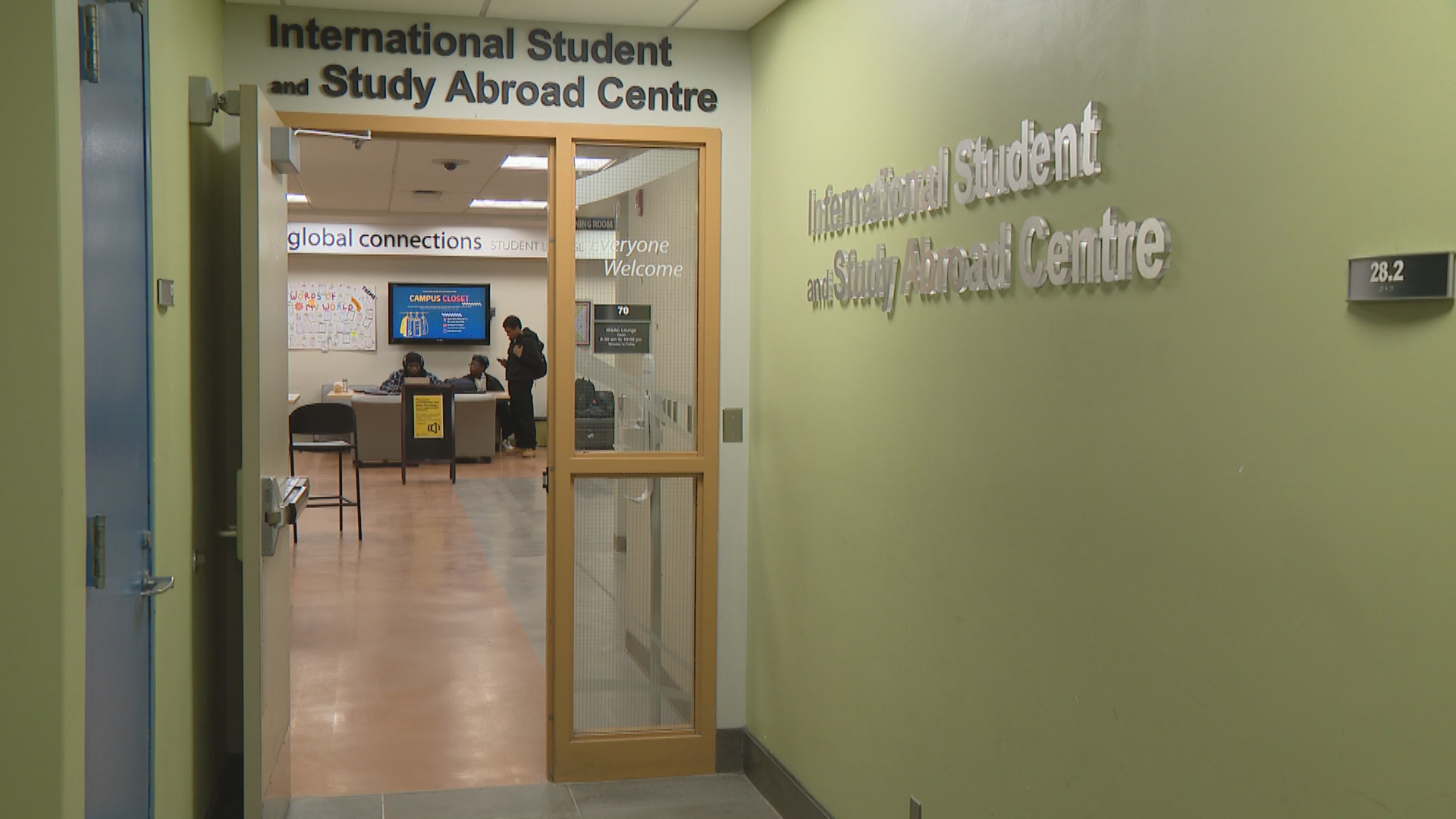
International students at the University of Saskatchewan are grappling with escalating tuition costs that have nearly doubled over the past four years. The rising expenses have sparked concerns among students about their ability to complete their education, with many feeling the financial pressure acutely.
Students like Isheanesu Nhiwatiwa have reported alarming increases in tuition fees. “I may not be able to finish my degree here,” she stated, highlighting that her tuition rose from $21,000 to approximately $31,000 in just a few years. The sharp increment, which was $10,000 from her first to second year and $5,000 from her second year to the current one, has left her uncertain about future costs.
The impact of these tuition hikes is palpable. Nganminen Kwashi observed that he has seen fellow international students leave the university due to financial pressures. “I remember one of my first friends who I was in the university with; he hasn’t been in school for the whole year,” Kwashi explained. The situation has prompted students like Allison Ochigbo to witness their peers dropping out or transferring to institutions that offer more stable tuition rates.
According to the University of Saskatchewan Students’ Union, the tuition increases are creating significant challenges for students. Issues such as housing instability and food insecurity are exacerbated by the financial strain, which also affects families back home. Chidera Nwobodo, a representative from the Pan-African Students Association, emphasized the sacrifices made by families to send their children abroad. “When you are spending the money you expected to spend for four years in one and a half years, what’s going to happen to the remaining three and a half years?” Nwobodo questioned.
The stress of rising tuition extends beyond the individual student. Nathaniel Aubynn shared that the situation puts pressure on entire families, complicating their financial stability. Ochigbo noted that the emotional toll can be overwhelming, explaining, “It’s been very difficult… You see the stress it takes… If you go back, it’s all for naught.”
Many students are resorting to working multiple jobs to meet their tuition obligations, leading to burnout and academic struggles. Emily Hubick, vice-president of student affairs at the USSU, pointed out that the need for additional work detracts from students’ ability to engage fully in their studies.
A potential solution may be found in policies adopted by other institutions. Pamino Akinjide highlighted that some Canadian universities, such as the University of Alberta, guarantee tuition rates for the duration of a student’s program. This allows students to plan their finances more effectively. The University of Alberta confirmed this policy, stating that it helps students secure student visas and funding opportunities.
In response to the rising concerns, Marjorie Delbaere, the interim vice-provost of students and learning at the University of Saskatchewan, acknowledged the financial pressures faced by international students. “We understand international students’ concerns about rising tuition costs and how this may affect their ability to continue their studies,” Delbaere stated. She noted that a renewed multi-year funding agreement with the Government of Saskatchewan will set tuition limits for the next four years, providing some degree of stability.
Despite these assurances, many students feel that the university’s financial support mechanisms are inadequate. “We’re not asking for some sort of special treatment; we’re just asking for transparency,” Aubynn asserted, reflecting the sentiment among students that their concerns have not been adequately addressed.
Additionally, Ken Cheveldayoff, Saskatchewan’s Minister of Education, remarked that international graduate student tuition fees in Saskatchewan are among the lowest in Canada. Nonetheless, the persistent lack of information regarding tuition increases for both domestic and international students raises concerns about future financial implications.
As international students at the University of Saskatchewan continue to navigate these challenges, their calls for transparency and support highlight the urgent need for a more sustainable approach to tuition costs in higher education.

Research Unveils Climate Threat to B.C. Cranberry Crops

Newfoundland and Labrador Premier Honors Legacy of Dr. Falah Maroun

Unlock Your Intuition: 5 Techniques for Understanding Others

Canadians Urged to Donate Blood as Holiday Needs Surge

Family Honors Late Matriarch with Heartfelt Tribute

Thousands Gather at Stonehenge to Celebrate Winter Solstice

New Book Aims to Bridge Divides in the Middle East Discourse

Analyzing the Impact of Western Canada’s Development Journey

Bancroft OPP Requests Public Help to Find Missing Woman and Infant

Toyoake City Proposes Daily Two-Hour Smartphone Use Limit

Pedestrian Fatally Injured in Esquimalt Collision on August 14

B.C. Review Reveals Urgent Need for Rare-Disease Drug Reforms

Dark Adventure Game “Bye Sweet Carole” Set for October Release

Jimmy Lai’s Defense Challenges Charges Under National Security Law

Victoria’s Pop-Up Shop Shines Light on B.C.’s Wolf Cull

Konami Revives Iconic Metal Gear Solid Delta Ahead of Release

Apple Expands Self-Service Repair Program to Canada

Snapmaker U1 Color 3D Printer Redefines Speed and Sustainability
-
 Science4 months ago
Toyoake City Proposes Daily Two-Hour Smartphone Use Limit
-
 Top Stories4 months ago
Pedestrian Fatally Injured in Esquimalt Collision on August 14
-
 Health4 months ago
B.C. Review Reveals Urgent Need for Rare-Disease Drug Reforms
-
 Technology4 months ago
Dark Adventure Game “Bye Sweet Carole” Set for October Release
-
 World4 months ago
Jimmy Lai’s Defense Challenges Charges Under National Security Law
-
 Lifestyle4 months ago
Victoria’s Pop-Up Shop Shines Light on B.C.’s Wolf Cull
-
 Technology4 months ago
Konami Revives Iconic Metal Gear Solid Delta Ahead of Release
-
 Technology4 months ago
Apple Expands Self-Service Repair Program to Canada
-
 Technology4 months ago
Snapmaker U1 Color 3D Printer Redefines Speed and Sustainability
-

 Technology4 months ago
AION Folding Knife: Redefining EDC Design with Premium Materials
-

 Technology4 months ago
Solve Today’s Wordle Challenge: Hints and Answer for August 19
-

 Business4 months ago
Gordon Murray Automotive Unveils S1 LM and Le Mans GTR at Monterey