
World
Ontario’s Speed Camera Ban Sparks Controversy Among Voters

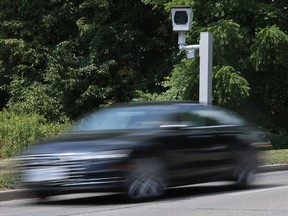
Ontario’s recent decision to eliminate speed cameras has generated significant debate among voters, revealing a clear divide along party lines. A poll conducted by Angus Reid between November 26 and December 1, 2023, indicates that while a majority of supporters from the Progressive Conservative party back the ban, opposition is notably strong among supporters of the New Democratic Party (NDP) and the Liberal Party.
According to the poll, only 38% of respondents view Premier Doug Ford’s decision to end the speed camera program as a positive move. In contrast, 49% believe it was the wrong decision, while 14% remain undecided. Among the Progressive Conservatives, 60% support the ban, whereas 69% of NDP supporters and 67% of Liberal supporters oppose it.
Context of the Ban
The ban comes approximately six years after the Ford government initially introduced speed cameras, a measure Ford justified by arguing that the program had devolved into a cash grab. Earlier this year, he stated, “What’s happening now, it’s out of control. This is nothing more than a tax grab taking tens of millions of dollars, hundreds of millions of dollars, out of the taxpayer’s pocket. Things have changed.”
Municipal leaders like Steven Del Duca, the Mayor of Vaughan, have supported the ban, citing affordability concerns and promising alternative measures to enhance road safety. He noted that his city discontinued its speed camera program in June. Ford has also emphasized that enforcement should focus on significant violations, stating, “No officer that I have ever met would ever give you a ticket for five or six kilometres over the speed limit.”
In response to safety concerns raised by several municipal officials, the provincial government has pledged $210 million for the newly established Road Safety Initiatives Fund (RSIF), aimed at implementing various measures to enhance road safety.
Public Opinion Variances
The ban has faced particularly strong criticism in urban areas, with the poll revealing that 58% of respondents in downtown Toronto oppose the decision, followed closely by 54% in Ottawa. In the 905 region, where the ban garnered more support, 45% opposed the removal of speed cameras compared to 42% who were in favor. Similar trends emerged in southwestern Ontario, where 43% opposed the ban versus 42% who supported it.
When asked about alternatives to speed cameras, the survey revealed that 53% of respondents preferred road redesigns and traffic calming measures, such as speed bumps and narrower lanes. Other suggestions included increased police enforcement by 47%, lower speed limits at 16%, public awareness campaigns at 13%, and 9% of respondents disapproving of any of the proposed alternatives.
The Angus Reid Forum surveyed 853 Canadian adults, with a comparable sample size indicating a margin of error of approximately 3%, 19 times out of 20.
As the debate continues, the provincial government faces mounting pressure to balance public safety with fiscal responsibility, prompting discussions on the future of traffic enforcement in Ontario.

Coffee Prices Surge Nearly 28% in Canada Amid Global Challenges

Regina Public Library Reveals Top Borrowed Books of 2025

B.C. Property Rights Under Scrutiny Following Court Ruling

Prince Albert RCMP’s ‘Fill the Cruiser’ Fundraiser Boosts Food Bank

Explore Career Opportunities: The Easiest AI Jobs in 2026

Public Health Officials Warn of Measles Exposure in Manitoba

Middlesex County Secures $3.4 Million for Inter-Community Transit

Second-Degree Murder Charge Filed in Maple Ridge Death

Ontario’s Speed Camera Ban Sparks Controversy Among Voters

Toyoake City Proposes Daily Two-Hour Smartphone Use Limit

B.C. Review Reveals Urgent Need for Rare-Disease Drug Reforms

Pedestrian Fatally Injured in Esquimalt Collision on August 14

Dark Adventure Game “Bye Sweet Carole” Set for October Release

Victoria’s Pop-Up Shop Shines Light on B.C.’s Wolf Cull

Jimmy Lai’s Defense Challenges Charges Under National Security Law

Konami Revives Iconic Metal Gear Solid Delta Ahead of Release

Apple Expands Self-Service Repair Program to Canada

Snapmaker U1 Color 3D Printer Redefines Speed and Sustainability
-
 Science4 months ago
Toyoake City Proposes Daily Two-Hour Smartphone Use Limit
-
 Health4 months ago
B.C. Review Reveals Urgent Need for Rare-Disease Drug Reforms
-
 Top Stories4 months ago
Pedestrian Fatally Injured in Esquimalt Collision on August 14
-
 Technology4 months ago
Dark Adventure Game “Bye Sweet Carole” Set for October Release
-
 Lifestyle4 months ago
Victoria’s Pop-Up Shop Shines Light on B.C.’s Wolf Cull
-
 World4 months ago
Jimmy Lai’s Defense Challenges Charges Under National Security Law
-
 Technology4 months ago
Konami Revives Iconic Metal Gear Solid Delta Ahead of Release
-
 Technology4 months ago
Apple Expands Self-Service Repair Program to Canada
-
 Technology4 months ago
Snapmaker U1 Color 3D Printer Redefines Speed and Sustainability
-

 Technology4 months ago
AION Folding Knife: Redefining EDC Design with Premium Materials
-

 Technology4 months ago
Solve Today’s Wordle Challenge: Hints and Answer for August 19
-

 Business4 months ago
Gordon Murray Automotive Unveils S1 LM and Le Mans GTR at Monterey