
Technology
Luxembourg’s 3D-Printed Tiny Home Revolutionizes Housing Solutions

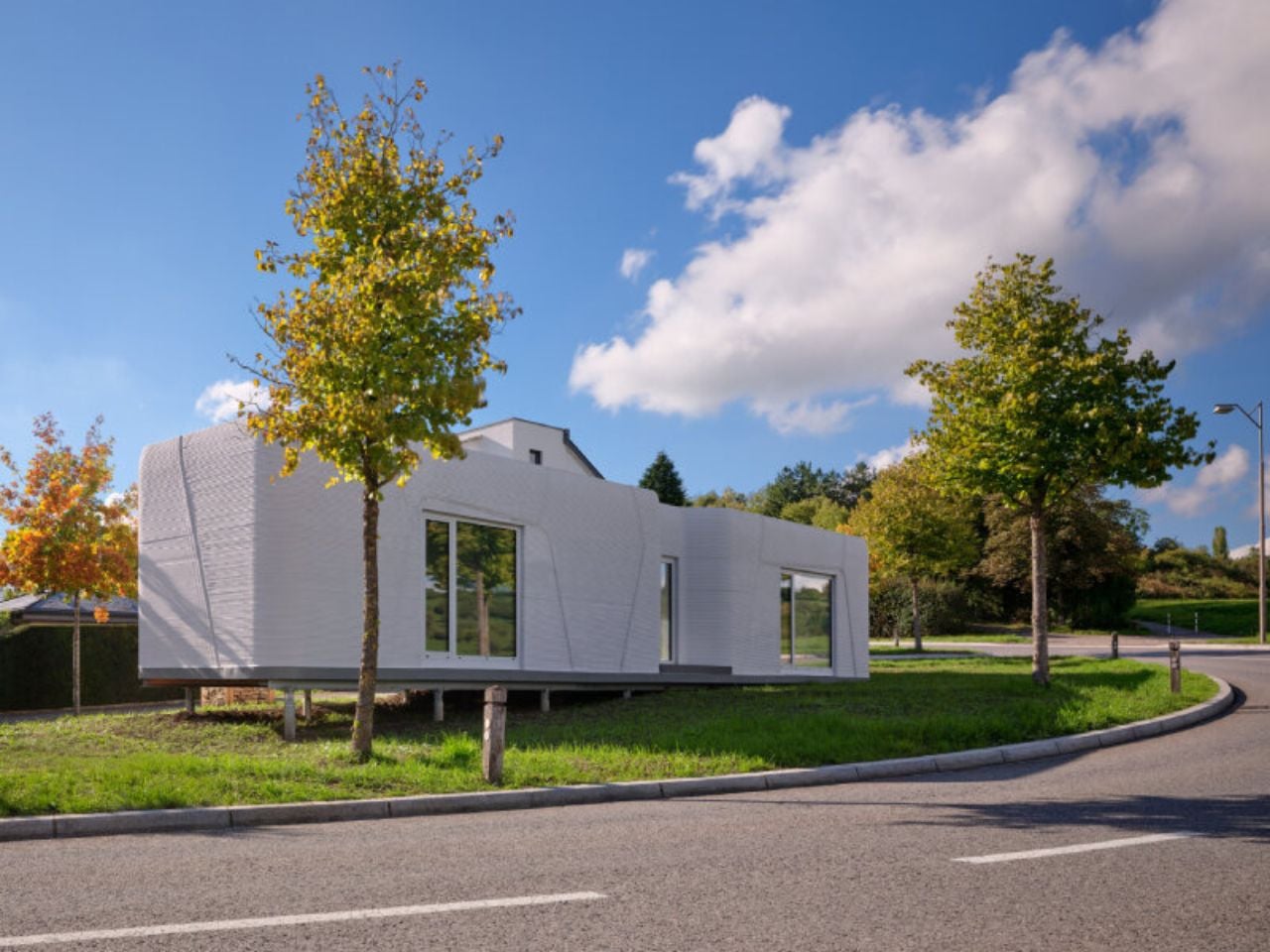
A groundbreaking initiative in Niederanven, a commune situated east of Luxembourg City, has introduced the nation’s first fully 3D-printed home, named Tiny House LUX. Designed by ODA Architects in collaboration with Coral Construction Technologies, this innovative project aims to transform housing solutions in Luxembourg, addressing the persistent housing shortage in the region.
The construction of Tiny House LUX demonstrates a remarkable reduction in build time, with the home printed in less than 28 hours per phase. This efficiency is crucial in a country where demand for housing greatly exceeds supply. Luxembourg requires approximately 7,000 new apartments each year, yet fewer than 4,000 are completed annually. This imbalance has resulted in some of the highest housing costs in Europe, with a 47 square meter apartment in the capital city often exceeding €560,000. In contrast, the estimated cost of this 3D-printed prototype is about one-third less, potentially making entry-level housing more attainable for young residents.
Innovative Design and Energy Efficiency
Energy performance is a central focus of the Tiny House LUX project. The structure features solar panels on the roof that generate sufficient electricity for daily usage. Additionally, a film-based underfloor heating system eliminates the need for traditional water pipes, radiators, or boilers. After printing, the walls are insulated with low-impact materials, further minimizing long-term energy consumption. The architects have prioritized simplicity, ensuring that systems are easy to operate, maintain, and repair over the home’s lifespan.
The interior layout of the home is designed for efficient living. A small entrance leads into a corridor that connects all major rooms, including a technical area, bathroom, and a bedroom at the end of the plan. To the left of the entrance, a combined living, dining, and kitchen area provides a continuous space that opens onto a terrace. This design links the indoor environment with the outdoor garden, reinforcing the concept that compact living can still provide a bright and inviting atmosphere.
Sustainable Practices and Community Engagement
The use of 3D printing technology in construction helps reduce waste, minimizes the use of heavy machinery, and lowers labor costs through precise digital instructions. The municipality of Niederanven is leasing the Tiny House LUX to a young resident for ten years as part of its Hei wunne bleiwen initiative, which encourages community engagement and supports starter housing for new residents. To further mitigate environmental impact, the project includes a commitment to plant 21 trees, offsetting construction emissions.
Currently, Tiny House LUX serves as a prototype. Its design and construction methods suggest a promising future for a new approach to building that combines architectural innovation with the urgent need for affordable and energy-efficient housing in Luxembourg and potentially beyond. As the demand for housing continues to rise, projects like this could pave the way for scalable solutions that address critical housing shortages in urban areas worldwide.

Meta Plans Major Layoffs as AI Costs Surge

Alberta’s Referendum Could Pave Way for U.S. Statehood

Minooka District 201 Plans Enhanced Bilingual Support for Students

Canmore Approves Multiple Development Permits for New Projects

Remembering Bradly Castillo Shearsmith: A Life of Friendship and Joy

BIS Urges Watchdogs to Integrate Synthetic Risk Transfers in Stress Tests

Teva Transforms: Shifting Focus from Generics to Branded Success

Apple Launches AirPods Max 2 with Enhanced Audio Features

Ontario Ends Funding for Seven Supervised Injection Sites

Toyoake City Proposes Daily Two-Hour Smartphone Use Limit

Pedestrian Fatally Injured in Esquimalt Collision on August 14

B.C. Review Reveals Urgent Need for Rare-Disease Drug Reforms

Dark Adventure Game “Bye Sweet Carole” Set for October Release

Konami Revives Iconic Metal Gear Solid Delta Ahead of Release

Victoria’s Pop-Up Shop Shines Light on B.C.’s Wolf Cull

Jimmy Lai’s Defense Challenges Charges Under National Security Law

Snapmaker U1 Color 3D Printer Redefines Speed and Sustainability

Apple Expands Self-Service Repair Program to Canada
-
 Science1 year ago
Toyoake City Proposes Daily Two-Hour Smartphone Use Limit
-
 Top Stories1 year ago
Pedestrian Fatally Injured in Esquimalt Collision on August 14
-
 Health1 year ago
B.C. Review Reveals Urgent Need for Rare-Disease Drug Reforms
-
 Technology1 year ago
Dark Adventure Game “Bye Sweet Carole” Set for October Release
-
 Technology1 year ago
Konami Revives Iconic Metal Gear Solid Delta Ahead of Release
-
 Lifestyle1 year ago
Victoria’s Pop-Up Shop Shines Light on B.C.’s Wolf Cull
-
 World1 year ago
Jimmy Lai’s Defense Challenges Charges Under National Security Law
-
 Technology1 year ago
Snapmaker U1 Color 3D Printer Redefines Speed and Sustainability
-
 Technology1 year ago
Apple Expands Self-Service Repair Program to Canada
-

 Technology1 year ago
AION Folding Knife: Redefining EDC Design with Premium Materials
-

 Technology1 year ago
Solve Today’s Wordle Challenge: Hints and Answer for August 19
-

 Business1 year ago
Gordon Murray Automotive Unveils S1 LM and Le Mans GTR at Monterey