
Science
Galaxy Collisions Unveil Brightest Black Holes in Space

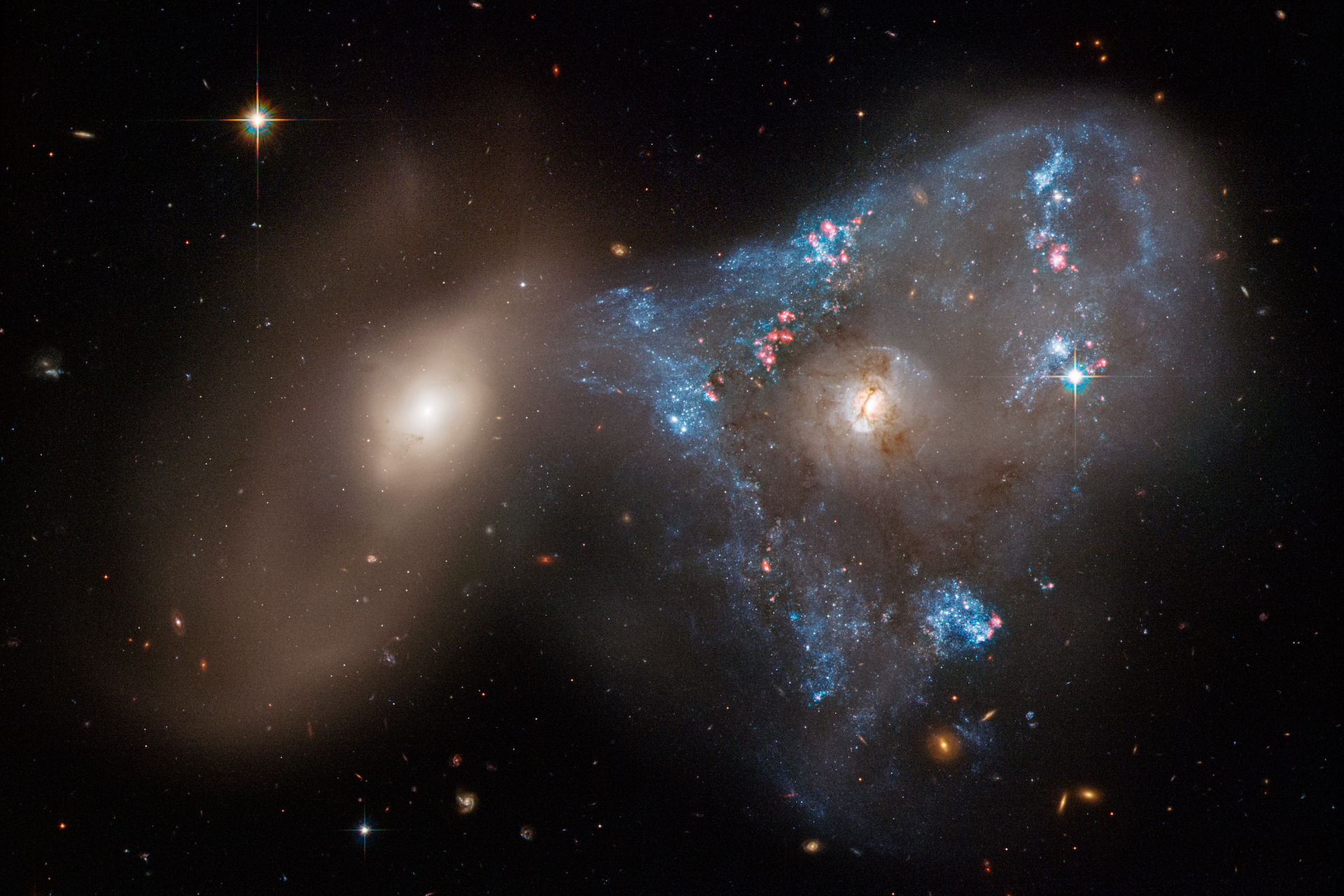
New research has revealed that collisions between galaxies lead to the formation of some of the brightest and fastest-growing black holes in the universe. This study, highlighted in a special edition of Astronomy and Astrophysics, utilized data from the Euclid satellite to provide compelling evidence of how these cosmic events trigger the most powerful active galactic nuclei (AGN).
Active galactic nuclei represent phases during which supermassive black holes at the centers of galaxies consume surrounding matter and gas, emitting intense light as they do so. While our own Milky Way hosts a supermassive black hole, it remains inactive at present. Understanding the mechanisms behind the formation and evolution of these supermassive black holes has been a complex challenge for astronomers.
Research has previously suggested that galaxy mergers play a crucial role in the development of supermassive black holes. The latest findings, led by a team of scientists that includes Dr. Allison Man, an assistant professor in the Department of Physics & Astronomy at the University of British Columbia, shed new light on this connection. The team analyzed data from hundreds of thousands of galaxy mergers dating back as far as 10 billion years ago.
Significant Findings on Galaxy Mergers and Black Hole Growth
The researchers discovered that AGN are observed to be two to six times more prevalent in merging galaxies compared to their non-merging counterparts. This correlation emphasizes the impact of galactic collisions on the activity of supermassive black holes.
Interestingly, the study noted that the AGN most strongly associated with galaxy mergers are often obscured by dust, indicating their rapid growth as they consume surrounding matter. These AGN emerge as the most luminous objects in the cosmos, outshining their host galaxies significantly. The researchers concluded that other fainter supermassive black holes likely formed through different processes.
Dr. Man remarked on the implications of this research, stating, “We’re starting to explore just how supermassive black holes form and evolve, and to pin down the connection between galaxy mergers, supermassive black hole mergers and how they contribute to building up the most massive black holes in the universe.”
This study not only enhances our understanding of black hole formation but also underscores the importance of galaxy mergers in shaping the cosmos. The findings pave the way for further exploration into the intricate relationships between galaxies and their central black holes, ultimately contributing to our comprehension of the universe’s evolution.

Ukraine Launches Strikes on Oil Terminal and Military Assets in Russia

Ontario Education Minister Signals Shift to Hands-On Teacher Training

Government Faces Scrutiny Over Hybrid Work Policies for Public Servants

Salmo’s Mountain Muskox Provides Healing for Backcountry Trauma

North Cowichan Takes Action on Boat Issues in Maple Bay

EU Condemns China’s Dairy Tariffs as Unjustified Trade Action

University of Illinois Launches Conservation Farming Series for 2024

City & Guilds Executives Awarded Million-Pound Bonuses Post-Privatization

Culver’s of Dixon Donates $500 to Local Food Pantry

Toyoake City Proposes Daily Two-Hour Smartphone Use Limit

Pedestrian Fatally Injured in Esquimalt Collision on August 14

B.C. Review Reveals Urgent Need for Rare-Disease Drug Reforms

Dark Adventure Game “Bye Sweet Carole” Set for October Release

Jimmy Lai’s Defense Challenges Charges Under National Security Law

Victoria’s Pop-Up Shop Shines Light on B.C.’s Wolf Cull

Konami Revives Iconic Metal Gear Solid Delta Ahead of Release

Apple Expands Self-Service Repair Program to Canada

Snapmaker U1 Color 3D Printer Redefines Speed and Sustainability
-
 Science4 months ago
Toyoake City Proposes Daily Two-Hour Smartphone Use Limit
-
 Top Stories4 months ago
Pedestrian Fatally Injured in Esquimalt Collision on August 14
-
 Health4 months ago
B.C. Review Reveals Urgent Need for Rare-Disease Drug Reforms
-
 Technology4 months ago
Dark Adventure Game “Bye Sweet Carole” Set for October Release
-
 World4 months ago
Jimmy Lai’s Defense Challenges Charges Under National Security Law
-
 Lifestyle4 months ago
Victoria’s Pop-Up Shop Shines Light on B.C.’s Wolf Cull
-
 Technology4 months ago
Konami Revives Iconic Metal Gear Solid Delta Ahead of Release
-
 Technology4 months ago
Apple Expands Self-Service Repair Program to Canada
-
 Technology4 months ago
Snapmaker U1 Color 3D Printer Redefines Speed and Sustainability
-

 Technology4 months ago
AION Folding Knife: Redefining EDC Design with Premium Materials
-

 Technology4 months ago
Solve Today’s Wordle Challenge: Hints and Answer for August 19
-

 Business4 months ago
Gordon Murray Automotive Unveils S1 LM and Le Mans GTR at Monterey