
Science
Government Faces Scrutiny Over Hybrid Work Policies for Public Servants

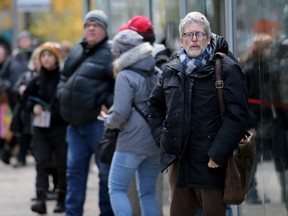
The Canadian government is under scrutiny regarding its hybrid work policies for public servants as discussions about a potential full-time return to the office gain traction. In recent remarks, Prime Minister Mark Carney indicated that the government would soon unveil a more definitive plan. However, the rationale behind potentially requiring public servants to return to the office five days a week raises questions, especially since the Treasury Board has yet to conduct studies on productivity related to the current mandate, which requires most public servants to work three days in the office.
Last year, the Treasury Board announced a task force to examine workplace dynamics. Despite its report being released on December 12, hybrid work was not included in its scope. The report made 19 recommendations, one of which called for improved data collection to measure productivity. Nevertheless, the Treasury Board stated it does not plan to implement this suggestion, which has drawn criticism from various observers.
Research on hybrid work for public servants remains limited. According to Linda Duxbury, a management professor at Carleton University, while private sector firms like Microsoft have conducted extensive research on the differences between remote and in-office work, the public sector lacks similar data. Duxbury pointed out, “The public sector is taking all kinds of actions, with no data,” emphasizing a disconnect in decision-making.
The absence of performance indicators in the public sector is a notable difference from private enterprises. Étienne Charbonneau, a professor at the National School of Public Administration, noted that private organizations often have built-in metrics for evaluating worker output. In contrast, the public sector tends to focus on optimizing resource use. He highlighted that many studies suggest productivity levels are comparable in both home and office settings. A recent study published in the journal Nature found that hybrid work did not hinder employee performance grades or the volume of work produced by software engineers in a Chinese tech company.
While many public servants report increased productivity while working remotely, these findings are primarily based on self-reported data, such as surveys. Maria Gintova, a political science professor at McMaster University, stated that employees she interviewed often prefer hybrid work arrangements, although there is “no magic number” for the ideal number of days in the office.
Charbonneau stressed the limitations of self-reported productivity assessments, arguing that evaluations should involve supervisors and formal performance reviews. He described such methods as inadequate, stating, “That’s not a good way to evaluate people.” Duxbury echoed this sentiment, labeling self-reported productivity as a “lousy measure.” She argued that the Government of Canada is neglecting its responsibility as an employer by not collecting comprehensive productivity data, which would be essential for improving operations, particularly with advancements in artificial intelligence.
Despite the lack of robust productivity data, research indicates that hybrid work arrangements can enhance quality of life. Charbonneau noted that many public servants experience reduced stress levels when commuting is no longer a factor. According to the 2022 Public Service Employee Survey, 80 percent of respondents agreed that flexible work arrangements contribute to a better work-life balance.
While many public servants appreciate the benefits of hybrid work, Charbonneau cautioned that not all employees share the same experience. Some individuals may feel more stressed working from home due to the blurred lines between personal and professional life. Gintova pointed out that employee morale could suffer if all workers are mandated to return to the office, as many express confusion over the rationale behind such a decision.
Concerns have also been raised regarding the condition of office spaces to which public servants are being recalled. Charbonneau warned that many office environments may not be in a suitable state for return, stating, “The conditions that are waiting for you are not the same conditions that you left in early 2020.” He highlighted the potential for overcrowding, as some departments may face challenges accommodating both returning employees and those still working from home.
While hybrid work offers flexibility, Duxbury cautioned that it may have drawbacks, particularly for tasks that require creativity or team collaboration. She noted that many private-sector hybrid workers report feelings of isolation and reduced camaraderie, which could hinder organizational culture. Furthermore, Gintova pointed out that promotional opportunities may be less accessible for remote workers, thereby widening inequalities within the workplace.
Duxbury advised decision-makers within the federal government to avoid drawing direct comparisons with private sector research, as the operational dynamics differ significantly. She concluded that while much is still unknown about the effects of hybrid work on public service, the complexity of the issue is evident.
As discussions continue regarding the future of hybrid work for public servants, the need for informed, data-driven decisions remains crucial for optimizing workplace efficiency and employee satisfaction.

Government Faces Scrutiny Over Hybrid Work Policies for Public Servants

Salmo’s Mountain Muskox Provides Healing for Backcountry Trauma

North Cowichan Takes Action on Boat Issues in Maple Bay

EU Condemns China’s Dairy Tariffs as Unjustified Trade Action

University of Illinois Launches Conservation Farming Series for 2024

City & Guilds Executives Awarded Million-Pound Bonuses Post-Privatization

Culver’s of Dixon Donates $500 to Local Food Pantry

Trump Administration Moves to Dismantle National Climate Research Center

Ottawa Teacher Restores Life Quality After Rare Surgery

Toyoake City Proposes Daily Two-Hour Smartphone Use Limit

Pedestrian Fatally Injured in Esquimalt Collision on August 14

B.C. Review Reveals Urgent Need for Rare-Disease Drug Reforms

Dark Adventure Game “Bye Sweet Carole” Set for October Release

Jimmy Lai’s Defense Challenges Charges Under National Security Law

Victoria’s Pop-Up Shop Shines Light on B.C.’s Wolf Cull

Konami Revives Iconic Metal Gear Solid Delta Ahead of Release

Apple Expands Self-Service Repair Program to Canada

Snapmaker U1 Color 3D Printer Redefines Speed and Sustainability
-
 Science4 months ago
Toyoake City Proposes Daily Two-Hour Smartphone Use Limit
-
 Top Stories4 months ago
Pedestrian Fatally Injured in Esquimalt Collision on August 14
-
 Health4 months ago
B.C. Review Reveals Urgent Need for Rare-Disease Drug Reforms
-
 Technology4 months ago
Dark Adventure Game “Bye Sweet Carole” Set for October Release
-
 World4 months ago
Jimmy Lai’s Defense Challenges Charges Under National Security Law
-
 Lifestyle4 months ago
Victoria’s Pop-Up Shop Shines Light on B.C.’s Wolf Cull
-
 Technology4 months ago
Konami Revives Iconic Metal Gear Solid Delta Ahead of Release
-
 Technology4 months ago
Apple Expands Self-Service Repair Program to Canada
-
 Technology4 months ago
Snapmaker U1 Color 3D Printer Redefines Speed and Sustainability
-

 Technology4 months ago
AION Folding Knife: Redefining EDC Design with Premium Materials
-

 Technology4 months ago
Solve Today’s Wordle Challenge: Hints and Answer for August 19
-

 Business4 months ago
Gordon Murray Automotive Unveils S1 LM and Le Mans GTR at Monterey