
World
Strong Quake Hits Northern Japan, Injures Ten and Triggers Alerts

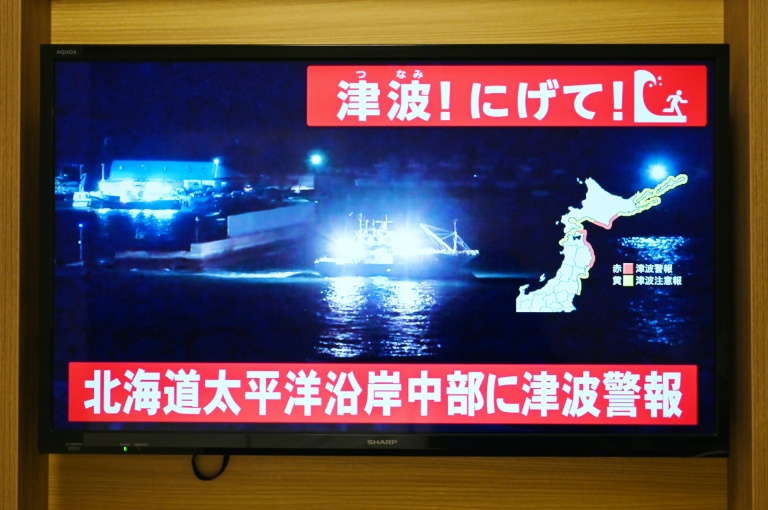
A significant earthquake measuring 7.6 on the Richter scale struck off the coast of the Aomori region in northern Japan on March 15, 2024, injuring at least ten people. The quake occurred at 11:15 PM local time (14:15 GMT) and generated tsunami waves reaching up to 70 centimetres (approximately 28 inches). Fortunately, there appears to be no major structural damage reported in the aftermath.
The Japan Meteorological Agency (JMA) warned that the earthquake raised the likelihood of additional tremors in the coming days. Among the injured, one person sustained serious injuries in Hokkaido, where the quake’s intensity prompted alarm systems to activate, alerting residents. Eyewitness accounts from an AFP reporter indicated that the ground shook violently for about 30 seconds, with shattered glass observed littering roads.
In the hours following the earthquake, approximately 2,700 homes in Aomori were reported to be without power, and numerous fires were documented across the region. Initial warnings from the JMA indicated that tsunami waves could potentially reach up to three metres (about 10 feet). Although the waves ultimately measured substantially lower, many residents were urged to evacuate to safer areas.
Public broadcaster NHK reported that a hotel employee in Hachinohe, Aomori, confirmed some injuries related to the quake. Meanwhile, Shinkansen bullet train services were suspended in various locations while engineers conducted damage assessments on the tracks.
In a reassuring update, Tohoku Electric Power reported that no abnormalities were detected at its nuclear facilities in the region, including the Higashidori plant in Aomori and the Onagawa facility in Miyagi prefecture.
Japanese Prime Minister Sanae Takaichi urged residents to remain vigilant. “Please listen to information from the JMA or local governments for about a week and check if furniture is fixed. Be prepared to evacuate when you feel shaking,” she advised.
Japan has a long history of seismic activity, sitting atop four major tectonic plates along the Pacific “Ring of Fire.” The country experiences around 1,500 earthquakes annually, with the vast majority being mild. However, the potential for more significant events remains a concern. In a recent assessment, a government panel increased the probability of a major earthquake occurring in the Nankai Trough over the next 30 years to between 75% and 82%.
The government’s updated estimates in March highlighted the catastrophic potential of such an event, predicting that a “megaquake” could lead to as many as 298,000 deaths and cause damages amounting to $2 trillion.
As recovery efforts continue, the focus remains on ensuring public safety and preparedness in a nation accustomed to living with the threat of seismic activity.

Luxembourg’s 3D-Printed Tiny Home Revolutionizes Housing Solutions

Canada’s Job Market Poses Challenges for Gen Z Workers

Cathay Pacific Expands Luxury Transpacific Routes to the US

Abbotsford Students Create Bags to Combat Impaired Driving

Westmount’s Carol for a Cure Raises Funds for Breast Cancer Research

SkyTrain to Retire Entire Mark II Fleet by Late 2030s

Join the Excitement at Big Broadway Trivia Night in Winnipeg

US, Ukraine Hold ‘Productive’ Talks in Miami, No Breakthrough Achieved

Dalhousie University Launches Physician Assistant Program to Enhance Healthcare

Toyoake City Proposes Daily Two-Hour Smartphone Use Limit

Pedestrian Fatally Injured in Esquimalt Collision on August 14

B.C. Review Reveals Urgent Need for Rare-Disease Drug Reforms

Dark Adventure Game “Bye Sweet Carole” Set for October Release

Jimmy Lai’s Defense Challenges Charges Under National Security Law

Victoria’s Pop-Up Shop Shines Light on B.C.’s Wolf Cull

Konami Revives Iconic Metal Gear Solid Delta Ahead of Release

Apple Expands Self-Service Repair Program to Canada

Snapmaker U1 Color 3D Printer Redefines Speed and Sustainability
-
 Science4 months ago
Toyoake City Proposes Daily Two-Hour Smartphone Use Limit
-
 Top Stories4 months ago
Pedestrian Fatally Injured in Esquimalt Collision on August 14
-
 Health4 months ago
B.C. Review Reveals Urgent Need for Rare-Disease Drug Reforms
-
 Technology4 months ago
Dark Adventure Game “Bye Sweet Carole” Set for October Release
-
 World4 months ago
Jimmy Lai’s Defense Challenges Charges Under National Security Law
-
 Lifestyle4 months ago
Victoria’s Pop-Up Shop Shines Light on B.C.’s Wolf Cull
-
 Technology4 months ago
Konami Revives Iconic Metal Gear Solid Delta Ahead of Release
-
 Technology4 months ago
Apple Expands Self-Service Repair Program to Canada
-
 Technology4 months ago
Snapmaker U1 Color 3D Printer Redefines Speed and Sustainability
-

 Technology4 months ago
AION Folding Knife: Redefining EDC Design with Premium Materials
-

 Technology4 months ago
Solve Today’s Wordle Challenge: Hints and Answer for August 19
-

 Business4 months ago
Gordon Murray Automotive Unveils S1 LM and Le Mans GTR at Monterey