
Top Stories
Taiwan Allocates $40 Billion for Defense Expansion Against China

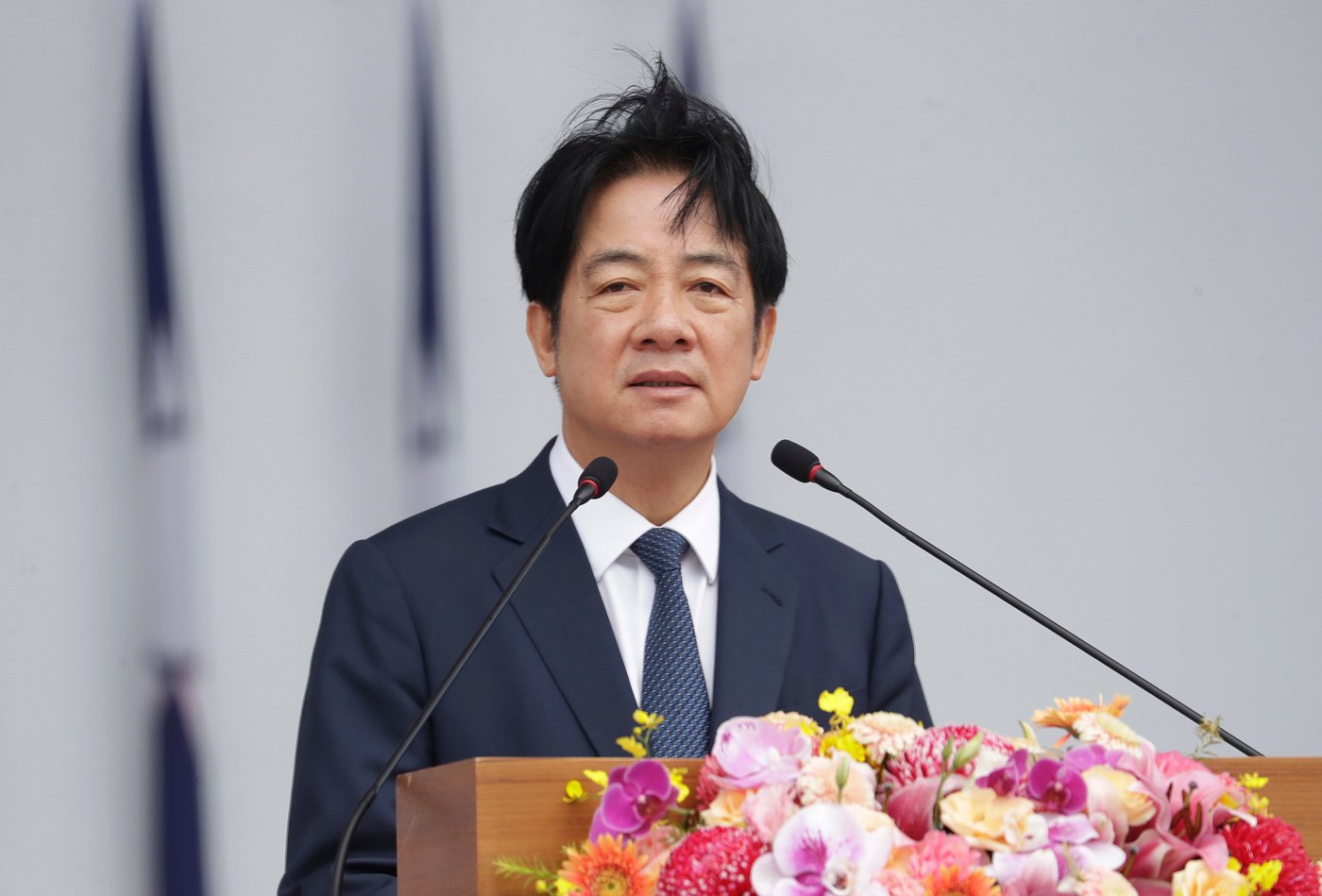
Taiwan’s President Lai Ching-te unveiled a substantial $40 billion budget on Wednesday aimed at enhancing the island’s defense capabilities. This funding will support the development of a new air defense system, known as the Taiwan Dome, which is designed to improve detection and interception of aerial threats. The budget is set to be allocated over an eight-year period, from 2026 to 2033, as Taiwan responds to increasing military pressure from China.
In a statement, Lai emphasized the urgency of strengthening Taiwan’s defenses, stating, “China’s threats to Taiwan and the Indo-Pacific region are escalating.” He highlighted the recent military activities and disinformation campaigns from China that have raised alarm across the region, impacting not only Taiwan but also neighboring countries such as Japan and the Philippines. Lai called for Taiwan to demonstrate its commitment to self-defense, particularly in light of its strategic position in the first island chain stretching from Japan to the Philippines.
Taiwan’s defense budget is currently projected to increase to 3.3% of its GDP in 2026, amounting to approximately $31.18 billion. This move follows pressure from the United States, where former President Donald Trump suggested that Taiwan should elevate its defense spending to as much as 10% of its GDP, a significant leap compared to the defense expenditures of the U.S. and its major allies.
The budget announcement comes as tensions remain high between Taiwan and China, which claims the self-governing island as part of its territory. In recent years, China has consistently conducted military exercises near Taiwan, deploying warplanes and naval vessels in an effort to assert its claims.
During the announcement, Lai reiterated that the special budget is intended for purchasing arms from the United States. Wellington Koo, Taiwan’s defense minister, clarified that the $40 billion represents an upper limit, with funds earmarked for acquiring precision-strike missiles and for joint development projects with the U.S. government.
Lai further addressed the need for Taiwan to bolster its defenses against what he termed Beijing’s “psychological warfare.” He affirmed that the government would enhance public awareness regarding Chinese interference, particularly during significant events and elections.
The Taiwanese president also commented on escalating tensions between China and Japan, especially in light of remarks from Japanese Prime Minister Sanae Takaichi, who indicated that Japan may consider military involvement if China acts against Taiwan. Lai noted that Takaichi’s comments underscore the importance of regional stability and expressed hope that China would accept its responsibilities as a major power in the region.
“This is not the way a responsible major power acts,” Lai stated, urging China to engage in constructive dialogue rather than continued threats against its neighbors.
The implications of Taiwan’s significant budget allocation for defense reflect not only concerns about its own security but also the broader dynamics of power in the Indo-Pacific region. As Taiwan takes these decisive steps, the international community will closely monitor how these developments will influence regional stability and security.

Meta Plans Major Layoffs as AI Costs Surge

Alberta’s Referendum Could Pave Way for U.S. Statehood

Minooka District 201 Plans Enhanced Bilingual Support for Students

Canmore Approves Multiple Development Permits for New Projects

Remembering Bradly Castillo Shearsmith: A Life of Friendship and Joy

BIS Urges Watchdogs to Integrate Synthetic Risk Transfers in Stress Tests

Teva Transforms: Shifting Focus from Generics to Branded Success

Apple Launches AirPods Max 2 with Enhanced Audio Features

Ontario Ends Funding for Seven Supervised Injection Sites

Toyoake City Proposes Daily Two-Hour Smartphone Use Limit

Pedestrian Fatally Injured in Esquimalt Collision on August 14

B.C. Review Reveals Urgent Need for Rare-Disease Drug Reforms

Dark Adventure Game “Bye Sweet Carole” Set for October Release

Konami Revives Iconic Metal Gear Solid Delta Ahead of Release

Victoria’s Pop-Up Shop Shines Light on B.C.’s Wolf Cull

Jimmy Lai’s Defense Challenges Charges Under National Security Law

Snapmaker U1 Color 3D Printer Redefines Speed and Sustainability

Apple Expands Self-Service Repair Program to Canada
-
 Science11 months ago
Toyoake City Proposes Daily Two-Hour Smartphone Use Limit
-
 Top Stories11 months ago
Pedestrian Fatally Injured in Esquimalt Collision on August 14
-
 Health11 months ago
B.C. Review Reveals Urgent Need for Rare-Disease Drug Reforms
-
 Technology11 months ago
Dark Adventure Game “Bye Sweet Carole” Set for October Release
-
 Technology11 months ago
Konami Revives Iconic Metal Gear Solid Delta Ahead of Release
-
 Lifestyle11 months ago
Victoria’s Pop-Up Shop Shines Light on B.C.’s Wolf Cull
-
 World11 months ago
Jimmy Lai’s Defense Challenges Charges Under National Security Law
-
 Technology11 months ago
Snapmaker U1 Color 3D Printer Redefines Speed and Sustainability
-
 Technology11 months ago
Apple Expands Self-Service Repair Program to Canada
-

 Technology11 months ago
AION Folding Knife: Redefining EDC Design with Premium Materials
-

 Technology11 months ago
Solve Today’s Wordle Challenge: Hints and Answer for August 19
-

 Business11 months ago
Gordon Murray Automotive Unveils S1 LM and Le Mans GTR at Monterey