
Lifestyle
Influential Philosopher Jürgen Habermas Passes Away at 96

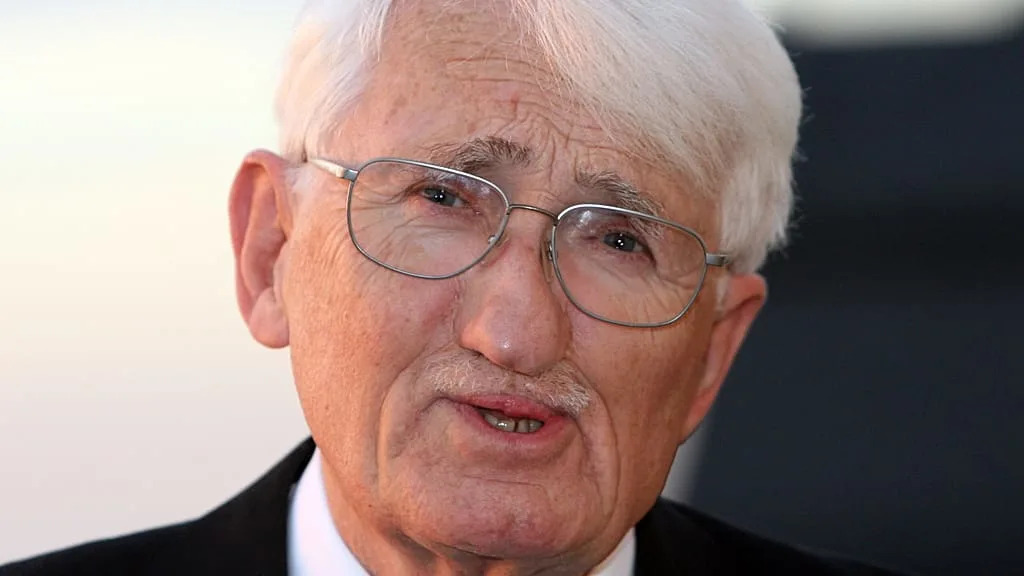
Jürgen Habermas, one of Germany’s most significant post-war philosophers, passed away on Saturday at the age of 96, as confirmed by his publishing house, Suhrkamp. His contributions to fields such as communication, rationality, and sociology have positioned him as a central figure in contemporary philosophy, particularly as a representative of the Frankfurt School.
Habermas was renowned for his reworking of the “Critical Theory,” originally developed by his mentors, Theodor W. Adorno and Max Horkheimer. This critical analysis of society, politics, and culture questioned existing power structures and ideologies. He stood out as the last surviving member of the Frankfurt School and was known for his willingness to engage in contemporary political discourse, frequently publishing opinion pieces in leading German newspapers.
One of Habermas’ most important works is the two-volume Theory of Communicative Action, published in 1981. In this seminal text, he articulates a vision of reason as an emancipatory communicative act, striving for a society where communication is free from domination and violence. This work has influenced numerous fields, including sociology, political theory, and communication studies.
Born in Düsseldorf in 1929, Habermas experienced the profound impact of the Nazi regime during his formative years. He enrolled in the Hitler Youth, a common experience for boys of his generation, but was deeply affected by the collapse of Nazism when he turned 15. Habermas later reflected on this dark chapter, noting, “you saw suddenly that it was a politically criminal system in which you had lived.” This revelation played a crucial role in shaping his philosophical outlook.
In the 1960s, Habermas had a complex relationship with the German left-wing student movement. While he engaged with its ideals, he firmly opposed radicalization and violence, cautioning against what he termed “left-wing fascism.” Nonetheless, he later acknowledged the movement’s role in fostering a “fundamental liberalisation” of German society.
Habermas faced personal health challenges early in life, being born with a severe cleft palate that required multiple surgeries. He often credited these experiences for shaping his views on language and communication. Despite his reluctance to engage with visual media, he maintained a significant influence through his writings. When approached for an interview by Euronews in 2002, he declined, stating, “sorry, but I don’t do television.”
The philosopher’s personal life was marked by loss. His wife, Ute Habermas-Wesselhoeft, passed away last year, and their daughter, Rebekka Habermas, a noted historian, died in 2023. Habermas is survived by his son, Tilmann Habermas, a psychoanalyst and professor of psychology, as well as his daughter, Judith, a designer.
Habermas’ legacy as a philosopher and public intellectual will continue to resonate in discussions around communication, democracy, and social theory. His contributions have left an indelible mark on the landscape of contemporary thought, ensuring that his ideas will remain relevant for generations to come.

Meta Plans Major Layoffs as AI Costs Surge

Alberta’s Referendum Could Pave Way for U.S. Statehood

Minooka District 201 Plans Enhanced Bilingual Support for Students

Canmore Approves Multiple Development Permits for New Projects

Remembering Bradly Castillo Shearsmith: A Life of Friendship and Joy

BIS Urges Watchdogs to Integrate Synthetic Risk Transfers in Stress Tests

Teva Transforms: Shifting Focus from Generics to Branded Success

Apple Launches AirPods Max 2 with Enhanced Audio Features

Ontario Ends Funding for Seven Supervised Injection Sites

Toyoake City Proposes Daily Two-Hour Smartphone Use Limit

Pedestrian Fatally Injured in Esquimalt Collision on August 14

B.C. Review Reveals Urgent Need for Rare-Disease Drug Reforms

Dark Adventure Game “Bye Sweet Carole” Set for October Release

Konami Revives Iconic Metal Gear Solid Delta Ahead of Release

Victoria’s Pop-Up Shop Shines Light on B.C.’s Wolf Cull

Jimmy Lai’s Defense Challenges Charges Under National Security Law

Snapmaker U1 Color 3D Printer Redefines Speed and Sustainability

Apple Expands Self-Service Repair Program to Canada
-
 Science1 year ago
Toyoake City Proposes Daily Two-Hour Smartphone Use Limit
-
 Top Stories1 year ago
Pedestrian Fatally Injured in Esquimalt Collision on August 14
-
 Health1 year ago
B.C. Review Reveals Urgent Need for Rare-Disease Drug Reforms
-
 Technology12 months ago
Dark Adventure Game “Bye Sweet Carole” Set for October Release
-
 Technology1 year ago
Konami Revives Iconic Metal Gear Solid Delta Ahead of Release
-
 Lifestyle1 year ago
Victoria’s Pop-Up Shop Shines Light on B.C.’s Wolf Cull
-
 World1 year ago
Jimmy Lai’s Defense Challenges Charges Under National Security Law
-
 Technology1 year ago
Snapmaker U1 Color 3D Printer Redefines Speed and Sustainability
-
 Technology1 year ago
Apple Expands Self-Service Repair Program to Canada
-

 Technology1 year ago
AION Folding Knife: Redefining EDC Design with Premium Materials
-

 Technology1 year ago
Solve Today’s Wordle Challenge: Hints and Answer for August 19
-

 Business1 year ago
Gordon Murray Automotive Unveils S1 LM and Le Mans GTR at Monterey