
Science
Interdisciplinary Team Targets Chronic Back Pain with Stem Cell Innovation

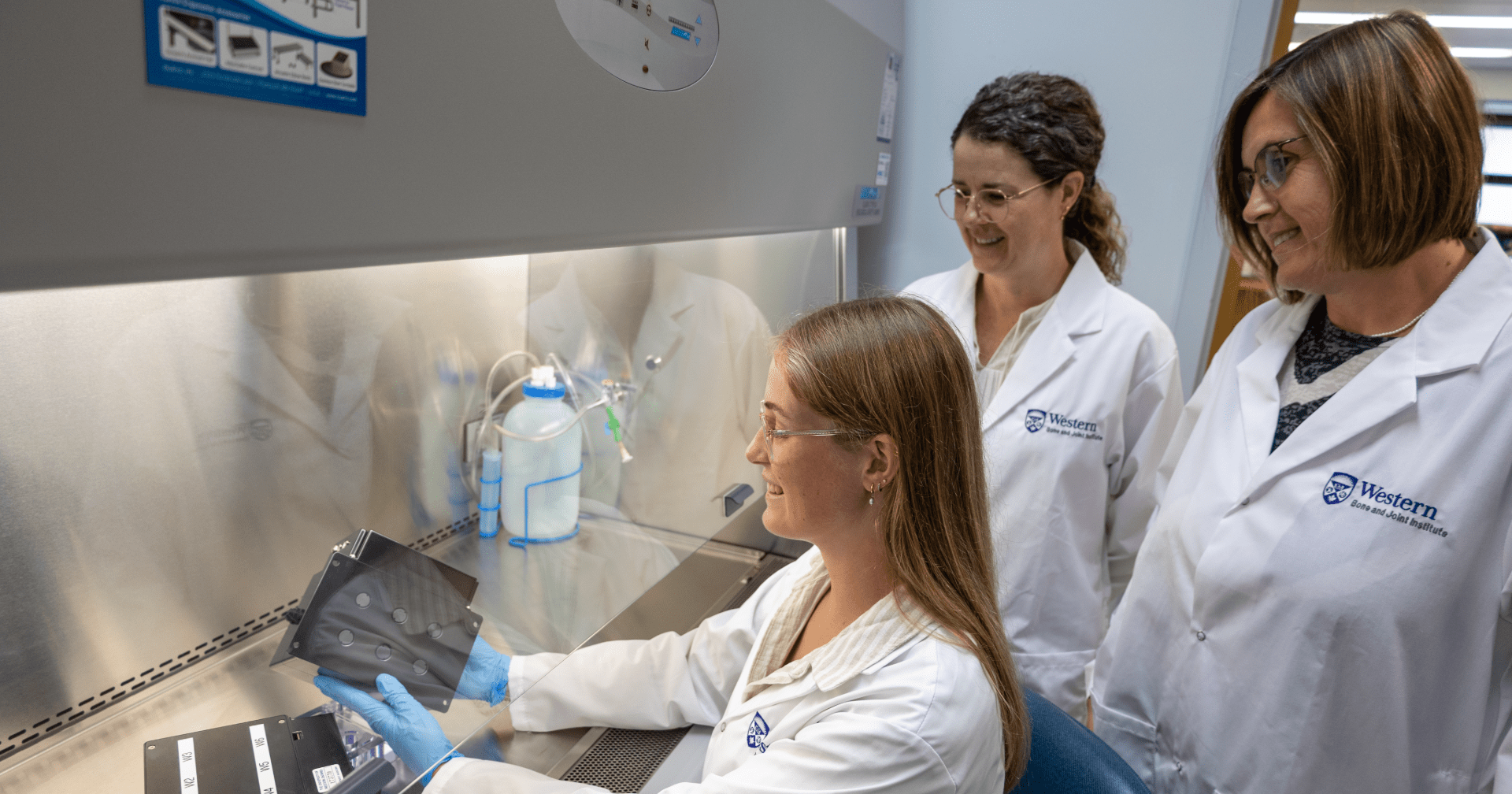
Chronic back pain affects millions globally, often leading to costly medical visits without providing a permanent solution. The interdisciplinary team at Western’s Bone and Joint Institute is making strides in addressing this issue by developing a treatment using stem cells and custom-designed biomaterials. Their innovative approach focuses on restoring the function and structure of intervertebral discs, the crucial cushions between the vertebrae in the spine.
Co-led by Cheryle Séguin and Lauren Flynn from the Schulich School of Medicine & Dentistry, the research aims to tackle chronic pain by promoting the regeneration of damaged spinal discs. This initiative comes at a time when conventional methods only manage pain symptoms, leaving many patients without a viable long-term solution. “We want to create a product that would promote the rebuilding of damaged spinal discs, letting the body heal itself,” Séguin stated.
Innovative Research Approach
The complexity of repairing degenerative spinal discs necessitated a collaborative effort. Séguin recognized early on that a multidisciplinary approach was essential for success. This realization led her to partner with Flynn, who specializes in natural biomaterials, and Brian Amsden from Queen’s University, known for his expertise in synthetic biomaterials.
Together, they aim to create a treatment that not only alleviates symptoms but also addresses the underlying issues of disc degeneration. “We are combining knowledge and techniques with different ingredients so we can make something new,” Séguin remarked, emphasizing the excitement of working at the intersection of their respective fields.
The team is also collaborating with researchers across Canada and the United States, including Lisbet Haglund from McGill University, who focuses on simulating the human spine, and experts from Cedars-Sinai Medical Center and Sunnybrook Health Sciences Centre. Their diverse insights are key to informing the development of new biomaterials and treatment strategies.
Path from Concept to Patient
The journey from research concept to practical application often begins with passionate discussions among researchers sharing common goals. Séguin and Flynn credit the support from the Bone and Joint Institute, which has provided seed funding and an interdisciplinary environment crucial for turning their ideas into actionable projects.
After a decade of development, the team is gaining momentum, securing significant funding, including a $960,000 project grant from the Canadian Institutes of Health Research and a $270,000 Impact Award from the Stem Cell Network. Despite still being in the early stages focused on materials development and cell culture experiments, the researchers are optimistic about the potential impact of their work.
“We need to test and adjust ingredients to improve outcomes, safety, and efficiency, so we are still years away from getting our products to patients,” Flynn noted. The team believes that their breakthrough could greatly benefit the healthcare system and provide relief for millions suffering from chronic pain.
As the research continues to evolve, the hope is that these innovative treatments will pave the way for a future where individuals can live and work free of debilitating back pain, improving their overall quality of life.

Meta Plans Major Layoffs as AI Costs Surge

Alberta’s Referendum Could Pave Way for U.S. Statehood

Minooka District 201 Plans Enhanced Bilingual Support for Students

Canmore Approves Multiple Development Permits for New Projects

Remembering Bradly Castillo Shearsmith: A Life of Friendship and Joy

BIS Urges Watchdogs to Integrate Synthetic Risk Transfers in Stress Tests

Teva Transforms: Shifting Focus from Generics to Branded Success

Apple Launches AirPods Max 2 with Enhanced Audio Features

Ontario Ends Funding for Seven Supervised Injection Sites

Toyoake City Proposes Daily Two-Hour Smartphone Use Limit

Pedestrian Fatally Injured in Esquimalt Collision on August 14

B.C. Review Reveals Urgent Need for Rare-Disease Drug Reforms

Dark Adventure Game “Bye Sweet Carole” Set for October Release

Konami Revives Iconic Metal Gear Solid Delta Ahead of Release

Victoria’s Pop-Up Shop Shines Light on B.C.’s Wolf Cull

Jimmy Lai’s Defense Challenges Charges Under National Security Law

Snapmaker U1 Color 3D Printer Redefines Speed and Sustainability

Apple Expands Self-Service Repair Program to Canada
-
 Science12 months ago
Toyoake City Proposes Daily Two-Hour Smartphone Use Limit
-
 Top Stories12 months ago
Pedestrian Fatally Injured in Esquimalt Collision on August 14
-
 Health12 months ago
B.C. Review Reveals Urgent Need for Rare-Disease Drug Reforms
-
 Technology12 months ago
Dark Adventure Game “Bye Sweet Carole” Set for October Release
-
 Technology12 months ago
Konami Revives Iconic Metal Gear Solid Delta Ahead of Release
-
 Lifestyle12 months ago
Victoria’s Pop-Up Shop Shines Light on B.C.’s Wolf Cull
-
 World12 months ago
Jimmy Lai’s Defense Challenges Charges Under National Security Law
-
 Technology12 months ago
Snapmaker U1 Color 3D Printer Redefines Speed and Sustainability
-
 Technology12 months ago
Apple Expands Self-Service Repair Program to Canada
-

 Technology12 months ago
AION Folding Knife: Redefining EDC Design with Premium Materials
-

 Technology12 months ago
Solve Today’s Wordle Challenge: Hints and Answer for August 19
-

 Business12 months ago
Gordon Murray Automotive Unveils S1 LM and Le Mans GTR at Monterey