
Science
University of Guelph Honors Shakespeare VR as Innovation of the Year

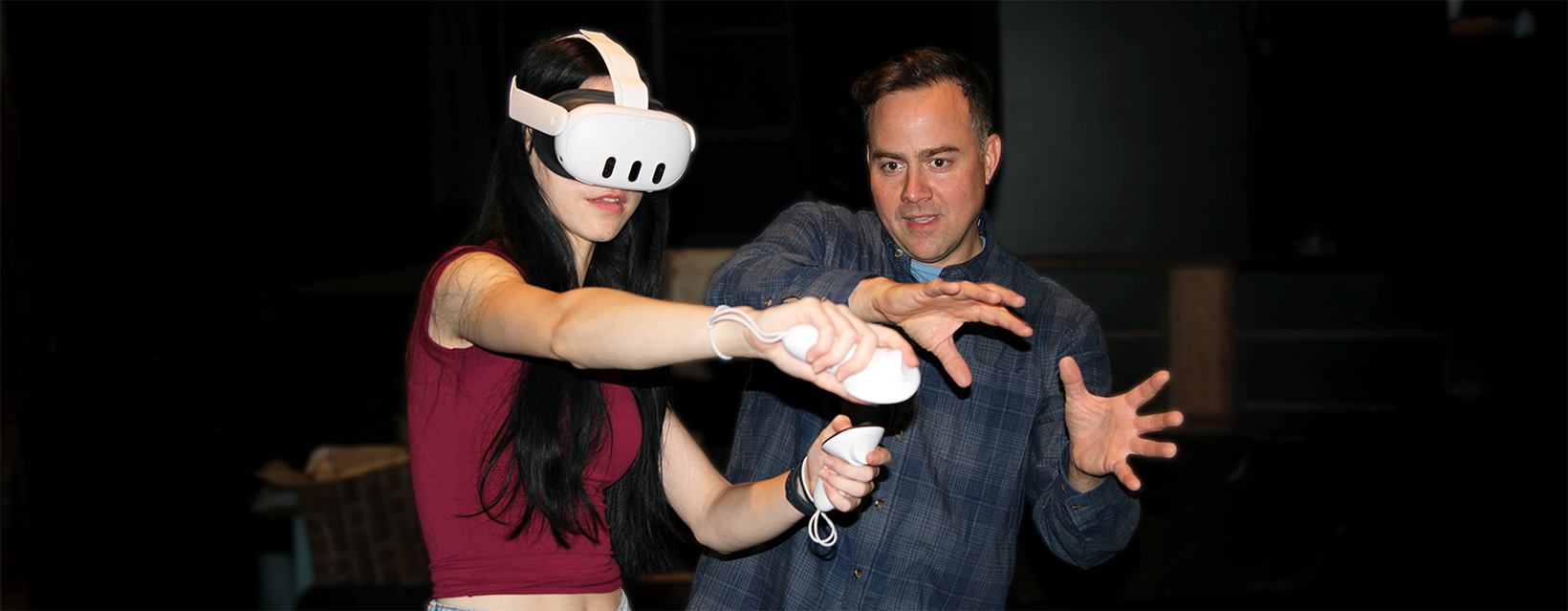
A virtual reality theatre initiative designed to immerse high school students in Shakespearean plays has been awarded the 2025 Innovation of the Year by the University of Guelph. This pioneering project transforms classic works into interactive experiences, making Shakespeare’s literature accessible to learners across various educational settings.
The annual award, presented by the University’s Office of Research and the Research Innovation Office, recognizes research outcomes that foster innovative strategies and products with a significant impact on society. Dr. Shayan Sharif, interim vice-president for research at the University, emphasized the importance of this project, stating, “This project is a perfect example of turning innovation into real-world impact. By combining cutting-edge virtual reality with Shakespeare’s works, we’re improving life for students through an immersive, interactive approach that reimagines how these stories are experienced.”
Dr. Peter Kuling, a professor in the School of Theatre, English, and Creative Writing, collaborated with Calian, an Ottawa-based company specializing in virtual reality development, to design the technology. Kuling noted, “I partnered with Calian because they understood the psychological and spatial experience of being ‘inside’ a scene and gave the experience of what it feels like to explore, make choices, and be immersed in an environment.” Their prior experience, including work for the Canadian War Museum, informed the project’s design, aiming to shape learning through engaging environments.
The initiative began in response to a funding call from the Government of Ontario during the COVID-19 pandemic, which sought innovative digital teaching solutions for high schools, colleges, and universities. Kuling reflected on the inspiration behind the project, saying, “I kept wondering what theatre could offer in a digital world and what I would have wanted in high school to truly understand Shakespeare. This project gives students a chance to experience Shakespeare not as a distant text, but as a living, breathing world they can step inside.”
The team first developed the Hamlet VR Experience, followed by the Macbeth VR Experience. Each production is designed to last between 12 and 26 minutes, allowing participants to engage with the narrative actively. In the Hamlet VR, players assume the role of Bernardo, a castle guard who encounters the ghost of Hamlet’s father, with the option to either deliver lines personally or allow an actor to present them. The Macbeth VR experience allows participants to become one of the three witches, casting spells and delivering prophecies while offering unique perspectives on key scenes.
Inclusivity is a core principle of the project, which features diverse characters and environments reflecting contemporary Canadian society. The VR experiences are designed to accommodate various user needs, including options for standing or seated play, alongside multilingual support through recorded dialogue rather than on-screen text. This initiative has already made a considerable impact, engaging high school students in Ontario and beyond, with schools from California to the United Kingdom utilizing the technology.
Educators across Ontario have integrated Shakespeare VR into their classrooms. At John Fraser Secondary School in Mississauga, students have enthusiastically embraced the VR experiences. English and history teacher Robert Gale noted the transformative effect of the technology: “Watching students step inside the world of the play was incredible, and even those who are usually shy lit up. The immersive details and 360-degree environment helped them feel the story rather than just read it, bringing Shakespeare to life in a way I’ve never seen in a classroom.”
Looking ahead, Kuling plans to expand the VR project with additional Shakespearean plays, including Julius Caesar and Antony and Cleopatra. He is also developing the Globe VR Experience, a virtual recreation of Shakespeare’s original theatre, which is set to launch in 2026. “With the Globe VR Experience, we’re bringing Shakespeare’s world directly to students, with no travel required,” Kuling stated. “We can bring world-class performances directly to students at every level, from high school to university.”
Kuling views the recognition of the Innovation of the Year Award as a collective achievement, highlighting the collaborative effort that went into the project. “This project was built on collaboration and creativity, and the award truly belongs to everyone who worked together to make something innovative and inspiring,” he said. Kuling expressed gratitude for the recognition of an idea that emerged from teamwork and imagination, emphasizing the importance of expanding educational opportunities and demonstrating how the arts can innovate alongside technology.
Numerous collaborators contributed to the success of the virtual performances, including Theatre Studies PhD students Alice Hinchliffe and Erin O’Brien, alumni Gabriella Sundar-Singh, Kyle Blair, and Kyle Golemba, as well as company members from the Stratford and Shaw Festivals. This research was funded by the Ontario Exchange Network, ensuring that innovative educational resources remain accessible to students throughout the province and beyond.

Meta Plans Major Layoffs as AI Costs Surge

Alberta’s Referendum Could Pave Way for U.S. Statehood

Minooka District 201 Plans Enhanced Bilingual Support for Students

Canmore Approves Multiple Development Permits for New Projects

Remembering Bradly Castillo Shearsmith: A Life of Friendship and Joy

BIS Urges Watchdogs to Integrate Synthetic Risk Transfers in Stress Tests

Teva Transforms: Shifting Focus from Generics to Branded Success

Apple Launches AirPods Max 2 with Enhanced Audio Features

Ontario Ends Funding for Seven Supervised Injection Sites

Toyoake City Proposes Daily Two-Hour Smartphone Use Limit

Pedestrian Fatally Injured in Esquimalt Collision on August 14

B.C. Review Reveals Urgent Need for Rare-Disease Drug Reforms

Dark Adventure Game “Bye Sweet Carole” Set for October Release

Konami Revives Iconic Metal Gear Solid Delta Ahead of Release

Victoria’s Pop-Up Shop Shines Light on B.C.’s Wolf Cull

Jimmy Lai’s Defense Challenges Charges Under National Security Law

Snapmaker U1 Color 3D Printer Redefines Speed and Sustainability

Apple Expands Self-Service Repair Program to Canada
-
 Science12 months ago
Toyoake City Proposes Daily Two-Hour Smartphone Use Limit
-
 Top Stories12 months ago
Pedestrian Fatally Injured in Esquimalt Collision on August 14
-
 Health12 months ago
B.C. Review Reveals Urgent Need for Rare-Disease Drug Reforms
-
 Technology12 months ago
Dark Adventure Game “Bye Sweet Carole” Set for October Release
-
 Technology12 months ago
Konami Revives Iconic Metal Gear Solid Delta Ahead of Release
-
 Lifestyle12 months ago
Victoria’s Pop-Up Shop Shines Light on B.C.’s Wolf Cull
-
 World12 months ago
Jimmy Lai’s Defense Challenges Charges Under National Security Law
-
 Technology12 months ago
Snapmaker U1 Color 3D Printer Redefines Speed and Sustainability
-
 Technology12 months ago
Apple Expands Self-Service Repair Program to Canada
-

 Technology12 months ago
AION Folding Knife: Redefining EDC Design with Premium Materials
-

 Technology12 months ago
Solve Today’s Wordle Challenge: Hints and Answer for August 19
-

 Business12 months ago
Gordon Murray Automotive Unveils S1 LM and Le Mans GTR at Monterey