
Science
Study Links Volcanic Eruptions to Black Death Spread in Europe

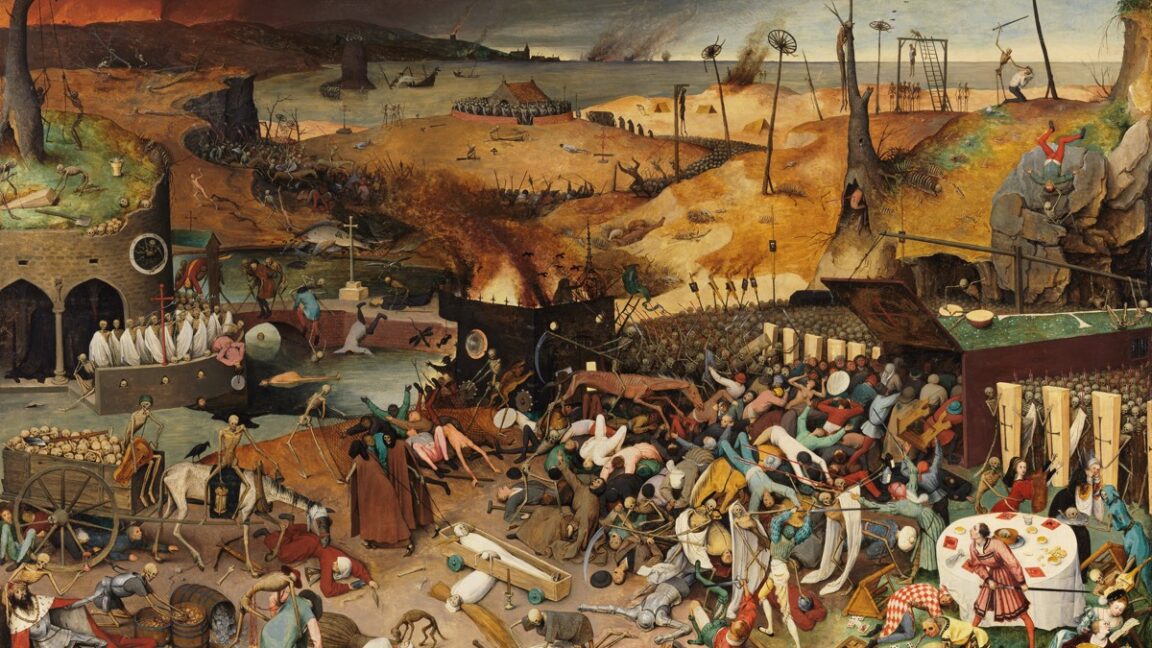
The Black Death, which decimated approximately one-third of the population in medieval Western Europe, has long been attributed to the bacterium Yersinia pestis. New research published in the journal Communications Earth & Environment suggests that a series of volcanic eruptions may have acted as a catalyst for the pandemic’s spread to Europe in the 1340s. This study highlights the complex interplay of environmental and socioeconomic factors that contributed to the outbreak.
Researchers have established that Yersinia pestis originated in the Tien Shan mountains, located west of present-day Kyrgyzstan, and traveled along trade routes to the Mediterranean. However, the specific conditions that allowed for its rapid spread have remained less understood. The authors of the recent paper propose that a major volcanic eruption, or potentially a cluster of eruptions, around 1345 created a series of environmental stresses that facilitated the plague’s emergence.
Climate and Economic Factors at Play
The study, co-authored by Ulf Büntgen from the University of Cambridge, involved analyzing tree ring data from eight European sites to reconstruct summer temperatures during this period. They compared this data with estimates of sulfur emissions from volcanic activity, derived from ice core samples taken in Antarctica and Greenland. Büntgen emphasized the importance of understanding the interconnected factors behind the Black Death, stating, “It’s such an interesting question, but it’s one no one can answer alone.”
The researchers found that tree rings indicated unusually cold or wet summers between 1345 and 1347. This climatic shift was corroborated by historical texts that described increased cloudiness and darkened lunar eclipses, phenomena linked to volcanic dust. These weather changes led to significant crop failures and resultant famine across regions including parts of Spain, southern France, and northern and central Italy.
As larger cities like Milan and Rome maintained relative self-sufficiency, smaller urban centers such as Bologna, Florence, and Venice depended heavily on grain imports. Administrative records from this era indicate that grain prices skyrocketed in 1346, prompting the imposition of grain trade regulations to avert starvation. Unfortunately, these trade routes also facilitated the movement of the plague.
A Modern Perspective on Historical Lessons
The authors argue that the unique combination of factors that triggered the spread of the Black Death underscores the vulnerabilities present in a globalized world. Büntgen notes that while the specific conditions leading to the Black Death may be rare, the likelihood of zoonotic diseases emerging due to climate change is increasing. He draws parallels to recent events, stating, “This is especially relevant given our recent experiences with COVID-19.”
The research serves as a reminder of the potential consequences of environmental shifts and global trade on public health. By examining the historical context of the Black Death, the study calls for a multidisciplinary approach to address future pandemics, emphasizing the need for vigilance and preparedness in an interconnected world.
The findings of this study not only deepen our understanding of the Black Death but also highlight the ongoing relevance of historical pandemics in informing contemporary health strategies. The implications of this research are significant, suggesting that lessons learned from the past can guide responses to current and future global health challenges.

Meta Plans Major Layoffs as AI Costs Surge

Alberta’s Referendum Could Pave Way for U.S. Statehood

Minooka District 201 Plans Enhanced Bilingual Support for Students

Canmore Approves Multiple Development Permits for New Projects

Remembering Bradly Castillo Shearsmith: A Life of Friendship and Joy

BIS Urges Watchdogs to Integrate Synthetic Risk Transfers in Stress Tests

Teva Transforms: Shifting Focus from Generics to Branded Success

Apple Launches AirPods Max 2 with Enhanced Audio Features

Ontario Ends Funding for Seven Supervised Injection Sites

Toyoake City Proposes Daily Two-Hour Smartphone Use Limit

Pedestrian Fatally Injured in Esquimalt Collision on August 14

B.C. Review Reveals Urgent Need for Rare-Disease Drug Reforms

Dark Adventure Game “Bye Sweet Carole” Set for October Release

Konami Revives Iconic Metal Gear Solid Delta Ahead of Release

Victoria’s Pop-Up Shop Shines Light on B.C.’s Wolf Cull

Jimmy Lai’s Defense Challenges Charges Under National Security Law

Snapmaker U1 Color 3D Printer Redefines Speed and Sustainability

Apple Expands Self-Service Repair Program to Canada
-
 Science12 months ago
Toyoake City Proposes Daily Two-Hour Smartphone Use Limit
-
 Top Stories12 months ago
Pedestrian Fatally Injured in Esquimalt Collision on August 14
-
 Health12 months ago
B.C. Review Reveals Urgent Need for Rare-Disease Drug Reforms
-
 Technology12 months ago
Dark Adventure Game “Bye Sweet Carole” Set for October Release
-
 Technology12 months ago
Konami Revives Iconic Metal Gear Solid Delta Ahead of Release
-
 Lifestyle12 months ago
Victoria’s Pop-Up Shop Shines Light on B.C.’s Wolf Cull
-
 World12 months ago
Jimmy Lai’s Defense Challenges Charges Under National Security Law
-
 Technology12 months ago
Snapmaker U1 Color 3D Printer Redefines Speed and Sustainability
-
 Technology12 months ago
Apple Expands Self-Service Repair Program to Canada
-

 Technology12 months ago
AION Folding Knife: Redefining EDC Design with Premium Materials
-

 Technology12 months ago
Solve Today’s Wordle Challenge: Hints and Answer for August 19
-

 Business12 months ago
Gordon Murray Automotive Unveils S1 LM and Le Mans GTR at Monterey