
Science
Alberta Implements Strict Measures Against Invasive Wild Boars

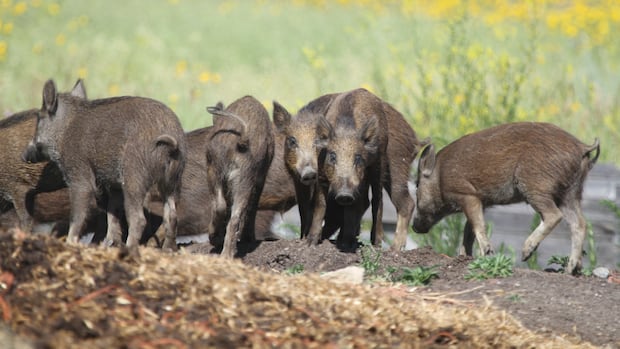
The Alberta government has classified wild boars as “a pest in all circumstances,” implementing new regulations effective December 1, 2023. These measures restrict the keeping of wild boars in captivity and prohibit hunting them in the wild, significantly altering the landscape for farmers and wildlife management in the province.
Under the new regulations, it is now illegal to keep, buy, sell, obtain, or transport wild boars in Alberta without a permit. Furthermore, no new wild boar farms will be permitted, and hunting and trapping of wild boars is banned, except for landowners or occupants who may kill the animals on their own property. Those who do kill a wild boar are required to report the date, location, and number of boars killed to the province as soon as possible.
Hannah McKenzie, Alberta’s wild boar specialist, highlighted the rationale behind these changes, emphasizing the dangers posed by the existing wild boar populations. “In addition to damaging agriculture and the environment, wild boars pose a serious risk for the introduction and spread of foreign animal diseases, including African swine fever and foot and mouth disease,” McKenzie stated. She noted that these diseases could have severe financial repercussions for the pork industry and broader livestock sector.
The term “wild boar” refers to the Eurasian wild pig, or hybrids between this animal and domestic swine. Initially brought to the Prairies in the late 20th century for livestock farming, some of these animals established feral populations across Canada, predominantly in the Prairie provinces. McKenzie pointed out that as wild boars continue to spread, other provinces have adjusted their management strategies to mitigate disease and trade risks.
To assist existing wild boar farms in Alberta, the province is collaborating with twelve operations that may be affected by the new rules. These farms can either continue to keep their wild boars under stricter conditions or accept compensation from the province to exit the industry. The government is offering $590 per boar, in addition to compensation for fencing, with the overall program estimated to cost around $2.6 million. Alberta’s Ministry of Agriculture and Irrigation has allocated $3 million for wild boar management in the current provincial budget.
Charlotte Shipp, programs manager for Alberta Pork, acknowledged the challenges posed by the new regulations. “Wild boar producers are also producers for Alberta Pork, too, so it’s a difficult position to be in,” she explained. Shipp emphasized that tightening restrictions on wild boar farming is necessary to prevent escapes and the potential spread of African swine fever while providing exit incentives for affected producers.
The threat of African swine fever is particularly concerning, as it can devastate pig populations, although it is harmless to humans. Recently, an outbreak of the disease among wild boars was reported in Spain, a major pork producer within the European Union.
Tracking wild boar populations in Alberta presents significant challenges. McKenzie noted that traditional survey methods, such as aerial surveys, are often ineffective because wild boars are more active at night and prefer densely forested areas that are difficult for aircraft to monitor.
Ryan Brook, a professor at the University of Saskatchewan who studies invasive wild boars, supports the stricter regulations. “They are incredibly destructive,” Brook said. “Unlike much of our native wildlife, wild boars actually uproot the ground, a behavior known as rooting.” He also pointed out that their lack of sweat glands drives them to wetlands for cooling, which can lead to contamination of water sources with various diseases.
While the ban on hunting may seem counterintuitive, Brook argues that it is necessary. He has long advocated for such a measure, stating, “Hunting has not been effective in reducing wild boar populations.” The species reproduces rapidly, with females averaging two litters of six piglets each year. Brook warned that hunting often breaks up groups of boars, leading to even wider dispersal across landscapes.
The regulations introduced by Alberta’s government mark a significant shift in wildlife management, aiming to curb the growing threat posed by wild boars and protect the province’s agricultural and ecological integrity.

Meta Plans Major Layoffs as AI Costs Surge

Alberta’s Referendum Could Pave Way for U.S. Statehood

Minooka District 201 Plans Enhanced Bilingual Support for Students

Canmore Approves Multiple Development Permits for New Projects

Remembering Bradly Castillo Shearsmith: A Life of Friendship and Joy

BIS Urges Watchdogs to Integrate Synthetic Risk Transfers in Stress Tests

Teva Transforms: Shifting Focus from Generics to Branded Success

Apple Launches AirPods Max 2 with Enhanced Audio Features

Ontario Ends Funding for Seven Supervised Injection Sites

Toyoake City Proposes Daily Two-Hour Smartphone Use Limit

Pedestrian Fatally Injured in Esquimalt Collision on August 14

B.C. Review Reveals Urgent Need for Rare-Disease Drug Reforms

Dark Adventure Game “Bye Sweet Carole” Set for October Release

Konami Revives Iconic Metal Gear Solid Delta Ahead of Release

Victoria’s Pop-Up Shop Shines Light on B.C.’s Wolf Cull

Jimmy Lai’s Defense Challenges Charges Under National Security Law

Snapmaker U1 Color 3D Printer Redefines Speed and Sustainability

Apple Expands Self-Service Repair Program to Canada
-
 Science12 months ago
Toyoake City Proposes Daily Two-Hour Smartphone Use Limit
-
 Top Stories12 months ago
Pedestrian Fatally Injured in Esquimalt Collision on August 14
-
 Health12 months ago
B.C. Review Reveals Urgent Need for Rare-Disease Drug Reforms
-
 Technology12 months ago
Dark Adventure Game “Bye Sweet Carole” Set for October Release
-
 Technology12 months ago
Konami Revives Iconic Metal Gear Solid Delta Ahead of Release
-
 Lifestyle12 months ago
Victoria’s Pop-Up Shop Shines Light on B.C.’s Wolf Cull
-
 World12 months ago
Jimmy Lai’s Defense Challenges Charges Under National Security Law
-
 Technology12 months ago
Snapmaker U1 Color 3D Printer Redefines Speed and Sustainability
-
 Technology12 months ago
Apple Expands Self-Service Repair Program to Canada
-

 Technology12 months ago
AION Folding Knife: Redefining EDC Design with Premium Materials
-

 Technology12 months ago
Solve Today’s Wordle Challenge: Hints and Answer for August 19
-

 Business12 months ago
Gordon Murray Automotive Unveils S1 LM and Le Mans GTR at Monterey