
Top Stories
Newfoundland and Labrador Urged to Boost Support for Bay du Nord

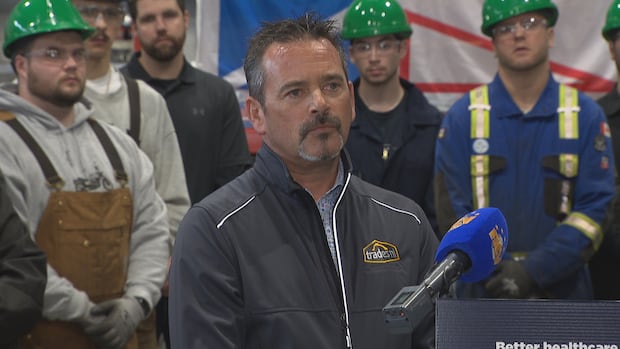
The federal and provincial governments are being urged to enhance their financial incentives to attract investment for the Bay du Nord oil project, which may otherwise result in significant economic losses for Newfoundland and Labrador. According to Trades N.L., an organization representing 14 trade unions, without direct subsidies or tax credits, the province risks losing billions in potential topsides construction work.
Bob Fiander, president of Trades N.L., emphasized the need for government support to ensure that local construction jobs are maximized during the development of the floating production, storage, and offloading vessel (FPSO) for the project. “If there is a gap in wages from Canada to Singapore, let’s close the gap with some nation-building funding or tax credits,” Fiander stated.
The Bay du Nord project, located approximately 500 kilometres east of Newfoundland, is currently in a state of uncertainty following Equinor’s decision to pause its development in 2023. The cost of the multi-billion-dollar offshore project had escalated, prompting the Norwegian energy giant to reassess its plans. Equinor is now proposing a leaner, phased approach that would enable production to commence sooner, targeting first oil by 2031.
In September, BW Offshore, another Norwegian firm, was selected to build and operate the FPSO. Nonetheless, the project’s future hinges on the establishment of a key benefits agreement with the Newfoundland and Labrador government that will determine local job creation.
The Progressive Conservative Party (PC Party) aims to ensure that a significant portion of the topsides construction occurs within the province. Fiander noted that Trades N.L. is advocating for 65 to 70 percent of the FPSO’s 19,000-tonne topsides to be built locally. The topsides consist of above-water modules that are essential for receiving, processing, and offloading crude oil.
During a recent address, Premier Tony Wakeham indicated a shift in negotiations with Equinor regarding the benefits agreement. He mentioned that during his initial meeting with the company, they committed to exploring expressions of interest (EOIs) from local contractors for all components of the Bay du Nord project, including topsides construction. “If modules can be built in Newfoundland and Labrador without compromising cost or schedule, they will be,” Wakeham asserted.
Despite this optimism, some industry experts remain skeptical. Rob Strong, a consultant with decades of experience in the Newfoundland oil sector, pointed out that Equinor has historically been hesitant to commit to local topsides manufacturing. He raised concerns over the competitiveness of costs and delivery times, noting that skilled labor is often cheaper in Asia, where supply chains for support sectors are more established.
Fiander expressed confidence that federal and provincial subsidies could help close the competitive gap. He highlighted the potential benefits of the Bay du Nord project for skilled trades workers in the region, noting that approximately 70 percent of Trades N.L.’s 14,000 members are currently unemployed.
As discussions on the benefits agreement continue, the federal and provincial governments have options to facilitate progress on the Bay du Nord project. The industry association Energy N.L. has long advocated for the reinstatement of the Atlantic investment tax credit for oil companies, which could encourage domestic investment.
Additionally, the federal government could recommend Bay du Nord to the new Major Projects Office, potentially unlocking federal funding. Ottawa could also take steps to handle the international royalties associated with the project, which falls outside the 200-nautical-mile limit, complicating responsibility for payments under the United Nations Convention on the Law of the Sea.
The provincial government has not ruled out the possibility of acquiring an equity stake in Bay du Nord. Strong noted that a payment in lieu of local jobs, similar to a $150 million deal made with ExxonMobil in 2012, could be a viable option.
Equinor has reportedly invested $2 billion in the initial phase of the Bay du Nord project, with a final investment decision expected in 2027. This project represents the province’s fifth major oil initiative and is located in waters significantly deeper than previous developments, adding to the complexity of its execution.
While Strong emphasized the critical nature of Bay du Nord for the future of the local oil sector, it comes at a time when numerous international organizations, including the International Energy Agency, are advocating for a halt to new hydrocarbon extraction projects due to climate change concerns. In 2022, Canada’s oil and gas sector accounted for nearly a third of the country’s greenhouse gas emissions, according to federal data.
As the situation develops, the focus remains on how Newfoundland and Labrador can secure its share of the economic opportunities presented by the Bay du Nord project.

Meta Plans Major Layoffs as AI Costs Surge

Alberta’s Referendum Could Pave Way for U.S. Statehood

Minooka District 201 Plans Enhanced Bilingual Support for Students

Canmore Approves Multiple Development Permits for New Projects

Remembering Bradly Castillo Shearsmith: A Life of Friendship and Joy

BIS Urges Watchdogs to Integrate Synthetic Risk Transfers in Stress Tests

Teva Transforms: Shifting Focus from Generics to Branded Success

Apple Launches AirPods Max 2 with Enhanced Audio Features

Ontario Ends Funding for Seven Supervised Injection Sites

Toyoake City Proposes Daily Two-Hour Smartphone Use Limit

Pedestrian Fatally Injured in Esquimalt Collision on August 14

B.C. Review Reveals Urgent Need for Rare-Disease Drug Reforms

Dark Adventure Game “Bye Sweet Carole” Set for October Release

Konami Revives Iconic Metal Gear Solid Delta Ahead of Release

Victoria’s Pop-Up Shop Shines Light on B.C.’s Wolf Cull

Jimmy Lai’s Defense Challenges Charges Under National Security Law

Snapmaker U1 Color 3D Printer Redefines Speed and Sustainability

Apple Expands Self-Service Repair Program to Canada
-
 Science11 months ago
Toyoake City Proposes Daily Two-Hour Smartphone Use Limit
-
 Top Stories11 months ago
Pedestrian Fatally Injured in Esquimalt Collision on August 14
-
 Health11 months ago
B.C. Review Reveals Urgent Need for Rare-Disease Drug Reforms
-
 Technology11 months ago
Dark Adventure Game “Bye Sweet Carole” Set for October Release
-
 Technology11 months ago
Konami Revives Iconic Metal Gear Solid Delta Ahead of Release
-
 Lifestyle11 months ago
Victoria’s Pop-Up Shop Shines Light on B.C.’s Wolf Cull
-
 World11 months ago
Jimmy Lai’s Defense Challenges Charges Under National Security Law
-
 Technology11 months ago
Snapmaker U1 Color 3D Printer Redefines Speed and Sustainability
-
 Technology11 months ago
Apple Expands Self-Service Repair Program to Canada
-

 Technology11 months ago
AION Folding Knife: Redefining EDC Design with Premium Materials
-

 Technology11 months ago
Solve Today’s Wordle Challenge: Hints and Answer for August 19
-

 Business11 months ago
Gordon Murray Automotive Unveils S1 LM and Le Mans GTR at Monterey