
Top Stories
Winter Nights Inspire Stargazing Adventures in Calgary’s Parks

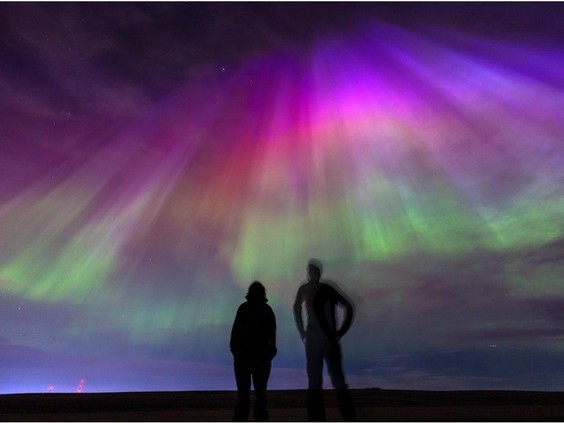
The cold winter nights around Calgary offer an exceptional opportunity for stargazing, showcasing a stunning night sky that can captivate both seasoned astronomers and casual observers. Just a short drive from the city, the Ann & Sandy Cross Conservation Area provides a serene setting for exploring the cosmos. Located approximately 20 minutes southwest of Calgary off Highway 22, the park features Sandy’s Lookout, a vantage point ideal for viewing celestial wonders.
On a recent visit, the night was cold and clear, devoid of wind, and the only sound was the crunching of snow beneath boots. After parking, it took just half an hour to reach the lookout, where the view was breathtaking. The sky above was a vibrant dome adorned with countless stars, a sight that highlights the beauty of winter nights.
While winter may tempt many to stay indoors, the season brings extended evening hours that enhance stargazing experiences. The early sunsets and prolonged darkness create ample viewing opportunities. As many stargazers know, late-night observations tend to offer the best visibility due to decreased light pollution. However, during winter, one can often catch a glimpse of celestial bodies even before dinner.
The night sky is filled with various phenomena, including constellations, comets, meteoroids, and the mesmerizing aurora borealis. Most of these are visible to the naked eye, although telescopes and binoculars can enhance the experience. Observing the stars can serve as a refreshing connection to nature, igniting a sense of wonder that resonates deeply with individuals.
Despite these enticing prospects, challenges exist. Cold temperatures, cloudy skies, and urban light pollution can complicate stargazing efforts. Dr. Phil Langill, co-director of the Rothney Astrophysical Observatory and an associate professor of physics and astrophysics at the University of Calgary, emphasizes the impact of light pollution on stargazing. “Unfortunately, 80 percent of the human race lives in urban centres that are bright and heavily polluted with excess light,” he explains. “Viewing the night sky when you’re in a city polluted with unnecessary light is a real problem. We’re losing our connection to the sky and the natural world.”
The implications of light pollution extend beyond stargazers and astronomers. It also affects wildlife, including birds and insects, which rely on darkness for survival. This phenomenon has raised concerns among biologists for decades. Langill, who has been captivated by the night sky since childhood, highlights the critical need to address these issues for both human and ecological well-being.
For those willing to brave the cold, winter nights in Calgary offer a remarkable opportunity to reconnect with the universe. As the stars twinkle overhead, the experience can serve as a reminder of the wonders that exist beyond our daily lives, enriching the spirit and fostering a deeper appreciation for nature. With the right preparation, including appropriate clothing and knowledge of the night sky, anyone can embark on an unforgettable stargazing adventure this winter.

Meta Plans Major Layoffs as AI Costs Surge

Alberta’s Referendum Could Pave Way for U.S. Statehood

Minooka District 201 Plans Enhanced Bilingual Support for Students

Canmore Approves Multiple Development Permits for New Projects

Remembering Bradly Castillo Shearsmith: A Life of Friendship and Joy

BIS Urges Watchdogs to Integrate Synthetic Risk Transfers in Stress Tests

Teva Transforms: Shifting Focus from Generics to Branded Success

Apple Launches AirPods Max 2 with Enhanced Audio Features

Ontario Ends Funding for Seven Supervised Injection Sites

Toyoake City Proposes Daily Two-Hour Smartphone Use Limit

Pedestrian Fatally Injured in Esquimalt Collision on August 14

B.C. Review Reveals Urgent Need for Rare-Disease Drug Reforms

Dark Adventure Game “Bye Sweet Carole” Set for October Release

Konami Revives Iconic Metal Gear Solid Delta Ahead of Release

Victoria’s Pop-Up Shop Shines Light on B.C.’s Wolf Cull

Jimmy Lai’s Defense Challenges Charges Under National Security Law

Snapmaker U1 Color 3D Printer Redefines Speed and Sustainability

Apple Expands Self-Service Repair Program to Canada
-
 Science11 months ago
Toyoake City Proposes Daily Two-Hour Smartphone Use Limit
-
 Top Stories11 months ago
Pedestrian Fatally Injured in Esquimalt Collision on August 14
-
 Health11 months ago
B.C. Review Reveals Urgent Need for Rare-Disease Drug Reforms
-
 Technology11 months ago
Dark Adventure Game “Bye Sweet Carole” Set for October Release
-
 Technology11 months ago
Konami Revives Iconic Metal Gear Solid Delta Ahead of Release
-
 Lifestyle11 months ago
Victoria’s Pop-Up Shop Shines Light on B.C.’s Wolf Cull
-
 World11 months ago
Jimmy Lai’s Defense Challenges Charges Under National Security Law
-
 Technology11 months ago
Snapmaker U1 Color 3D Printer Redefines Speed and Sustainability
-
 Technology11 months ago
Apple Expands Self-Service Repair Program to Canada
-

 Technology11 months ago
AION Folding Knife: Redefining EDC Design with Premium Materials
-

 Technology11 months ago
Solve Today’s Wordle Challenge: Hints and Answer for August 19
-

 Business11 months ago
Gordon Murray Automotive Unveils S1 LM and Le Mans GTR at Monterey