
Top Stories
US Launches Airstrikes Against Islamic State Militants in Nigeria

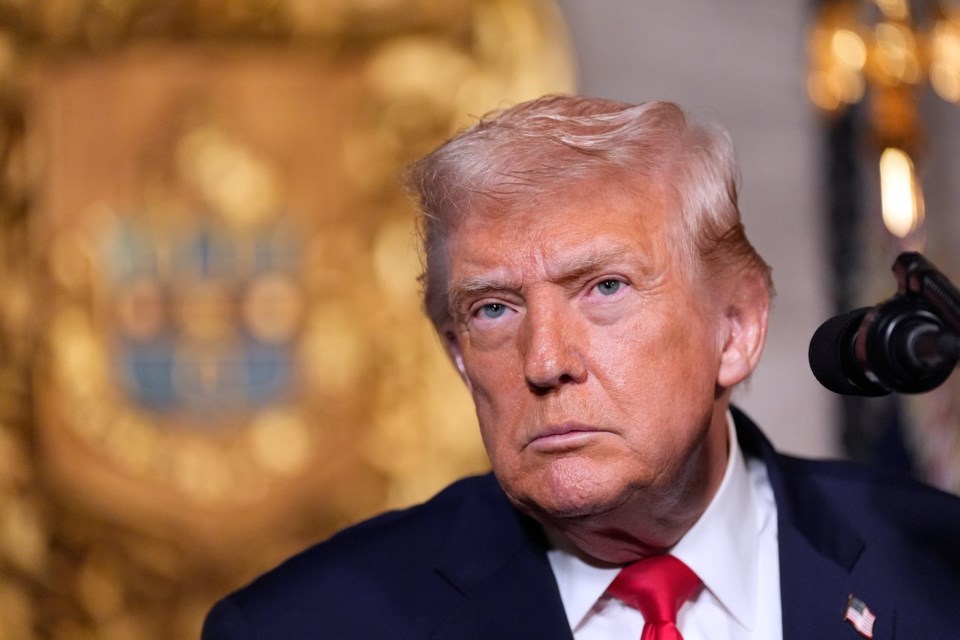
The United States conducted airstrikes against Islamic State militants in Nigeria’s northwestern state of Sokoto on December 25, 2023. This action follows weeks of accusations directed at the Nigerian government for its inability to effectively combat attacks targeting Christians in the region. President Donald Trump described the strikes as “powerful and deadly,” although specific details concerning the extent of the damage have not been disclosed.
A U.S. Defense Department official, who requested anonymity, confirmed that the strikes were coordinated with Nigeria and approved by Abuja. The Nigerian Ministry of Foreign Affairs emphasized that the collaboration adhered to international law and mutual respect for sovereignty, including intelligence sharing and strategic coordination. The Associated Press has not been able to confirm the precise impact of the airstrikes.
Context of Ongoing Violence
Nigeria faces a complex security crisis with multiple armed groups operating throughout the country. The Islamic State has established a presence in Nigeria through its affiliate, the Islamic State West Africa Province, which emerged from the notorious Boko Haram group. Additionally, the lesser-known Lakurawa group has gained notoriety in the northwestern states, where it exploits forested areas as hideouts.
Security analyst Malik Samuel, a researcher at Good Governance Africa, noted that Lakurawa has increasingly targeted remote communities and security forces in Sokoto and surrounding areas. He attributed the rise of such violent extremist groups to a lack of effective state presence and security forces in vulnerable regions.
Trump stated that the airstrikes were necessary to combat IS militants who “have been targeting and viciously killing, primarily, innocent Christians.” However, local residents and analysts have indicated that both Christians, predominantly in the south, and Muslims, who are the majority in the north, are suffering from the ongoing violence. The Nigerian Ministry of Foreign Affairs reiterated that terrorist attacks affect individuals of all faiths, asserting that “terrorist violence in any form… remains an affront to Nigeria’s values and to international peace and security.”
U.S. Measures in Response to Violence
In the wake of these events, Trump ordered the Pentagon to devise military strategies to address what he termed Christian persecution in Nigeria. Recently, the State Department announced visa restrictions for Nigerians implicated in violence against Christians, further emphasizing U.S. concerns regarding religious freedom in the country. Moreover, Nigeria has been designated a “country of particular concern” under the International Religious Freedom Act.
While Nigeria’s population of approximately 220 million is nearly evenly split between Christians and Muslims, the country has long grappled with a spectrum of security threats, including religiously motivated violence, clashes over resources between farmers and herders, and ethnic conflicts. The complexities of this violence highlight the multifaceted nature of the challenges facing Nigeria.
The U.S. military presence in Africa has diminished in recent years, with many partnerships being reduced or terminated. Should the need arise for more extensive military involvement, U.S. forces would likely be sourced from other regions. Despite this, Trump has consistently pressed for a strong response to the violence, particularly in light of recent attacks on schools and churches that affect both Christian and Muslim communities.
On social media platform X, Defense Secretary Pete Hegseth reiterated Trump’s message, emphasizing that the killing of innocent Christians in Nigeria must cease. He expressed gratitude for the cooperation from the Nigerian government and stated, “More to come… Grateful for Nigerian government support & cooperation.”
The situation in Nigeria remains fluid, reflecting the broader complexities of security, governance, and communal relations in a nation grappling with deep-seated challenges.

Meta Plans Major Layoffs as AI Costs Surge

Alberta’s Referendum Could Pave Way for U.S. Statehood

Minooka District 201 Plans Enhanced Bilingual Support for Students

Canmore Approves Multiple Development Permits for New Projects

Remembering Bradly Castillo Shearsmith: A Life of Friendship and Joy

BIS Urges Watchdogs to Integrate Synthetic Risk Transfers in Stress Tests

Teva Transforms: Shifting Focus from Generics to Branded Success

Apple Launches AirPods Max 2 with Enhanced Audio Features

Ontario Ends Funding for Seven Supervised Injection Sites

Toyoake City Proposes Daily Two-Hour Smartphone Use Limit

Pedestrian Fatally Injured in Esquimalt Collision on August 14

Dark Adventure Game “Bye Sweet Carole” Set for October Release

B.C. Review Reveals Urgent Need for Rare-Disease Drug Reforms

Konami Revives Iconic Metal Gear Solid Delta Ahead of Release

Jimmy Lai’s Defense Challenges Charges Under National Security Law

Victoria’s Pop-Up Shop Shines Light on B.C.’s Wolf Cull

Snapmaker U1 Color 3D Printer Redefines Speed and Sustainability

Apple Expands Self-Service Repair Program to Canada
-
 Science9 months ago
Toyoake City Proposes Daily Two-Hour Smartphone Use Limit
-
 Top Stories9 months ago
Pedestrian Fatally Injured in Esquimalt Collision on August 14
-
 Technology9 months ago
Dark Adventure Game “Bye Sweet Carole” Set for October Release
-
 Health9 months ago
B.C. Review Reveals Urgent Need for Rare-Disease Drug Reforms
-
 Technology9 months ago
Konami Revives Iconic Metal Gear Solid Delta Ahead of Release
-
 World9 months ago
Jimmy Lai’s Defense Challenges Charges Under National Security Law
-
 Lifestyle9 months ago
Victoria’s Pop-Up Shop Shines Light on B.C.’s Wolf Cull
-
 Technology9 months ago
Snapmaker U1 Color 3D Printer Redefines Speed and Sustainability
-
 Technology9 months ago
Apple Expands Self-Service Repair Program to Canada
-

 Technology9 months ago
AION Folding Knife: Redefining EDC Design with Premium Materials
-

 Technology9 months ago
Solve Today’s Wordle Challenge: Hints and Answer for August 19
-

 Business9 months ago
Gordon Murray Automotive Unveils S1 LM and Le Mans GTR at Monterey