
World
Trump Advocates for Greenland’s Strategic Role in Arctic Security

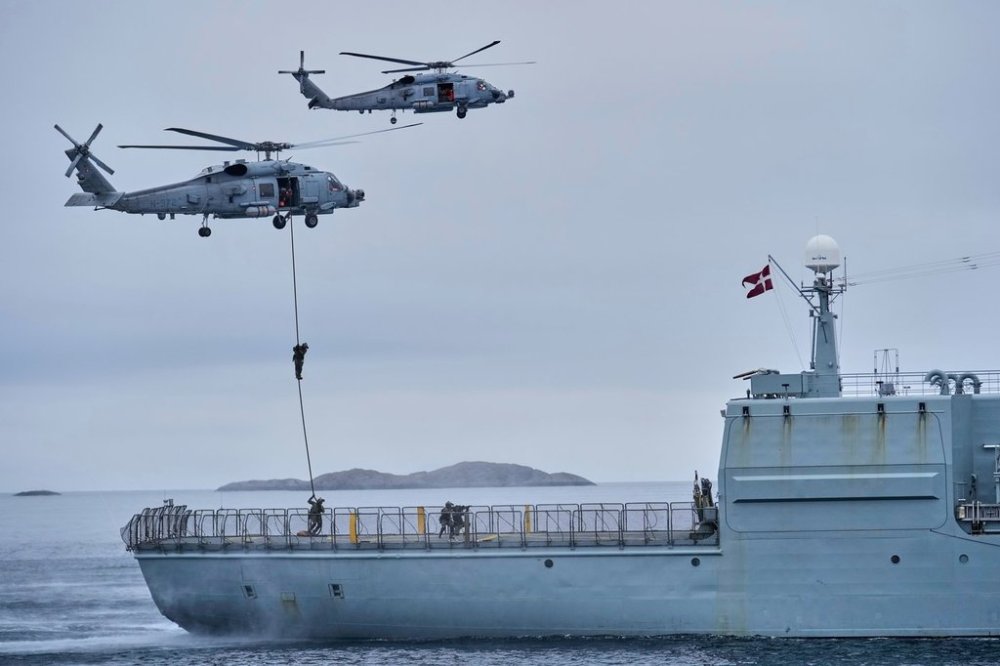
U.S. President Donald Trump has highlighted the importance of Greenland in relation to Arctic security, emphasizing its strategic location above the Arctic Circle. This positioning potentially enhances the United States’ ability to safeguard its interests in the High North, especially amid rising global tensions and the impacts of climate change.
Greenland, the world’s largest island, is a self-governing territory of Denmark, which has historically been a strong U.S. ally. However, both the Danish government and Greenland’s local authorities have rejected Trump’s proposals regarding U.S. control over the island. They assert that the future of Greenland will be determined by its own people.
The island, which is home to approximately 56,000 residents, primarily of Inuit descent, has often been overlooked in global discussions. However, its strategic significance has grown as international competition intensifies over resources and trade routes in the Arctic. Greenland’s position off the northeastern coast of Canada, with two-thirds of its land within the Arctic Circle, has made it vital to North American defense since World War II. During that conflict, the U.S. occupied Greenland to prevent it from falling into enemy hands and to protect critical North Atlantic shipping lanes.
In recent years, climate change has led to diminishing Arctic ice, paving the way for new trade routes and increasing competition for access to mineral resources. Greenland is rich in rare earth minerals essential for high-tech industries, including mobile phones and electric vehicles. This has piqued the interest of the United States and other Western nations, particularly as they seek to reduce reliance on China for these crucial materials.
The challenges of developing Greenland’s mineral resources are notable, primarily due to its harsh climate and strict environmental regulations. The U.S. Department of Defense operates the Pituffik Space Base in northwestern Greenland, established under the Defense of Greenland Treaty signed in 1951. This facility supports missile warning and space surveillance operations for the U.S. and NATO.
Greenland’s strategic value also extends to monitoring Russian naval movements in the North Atlantic, particularly in the GIUK (Greenland, Iceland, United Kingdom) Gap. As tensions have increased, Denmark has taken steps to bolster its military presence in and around Greenland. In 2022, the Danish government announced a 14.6 billion-kroner (approximately $2.3 billion) investment plan aimed at enhancing surveillance and sovereignty capabilities in the region. This initiative includes the acquisition of new Arctic naval vessels and long-range surveillance drones.
Denmark’s Joint Arctic Command, which is headquartered in Greenland’s capital, Nuuk, is responsible for asserting sovereignty and conducting military defense in the Arctic. Additionally, the elite Sirius Dog Sled Patrol enforces Danish sovereignty in the remote Arctic wilderness.
The geopolitical landscape in the Arctic has further complicated with the involvement of China. In 2018, China proclaimed itself a “near-Arctic state” and announced plans for a “Polar Silk Road” as part of its broader Belt and Road Initiative. This move raised alarms in Washington, D.C., prompting then-U.S. Secretary of State Mike Pompeo to question whether the Arctic would mirror the militarized tensions of the South China Sea.
Furthermore, Russian President Vladimir Putin has expressed concerns over NATO’s activities in the Arctic, pledging to enhance Russia’s military capabilities in the region. The ongoing conflict in Ukraine has amplified European leaders’ apprehensions regarding Russian intentions in the Arctic.
As the dynamics of Arctic security evolve, Greenland stands at the forefront of strategic interests involving multiple nations, with implications for global trade and geopolitical stability. The decisions made regarding its future will not only shape the island’s destiny but also influence broader international relations in the High North.

Meta Plans Major Layoffs as AI Costs Surge

Alberta’s Referendum Could Pave Way for U.S. Statehood

Minooka District 201 Plans Enhanced Bilingual Support for Students

Canmore Approves Multiple Development Permits for New Projects

Remembering Bradly Castillo Shearsmith: A Life of Friendship and Joy

BIS Urges Watchdogs to Integrate Synthetic Risk Transfers in Stress Tests

Teva Transforms: Shifting Focus from Generics to Branded Success

Apple Launches AirPods Max 2 with Enhanced Audio Features

Ontario Ends Funding for Seven Supervised Injection Sites

Toyoake City Proposes Daily Two-Hour Smartphone Use Limit

Pedestrian Fatally Injured in Esquimalt Collision on August 14

B.C. Review Reveals Urgent Need for Rare-Disease Drug Reforms

Dark Adventure Game “Bye Sweet Carole” Set for October Release

Konami Revives Iconic Metal Gear Solid Delta Ahead of Release

Victoria’s Pop-Up Shop Shines Light on B.C.’s Wolf Cull

Jimmy Lai’s Defense Challenges Charges Under National Security Law

Snapmaker U1 Color 3D Printer Redefines Speed and Sustainability

Apple Expands Self-Service Repair Program to Canada
-
 Science11 months ago
Toyoake City Proposes Daily Two-Hour Smartphone Use Limit
-
 Top Stories11 months ago
Pedestrian Fatally Injured in Esquimalt Collision on August 14
-
 Health11 months ago
B.C. Review Reveals Urgent Need for Rare-Disease Drug Reforms
-
 Technology11 months ago
Dark Adventure Game “Bye Sweet Carole” Set for October Release
-
 Technology11 months ago
Konami Revives Iconic Metal Gear Solid Delta Ahead of Release
-
 Lifestyle11 months ago
Victoria’s Pop-Up Shop Shines Light on B.C.’s Wolf Cull
-
 World11 months ago
Jimmy Lai’s Defense Challenges Charges Under National Security Law
-
 Technology11 months ago
Snapmaker U1 Color 3D Printer Redefines Speed and Sustainability
-
 Technology11 months ago
Apple Expands Self-Service Repair Program to Canada
-

 Technology11 months ago
AION Folding Knife: Redefining EDC Design with Premium Materials
-

 Technology11 months ago
Solve Today’s Wordle Challenge: Hints and Answer for August 19
-

 Business11 months ago
Gordon Murray Automotive Unveils S1 LM and Le Mans GTR at Monterey