
World
Somalia Condemns Israeli FM’s Visit to Somaliland as Incursion

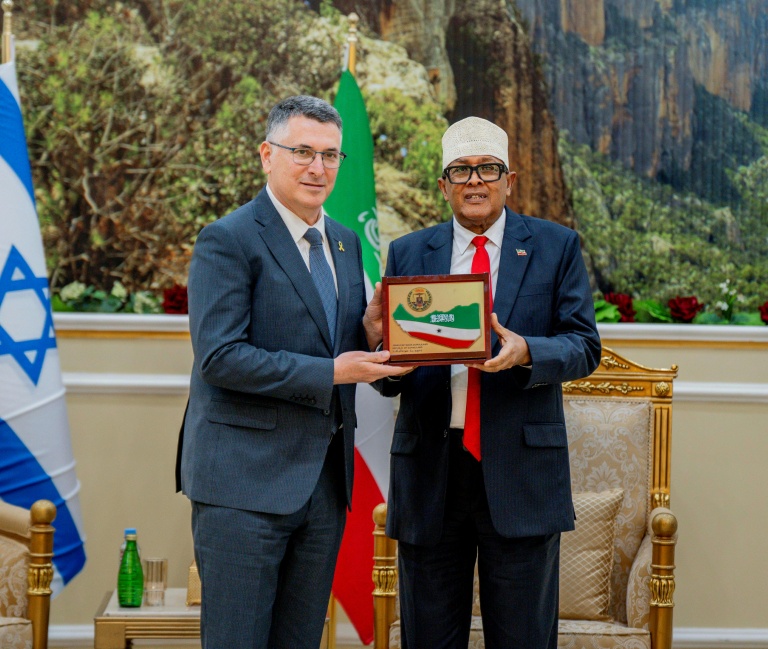
The arrival of Israeli Foreign Minister Gideon Saar in Somaliland on October 3, 2023, has sparked significant diplomatic tension, as Somalia condemned the visit as an “unauthorized incursion.” This follows Israel’s recent recognition of Somaliland, marking the first time a country has officially acknowledged the self-proclaimed republic since it declared independence from Somalia in 1991.
Located on the strategically important Gulf of Aden, Somaliland has its own currency, passport, and military, yet it has struggled to gain international recognition due to concerns about provoking Somalia and encouraging separatist movements elsewhere in Africa. The recognition by Israel was described by Saar as “the moral thing to do,” emphasizing the potential for enhanced relations.
Somalia’s Strong Condemnation
Somalia reacted strongly to the visit, labeling it “illegal” and “unauthorized.” In an official statement, Somalia’s foreign ministry asserted that it “reserves the right to take all appropriate diplomatic and legal measures” to protect its sovereignty and territorial integrity. The Somali President, Hassan Sheikh Mohamud, characterized the Israeli decision as a “threat” to stability in the already volatile Horn of Africa.
During the visit, local sources indicated that civilian movements were restricted, and roads were blocked, reflecting the heightened tensions surrounding the Israeli delegation’s presence. The African Union Peace and Security Council convened on the same day to condemn Israel’s recognition of Somaliland, demanding its “immediate revocation.”
Potential Implications and Reactions
While Saar and Somaliland’s President, Abdirahman Abdullahi Mohamed, hailed the recognition as a courageous decision that would foster economic development, the visit has also attracted criticism from various quarters. Al-Shabaab, the Islamist militant group operating in Somalia, issued threats against any attempts by Israel to establish a base in Somaliland, emphasizing the potential for increased instability.
Analysts suggest that Israel’s engagement with Somaliland could enhance its access to the Red Sea, an important move in its regional strategy. This development has garnered support from the United States but has faced backlash from countries including Egypt, Turkey, and the Organisation of Islamic Cooperation, all of which have expressed concerns regarding Somalia’s sovereignty.
In an interview with Al Jazeera, President Mohamud stated that Somaliland had accepted several conditions from Israel, including the resettlement of Palestinians and the establishment of a military base on the Gulf of Aden, which Somaliland’s foreign ministry has since denied.
Somaliland has historically experienced more stability compared to the broader Somali region, having briefly enjoyed international recognition in June 1960 before uniting with Italian-administered Somalia. Leaders in Somaliland maintain that this union was never formally ratified and became void after the collapse of the Somali state in 1991.
The dynamics surrounding this visit highlight the complexities of international relations in the Horn of Africa and underscore the delicate balance of power in a region marked by longstanding conflicts and aspirations for recognition.

Meta Plans Major Layoffs as AI Costs Surge

Alberta’s Referendum Could Pave Way for U.S. Statehood

Minooka District 201 Plans Enhanced Bilingual Support for Students

Canmore Approves Multiple Development Permits for New Projects

Remembering Bradly Castillo Shearsmith: A Life of Friendship and Joy

BIS Urges Watchdogs to Integrate Synthetic Risk Transfers in Stress Tests

Teva Transforms: Shifting Focus from Generics to Branded Success

Apple Launches AirPods Max 2 with Enhanced Audio Features

Ontario Ends Funding for Seven Supervised Injection Sites

Toyoake City Proposes Daily Two-Hour Smartphone Use Limit

Pedestrian Fatally Injured in Esquimalt Collision on August 14

B.C. Review Reveals Urgent Need for Rare-Disease Drug Reforms

Dark Adventure Game “Bye Sweet Carole” Set for October Release

Konami Revives Iconic Metal Gear Solid Delta Ahead of Release

Jimmy Lai’s Defense Challenges Charges Under National Security Law

Victoria’s Pop-Up Shop Shines Light on B.C.’s Wolf Cull

Snapmaker U1 Color 3D Printer Redefines Speed and Sustainability

Apple Expands Self-Service Repair Program to Canada
-
 Science11 months ago
Toyoake City Proposes Daily Two-Hour Smartphone Use Limit
-
 Top Stories11 months ago
Pedestrian Fatally Injured in Esquimalt Collision on August 14
-
 Health11 months ago
B.C. Review Reveals Urgent Need for Rare-Disease Drug Reforms
-
 Technology11 months ago
Dark Adventure Game “Bye Sweet Carole” Set for October Release
-
 Technology11 months ago
Konami Revives Iconic Metal Gear Solid Delta Ahead of Release
-
 World11 months ago
Jimmy Lai’s Defense Challenges Charges Under National Security Law
-
 Lifestyle11 months ago
Victoria’s Pop-Up Shop Shines Light on B.C.’s Wolf Cull
-
 Technology11 months ago
Snapmaker U1 Color 3D Printer Redefines Speed and Sustainability
-
 Technology11 months ago
Apple Expands Self-Service Repair Program to Canada
-

 Technology11 months ago
AION Folding Knife: Redefining EDC Design with Premium Materials
-

 Technology11 months ago
Solve Today’s Wordle Challenge: Hints and Answer for August 19
-

 Business11 months ago
Gordon Murray Automotive Unveils S1 LM and Le Mans GTR at Monterey