
World
Surge of Misinformation Follows Capture of Maduro in Caracas

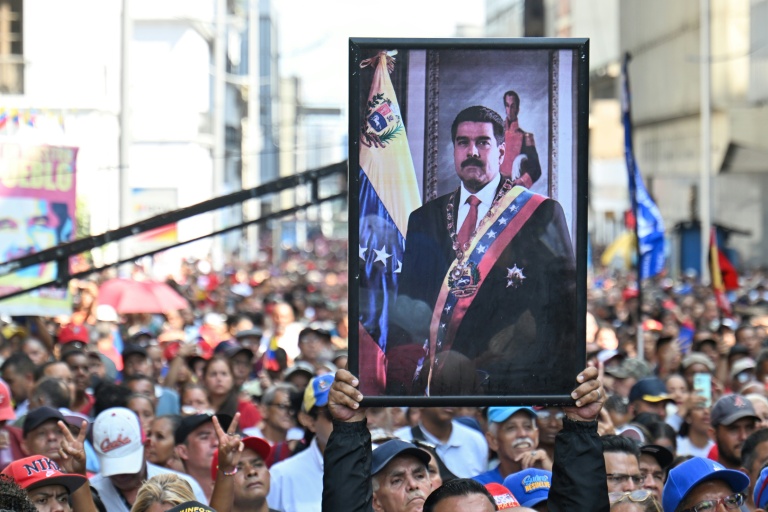
A wave of misinformation has flooded social media following the capture of Venezuelan leader Nicolas Maduro by US forces during a dramatic raid on his home in Caracas. This surge includes AI-generated images and outdated visuals, all misleadingly presented as authentic representations of the event. The proliferation of these false narratives highlights the challenges of discerning fact from fiction in today’s digital landscape.
Shortly after the operation on March 10, 2024, Agence France-Presse (AFP) fact-checkers identified misleading posts on platforms such as X and Facebook. Some posts claimed to show the first image of Maduro in US custody, purportedly flanked by American soldiers near an aircraft. In reality, this image was AI-generated, detected by Google’s Gemini AI tool, which identified an invisible watermark known as SynthID that confirms AI content.
In addition to this fabricated image, social media users circulated a photograph that supposedly depicted an American soldier with a hooded Maduro. This image, however, is from 2003 and actually shows the capture of Iraqi leader Saddam Hussein. According to NewsGuard, a disinformation watchdog, at least seven fabricated or misrepresented images and videos related to the US operation in Venezuela received over 14 million views on X within two days.
The rise of misleading visuals underscores a troubling trend where hyper-realistic misinformation competes with genuine news. The combination of AI-generated content and recycled images often makes it difficult for fact-checkers to clarify the truth. Senior analyst at NewsGuard, Chiara Vercellone, noted that while these visuals may not radically alter the facts, they represent a growing tactic of misinformation that complicates the work of those verifying information.
In an unexpected turn, former President Donald Trump contributed to the spread of misinformation by sharing a viral video on his Truth Social network. This video claimed to show Venezuelans celebrating in the streets after Maduro’s capture. AFP fact-checkers discovered that the footage, initially posted on TikTok, actually depicted college students participating in the “UCLA undie run,” a well-known tradition at the University of California, Los Angeles.
As the flood of humorous AI-generated clips proliferated online, one showed Maduro and Trump dancing in the Oval Office, while another depicted the ousted president alongside prisoners in orange jumpsuits. These creative interpretations of the event have added to the confusion surrounding the situation.
Following his capture, Maduro appeared in a New York court on March 11, 2024, where he pleaded not guilty to charges of drug trafficking and “narco-terrorism.” In response to claims by Trump that the US would “run” Venezuela during a transitional period, interim president Delcy Rodriguez asserted that no foreign powers govern her country.
With the rapid evolution of misinformation through AI and recycled visuals, the need for accurate reporting has never been more crucial. As social media continues to serve as a primary source of news for many, the responsibility to discern fact from falsehood rests heavily on both the platforms and the users themselves.

Meta Plans Major Layoffs as AI Costs Surge

Alberta’s Referendum Could Pave Way for U.S. Statehood

Minooka District 201 Plans Enhanced Bilingual Support for Students

Canmore Approves Multiple Development Permits for New Projects

Remembering Bradly Castillo Shearsmith: A Life of Friendship and Joy

BIS Urges Watchdogs to Integrate Synthetic Risk Transfers in Stress Tests

Teva Transforms: Shifting Focus from Generics to Branded Success

Apple Launches AirPods Max 2 with Enhanced Audio Features

Ontario Ends Funding for Seven Supervised Injection Sites

Toyoake City Proposes Daily Two-Hour Smartphone Use Limit

Pedestrian Fatally Injured in Esquimalt Collision on August 14

B.C. Review Reveals Urgent Need for Rare-Disease Drug Reforms

Dark Adventure Game “Bye Sweet Carole” Set for October Release

Konami Revives Iconic Metal Gear Solid Delta Ahead of Release

Victoria’s Pop-Up Shop Shines Light on B.C.’s Wolf Cull

Jimmy Lai’s Defense Challenges Charges Under National Security Law

Snapmaker U1 Color 3D Printer Redefines Speed and Sustainability

Apple Expands Self-Service Repair Program to Canada
-
 Science11 months ago
Toyoake City Proposes Daily Two-Hour Smartphone Use Limit
-
 Top Stories11 months ago
Pedestrian Fatally Injured in Esquimalt Collision on August 14
-
 Health11 months ago
B.C. Review Reveals Urgent Need for Rare-Disease Drug Reforms
-
 Technology11 months ago
Dark Adventure Game “Bye Sweet Carole” Set for October Release
-
 Technology11 months ago
Konami Revives Iconic Metal Gear Solid Delta Ahead of Release
-
 Lifestyle11 months ago
Victoria’s Pop-Up Shop Shines Light on B.C.’s Wolf Cull
-
 World11 months ago
Jimmy Lai’s Defense Challenges Charges Under National Security Law
-
 Technology11 months ago
Snapmaker U1 Color 3D Printer Redefines Speed and Sustainability
-
 Technology11 months ago
Apple Expands Self-Service Repair Program to Canada
-

 Technology11 months ago
AION Folding Knife: Redefining EDC Design with Premium Materials
-

 Technology11 months ago
Solve Today’s Wordle Challenge: Hints and Answer for August 19
-

 Business11 months ago
Gordon Murray Automotive Unveils S1 LM and Le Mans GTR at Monterey