
World
Man Sentenced to Life for Assassinating Former PM Shinzo Abe

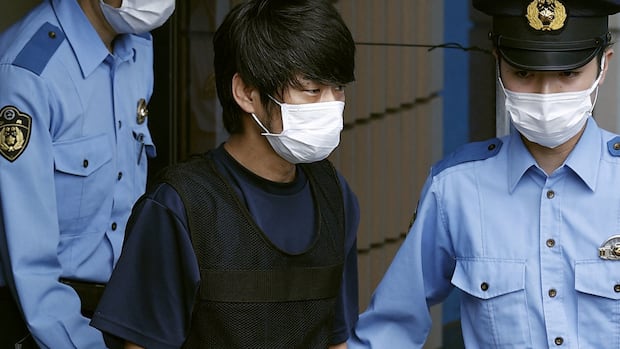
A Japanese court has sentenced Tetsuya Yamagami to life imprisonment for the assassination of former Prime Minister Shinzo Abe. The verdict was delivered on Wednesday by the Nara District Court, following Yamagami’s confession to the crime committed on July 8, 2022, during Abe’s campaign speech in the city of Nara. This case has highlighted longstanding connections between Japan’s ruling Liberal Democratic Party and the controversial Unification Church.
Yamagami, 45, admitted to killing Abe to draw attention to his grievances against the Unification Church, claiming a desire to expose its ties with the former leader. During the trial, which commenced in October, he expressed remorse and apologized to Abe’s widow, Akie Abe, stating he bore no animosity towards her family.
The assassination sent shockwaves through Japan, a country renowned for its stringent gun control laws. Security footage captured the moment Abe was shot while delivering a speech outside a train station. He collapsed shortly after the gunshots rang out, succumbing to his injuries almost instantly. Yamagami was apprehended at the scene, where he initially intended to target the leader of the Unification Church but redirected his plan after determining it would be difficult to reach that individual.
In court, Yamagami’s defense team requested a lighter sentence of no more than 20 years, citing his troubled background as the child of a church adherent. In contrast, prosecutors sought life imprisonment, emphasizing the severity of the crime. Under Japanese law, the death penalty is typically reserved for cases involving multiple victims, which influenced the prosecution’s decision.
The trial has also sparked broader discussions about the relationship between Japanese politics and the Unification Church. Following Abe’s assassination, the ruling party reevaluated its associations with the church, which resulted in investigations that stripped the church’s Japanese branch of its tax-exempt status. The church has since appealed the ruling.
Yamagami’s actions and the subsequent trial have prompted increased security measures for public figures in Japan. The National Police Agency has responded by enhancing protective protocols for politicians and dignitaries.
The case has resonated deeply within the community, leading thousands to sign petitions advocating for leniency for Yamagami. Some have even sent care packages to his family and the detention center where he is being held. The incident has highlighted the challenges faced by children of Unification Church members in Japan and has influenced legislative efforts aimed at regulating aggressive fundraising practices by religious organizations.
As the aftermath of this tragic event continues to unfold, Japan reflects on the implications of political violence and the need for greater accountability in the relationships between politicians and religious groups.

Meta Plans Major Layoffs as AI Costs Surge

Alberta’s Referendum Could Pave Way for U.S. Statehood

Minooka District 201 Plans Enhanced Bilingual Support for Students

Canmore Approves Multiple Development Permits for New Projects

Remembering Bradly Castillo Shearsmith: A Life of Friendship and Joy

BIS Urges Watchdogs to Integrate Synthetic Risk Transfers in Stress Tests

Teva Transforms: Shifting Focus from Generics to Branded Success

Apple Launches AirPods Max 2 with Enhanced Audio Features

Ontario Ends Funding for Seven Supervised Injection Sites

Toyoake City Proposes Daily Two-Hour Smartphone Use Limit

Pedestrian Fatally Injured in Esquimalt Collision on August 14

B.C. Review Reveals Urgent Need for Rare-Disease Drug Reforms

Dark Adventure Game “Bye Sweet Carole” Set for October Release

Konami Revives Iconic Metal Gear Solid Delta Ahead of Release

Victoria’s Pop-Up Shop Shines Light on B.C.’s Wolf Cull

Jimmy Lai’s Defense Challenges Charges Under National Security Law

Snapmaker U1 Color 3D Printer Redefines Speed and Sustainability

Apple Expands Self-Service Repair Program to Canada
-
 Science11 months ago
Toyoake City Proposes Daily Two-Hour Smartphone Use Limit
-
 Top Stories11 months ago
Pedestrian Fatally Injured in Esquimalt Collision on August 14
-
 Health11 months ago
B.C. Review Reveals Urgent Need for Rare-Disease Drug Reforms
-
 Technology11 months ago
Dark Adventure Game “Bye Sweet Carole” Set for October Release
-
 Technology11 months ago
Konami Revives Iconic Metal Gear Solid Delta Ahead of Release
-
 Lifestyle11 months ago
Victoria’s Pop-Up Shop Shines Light on B.C.’s Wolf Cull
-
 World11 months ago
Jimmy Lai’s Defense Challenges Charges Under National Security Law
-
 Technology11 months ago
Snapmaker U1 Color 3D Printer Redefines Speed and Sustainability
-
 Technology11 months ago
Apple Expands Self-Service Repair Program to Canada
-

 Technology11 months ago
AION Folding Knife: Redefining EDC Design with Premium Materials
-

 Technology11 months ago
Solve Today’s Wordle Challenge: Hints and Answer for August 19
-

 Business11 months ago
Gordon Murray Automotive Unveils S1 LM and Le Mans GTR at Monterey