
Business
Canada Eyes Canola Expansion as China Trade Barriers Eased

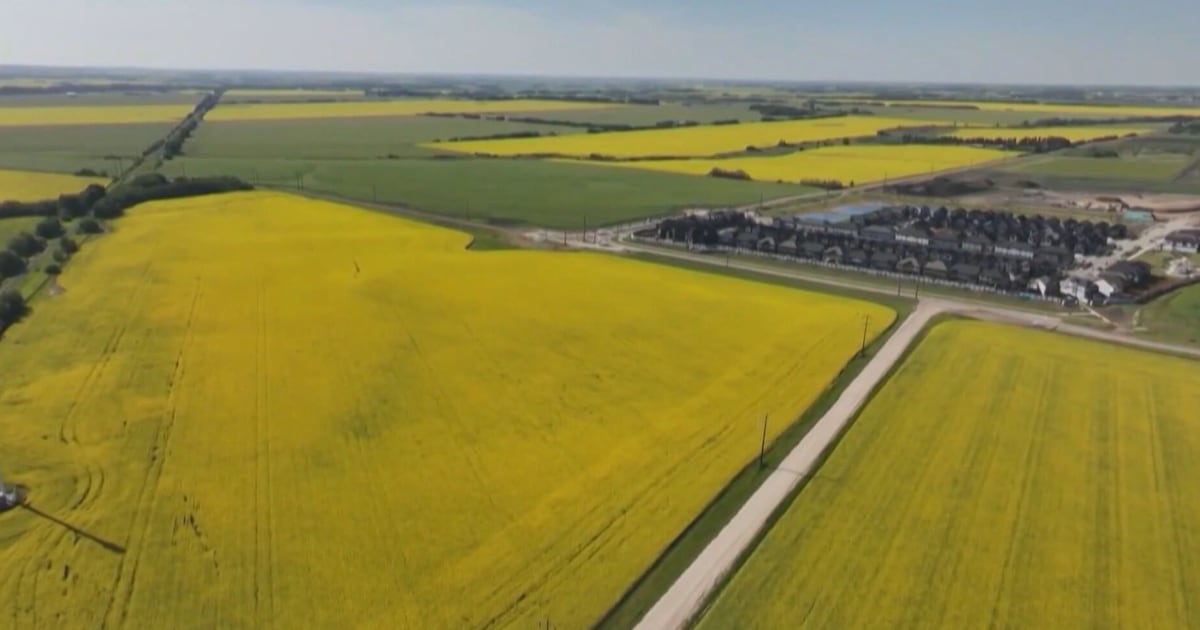
The Canadian canola industry is set for significant growth opportunities as trade with China begins to reopen, according to Saskatchewan Premier Scott Moe. During a recent interview with BNN Bloomberg, Moe highlighted the potential for expanding canola markets domestically within North America and into Europe, particularly in the renewable fuels and biofuels sectors.
Moe’s remarks followed the release of a research report indicating that approximately 90 percent of Canada’s canola exports are heavily reliant on just two markets: the United States and China. “We are where we are for a reason,” Moe stated, emphasizing the need for reflection on the country’s reliance on specific markets amid a globally uncertain trade environment.
New Trade Agreement with China
Last week, Premier Moe joined Prime Minister Mark Carney on a state visit to China, where a landmark agreement was established. This deal will see a reduction in China’s tariffs on Canadian canola seed to about 16 percent. In return, Canada will permit a quota of 49,000 Chinese electric vehicles to enter the country at a reduced tariff rate of nearly 6 percent.
Moe noted that both the U.S. and China represent the two largest markets for canola, offering some of the highest prices globally. The U.S. primarily imports canola oil, while China focuses on canola seed. “Those are the markets you want to be in if you want a premium for your product,” he remarked.
Despite these positive developments, Moe acknowledged that Canada’s canola oil exports have faced decline in recent years, impacted by high tariffs on oil. “We’ll work to get it removed, but the seed is a much larger number by value, as is the meal,” he explained, referring to the operational importance of canola meal for Canada’s domestic crushing industry.
Impact of Tariffs on Farmers
Moe pointed out that the effects of the recent tariff changes may not be immediately felt at the farm level, as farmers have struggled to move their crops. With the tariffs reduced, canola exports are expected to resume from the farm gate to markets like China starting in March 2024. This shift could potentially drive prices higher and help revitalize parts of the agricultural sector, bringing them back into the “profit zone.”
He acknowledged that any losses incurred were primarily concentrated in the export sector, particularly among companies that had pre-priced crops and were forced to sell into a depressed market due to China’s prior inaccessibility. “All of that being said, this is a huge step forward for not only the Canadian agricultural economy, but the general Canadian economy,” Moe stated.
Furthermore, he highlighted memorandums of understanding that are linked to opportunities for expanding exports to China in sectors such as energy and forestry, underscoring the broader implications of the recent trade developments.
Moe also addressed the concerns raised by Ontario Premier Doug Ford regarding the new agreement, which allows for Chinese electric vehicles to enter Canada. Ford criticized the deal, suggesting it could negatively impact Ontario’s auto industry. In response, Moe reiterated the significance of Canada’s agricultural sector and its potential to benefit from the restoration of trade with China, noting that products like canola, seafood, and pulse crops are grown across multiple provinces, including Ontario.
As Canada navigates these evolving trade dynamics, the potential for canola expansion remains a key focus for policymakers and industry stakeholders alike.

Meta Plans Major Layoffs as AI Costs Surge

Alberta’s Referendum Could Pave Way for U.S. Statehood

Minooka District 201 Plans Enhanced Bilingual Support for Students

Canmore Approves Multiple Development Permits for New Projects

Remembering Bradly Castillo Shearsmith: A Life of Friendship and Joy

BIS Urges Watchdogs to Integrate Synthetic Risk Transfers in Stress Tests

Teva Transforms: Shifting Focus from Generics to Branded Success

Apple Launches AirPods Max 2 with Enhanced Audio Features

Ontario Ends Funding for Seven Supervised Injection Sites

Toyoake City Proposes Daily Two-Hour Smartphone Use Limit

Pedestrian Fatally Injured in Esquimalt Collision on August 14

B.C. Review Reveals Urgent Need for Rare-Disease Drug Reforms

Dark Adventure Game “Bye Sweet Carole” Set for October Release

Konami Revives Iconic Metal Gear Solid Delta Ahead of Release

Jimmy Lai’s Defense Challenges Charges Under National Security Law

Victoria’s Pop-Up Shop Shines Light on B.C.’s Wolf Cull

Snapmaker U1 Color 3D Printer Redefines Speed and Sustainability

Apple Expands Self-Service Repair Program to Canada
-
 Science11 months ago
Toyoake City Proposes Daily Two-Hour Smartphone Use Limit
-
 Top Stories11 months ago
Pedestrian Fatally Injured in Esquimalt Collision on August 14
-
 Health11 months ago
B.C. Review Reveals Urgent Need for Rare-Disease Drug Reforms
-
 Technology11 months ago
Dark Adventure Game “Bye Sweet Carole” Set for October Release
-
 Technology11 months ago
Konami Revives Iconic Metal Gear Solid Delta Ahead of Release
-
 World11 months ago
Jimmy Lai’s Defense Challenges Charges Under National Security Law
-
 Lifestyle11 months ago
Victoria’s Pop-Up Shop Shines Light on B.C.’s Wolf Cull
-
 Technology11 months ago
Snapmaker U1 Color 3D Printer Redefines Speed and Sustainability
-
 Technology11 months ago
Apple Expands Self-Service Repair Program to Canada
-

 Technology11 months ago
AION Folding Knife: Redefining EDC Design with Premium Materials
-

 Technology11 months ago
Solve Today’s Wordle Challenge: Hints and Answer for August 19
-

 Business11 months ago
Gordon Murray Automotive Unveils S1 LM and Le Mans GTR at Monterey