
Science
Graduate Student Leverages AI to Transform Lung Disease Treatment

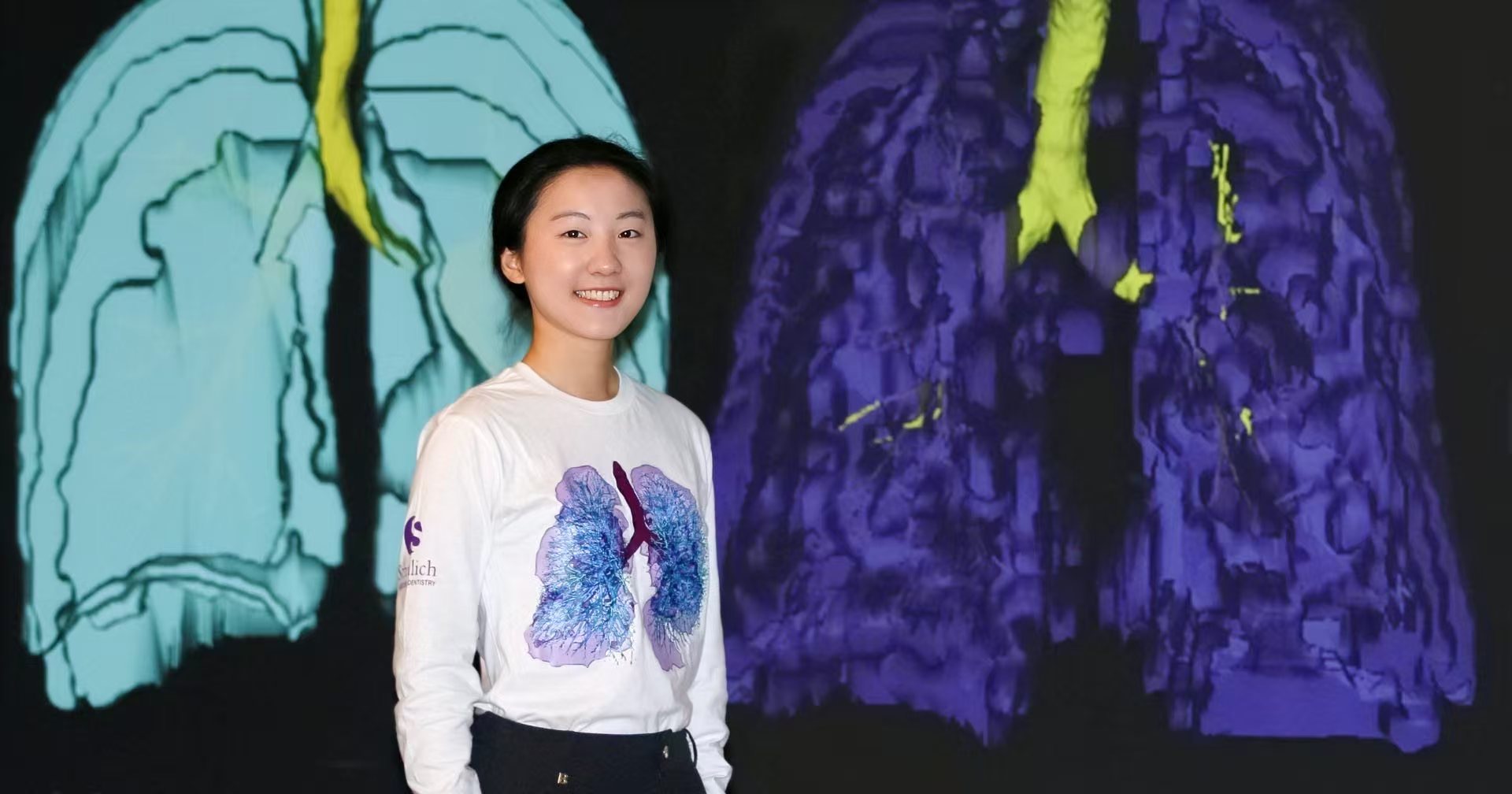
Artificial intelligence is reshaping the landscape of lung disease management, enabling more personalized treatment options. Yixiu (Helen) He, a master’s student in biomedical engineering, is at the forefront of this innovation. Working at the Advanced Pulmonary Imaging (API) Lab within the Robarts Research Institute, she is integrating machine learning techniques to enhance the understanding and treatment of chronic lung conditions.
Under the supervision of Grace Parraga, a professor of medical biophysics and the lab’s director, Helen is gaining hands-on experience with patient interactions while also honing her data analysis skills. She assists patients during testing, which includes spirometry and oscillometry, crucial for assessing lung function. “I’d thought only medical students could work with patients, but here I’m getting an interdisciplinary experience that combines actual patient visits, along with data analysis and engineering principles to improve health care,” said Helen.
Helen’s work revolves around developing tools that aid researchers in understanding how severe asthma patients respond to therapies. Research in the API Lab focuses on creating non-invasive imaging techniques to detect lung damage that standard clinical tests may overlook. Parraga emphasizes the complexity of diagnosing lung conditions in patients with severe symptoms despite normal test results. “When patients are still breathless, it’s difficult to ascertain who is responding to treatment, and when to try something different,” she stated.
Machine learning technology plays a pivotal role in this research. By analyzing data collected from lung tests alongside imaging scans from MRI, CT, and X-rays, Helen is identifying subtle differences in inhaled gas distribution, termed ‘texture features.’ Not all features are significant for disease detection, so the Boruta analysis method is employed to highlight the most impactful characteristics for training machine learning models. This process allows AI to uncover patterns in data much faster than manual analysis.
Helen described the efficiency of machine learning, stating, “These models can analyze thousands of pixel-by-pixel comparisons at once to reveal hidden patterns in a tiny fraction of the time it would take a person to do the same by hand.” The predictive capabilities of these models are set to revolutionize healthcare, providing a pathway for personalized treatment plans.
The opportunity for Helen to engage in this cutting-edge research is partly due to her receipt of the Vector Scholarship in Artificial Intelligence (VSAI) from the Vector Institute, a Canadian organization dedicated to advancing AI research. The scholarship supports talented students pursuing AI-related master’s programs at Ontario universities. Parraga noted, “Helen brings solid engineering skills to the team as she helps grow the tools needed to provide tailored therapy to asthma patients. This work will improve overall patient outcomes and save time and money.”
As an international student from Chongqing, China, Helen appreciates the networking opportunities and financial support the Vector scholarship provides. “Vector helps me make connections with industry partners, entrepreneurs, and educators. I’ve come to know the Canadian environment, so I can go even further in imaging. I feel this is a really important area for study,” she expressed.
Canada is recognized for its advancements in medical imaging, with researchers like Parraga leading the charge. She believes that the work being done at Western University positions Canadian scientists at the forefront of global efforts to improve health care through innovative imaging technologies. “Western-trained imaging scientists have now established new approaches and strong teams who are positioning novel lung imaging markers and technologies to improve the health of patients worldwide,” Parraga concluded.
Helen’s journey exemplifies how interdisciplinary collaboration can drive significant advancements in health care, particularly in the treatment of chronic lung diseases. With AI as a powerful ally, the future of lung disease management looks promising.

Meta Plans Major Layoffs as AI Costs Surge

Alberta’s Referendum Could Pave Way for U.S. Statehood

Minooka District 201 Plans Enhanced Bilingual Support for Students

Canmore Approves Multiple Development Permits for New Projects

Remembering Bradly Castillo Shearsmith: A Life of Friendship and Joy

BIS Urges Watchdogs to Integrate Synthetic Risk Transfers in Stress Tests

Teva Transforms: Shifting Focus from Generics to Branded Success

Apple Launches AirPods Max 2 with Enhanced Audio Features

Ontario Ends Funding for Seven Supervised Injection Sites

Toyoake City Proposes Daily Two-Hour Smartphone Use Limit

Pedestrian Fatally Injured in Esquimalt Collision on August 14

B.C. Review Reveals Urgent Need for Rare-Disease Drug Reforms

Dark Adventure Game “Bye Sweet Carole” Set for October Release

Konami Revives Iconic Metal Gear Solid Delta Ahead of Release

Victoria’s Pop-Up Shop Shines Light on B.C.’s Wolf Cull

Jimmy Lai’s Defense Challenges Charges Under National Security Law

Snapmaker U1 Color 3D Printer Redefines Speed and Sustainability

Apple Expands Self-Service Repair Program to Canada
-
 Science11 months ago
Toyoake City Proposes Daily Two-Hour Smartphone Use Limit
-
 Top Stories11 months ago
Pedestrian Fatally Injured in Esquimalt Collision on August 14
-
 Health11 months ago
B.C. Review Reveals Urgent Need for Rare-Disease Drug Reforms
-
 Technology11 months ago
Dark Adventure Game “Bye Sweet Carole” Set for October Release
-
 Technology11 months ago
Konami Revives Iconic Metal Gear Solid Delta Ahead of Release
-
 Lifestyle11 months ago
Victoria’s Pop-Up Shop Shines Light on B.C.’s Wolf Cull
-
 World11 months ago
Jimmy Lai’s Defense Challenges Charges Under National Security Law
-
 Technology11 months ago
Snapmaker U1 Color 3D Printer Redefines Speed and Sustainability
-
 Technology11 months ago
Apple Expands Self-Service Repair Program to Canada
-

 Technology11 months ago
AION Folding Knife: Redefining EDC Design with Premium Materials
-

 Technology11 months ago
Solve Today’s Wordle Challenge: Hints and Answer for August 19
-

 Business11 months ago
Gordon Murray Automotive Unveils S1 LM and Le Mans GTR at Monterey