
Technology
Experts Outline Key Steps for Smooth Launch of Toronto’s Line 5 LRT

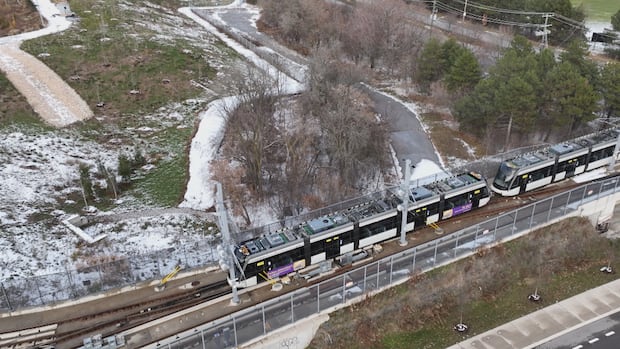
Toronto’s transit landscape may see a significant change with the upcoming launch of the Line 5 LRT, although the exact opening date remains uncertain. While officials, including Premier Doug Ford and Toronto Mayor Olivia Chow, have hinted at a potential opening on February 8, 2024, the Toronto Transit Commission (TTC) has yet to confirm this date. As anticipation builds, transit experts and advocates emphasize the need for specific measures to ensure that Line 5 does not face the same challenges that plagued the initial weeks of Line 6 on Finch West.
Although Line 6 has been operational since late 2022, it has experienced numerous delays, slow travel times, and mechanical issues that have frustrated riders. Experts warn that if Line 5 encounters similar problems, it could undermine public confidence in the system. A key concern is the speed of the trains, which must be competitive with automobile travel to attract riders.
Addressing Speed and Signal Priorities
One of the most pressing issues for the Eglinton line is its speed. On Line 6, the travel time from one end of the 10.3-kilometre route to the other can take nearly an hour, with some riders outpacing the train by as much as 18 minutes. This slow pace is attributed to a speed limit of 60 km/h, which drops to 25 km/h at intersections and transit stops.
TTC spokesperson Stuart Green has not disclosed the proposed speed limits for Line 5, stating that this information will be revealed once an official opening date is confirmed. Transit consultant Reece Martin argues that low speed limits at intersections are “arbitrary,” and advocates for light-rail vehicles to operate at speeds comparable to cars. He emphasizes that if it is safe for cars to traverse intersections at speeds of 50 km/h, trains should be able to do the same safely.
Another critical factor in ensuring a smooth transit experience is the implementation of signal priority, which allows LRTs to receive green lights at intersections. The absence of effective signal priority on Line 6 contributed to frequent delays. Jonathan English, a transit consultant, points out that cities around the world, including Waterloo, successfully implement this technology, allowing their LRT systems to operate seamlessly through intersections.
City council has passed a motion to enhance signal priority for both Line 5 and Line 6, but details regarding the timeline for these changes are still unclear. Green has indicated that work is underway, but specifics will be shared once the opening date is confirmed.
Overcoming Mechanical Challenges
Beyond speed and signaling, Metrolinx is responsible for addressing mechanical issues that could affect Line 5’s operations. Delays on Line 6 have often been attributed to malfunctioning switches, which guide vehicles between tracks. The electric heating systems used to melt ice and snow from these switches have raised concerns, particularly as similar systems in Ottawa faced challenges in the past.
Line 5 will utilize a combination of electric and gas heating for its switches. Experts, including English, suggest that the effectiveness of this heating system will depend not just on its type, but also on its operation. It is crucial that heating systems activate before ice accumulates, and deactivate when temperatures rise.
August Puranauth, a campaign manager with the transit advocacy group TTC Riders, has expressed concerns about the potential for recurring switch problems, especially since some contractors for Line 5 are the same as those for Line 6. Metrolinx has assured that the switch heaters have undergone thorough testing and commissioning processes.
In a recent statement, Premier Doug Ford downplayed concerns about possible issues with Line 5, suggesting that initial operational challenges are to be expected. Nonetheless, Martin challenges this notion, arguing that Toronto should not accept a lower standard for transit operations than that of major cities like Seoul or London. He hopes for a more seamless launch for Line 5, while recognizing that successful implementation will require vigilance and proactive measures.
As the TTC prepares for the official launch of Line 5, transit users remain eager for clarity on the opening date and operational specifics. Until then, the focus remains on ensuring that lessons learned from Line 6 are applied to facilitate a successful introduction of the Eglinton Crosstown LRT.

Meta Plans Major Layoffs as AI Costs Surge

Alberta’s Referendum Could Pave Way for U.S. Statehood

Minooka District 201 Plans Enhanced Bilingual Support for Students

Canmore Approves Multiple Development Permits for New Projects

Remembering Bradly Castillo Shearsmith: A Life of Friendship and Joy

BIS Urges Watchdogs to Integrate Synthetic Risk Transfers in Stress Tests

Teva Transforms: Shifting Focus from Generics to Branded Success

Apple Launches AirPods Max 2 with Enhanced Audio Features

Ontario Ends Funding for Seven Supervised Injection Sites

Toyoake City Proposes Daily Two-Hour Smartphone Use Limit

Pedestrian Fatally Injured in Esquimalt Collision on August 14

B.C. Review Reveals Urgent Need for Rare-Disease Drug Reforms

Dark Adventure Game “Bye Sweet Carole” Set for October Release

Konami Revives Iconic Metal Gear Solid Delta Ahead of Release

Victoria’s Pop-Up Shop Shines Light on B.C.’s Wolf Cull

Jimmy Lai’s Defense Challenges Charges Under National Security Law

Snapmaker U1 Color 3D Printer Redefines Speed and Sustainability

Apple Expands Self-Service Repair Program to Canada
-
 Science11 months ago
Toyoake City Proposes Daily Two-Hour Smartphone Use Limit
-
 Top Stories11 months ago
Pedestrian Fatally Injured in Esquimalt Collision on August 14
-
 Health11 months ago
B.C. Review Reveals Urgent Need for Rare-Disease Drug Reforms
-
 Technology11 months ago
Dark Adventure Game “Bye Sweet Carole” Set for October Release
-
 Technology11 months ago
Konami Revives Iconic Metal Gear Solid Delta Ahead of Release
-
 Lifestyle11 months ago
Victoria’s Pop-Up Shop Shines Light on B.C.’s Wolf Cull
-
 World11 months ago
Jimmy Lai’s Defense Challenges Charges Under National Security Law
-
 Technology11 months ago
Snapmaker U1 Color 3D Printer Redefines Speed and Sustainability
-
 Technology11 months ago
Apple Expands Self-Service Repair Program to Canada
-

 Technology11 months ago
AION Folding Knife: Redefining EDC Design with Premium Materials
-

 Technology11 months ago
Solve Today’s Wordle Challenge: Hints and Answer for August 19
-

 Business11 months ago
Gordon Murray Automotive Unveils S1 LM and Le Mans GTR at Monterey