
Science
NASA Delays Artemis II Launch Due to Hydrogen Leak Concerns

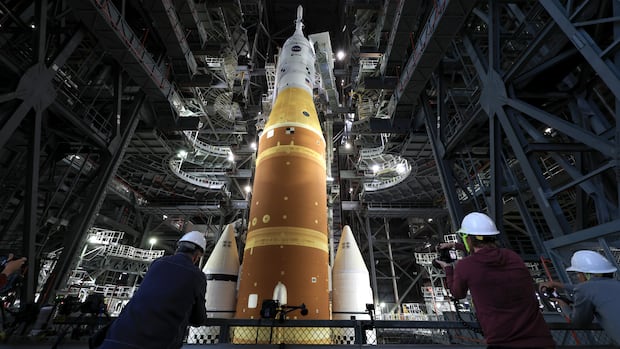
NASA has postponed the launch of the Artemis II mission, originally scheduled for February 8, 2024, due to the discovery of a hydrogen leak during the fuel tanking process. This delay, which extends the timeline by at least a month, highlights challenges associated with handling cryogenic fuels that are critical to the Artemis program.
The complexities of using liquid hydrogen and liquid oxygen stem from their extreme temperatures. Liquid hydrogen has a boiling point of -253 degrees Celsius, while liquid oxygen boils at -183 degrees Celsius. These substances remain in liquid form only under specific conditions, making them difficult to manage. Any exposure to warmer air, such as that in Florida, can cause these fuels to vaporize.
To mitigate the risk of leaks, the core stage of the Space Launch System (SLS) rocket is insulated with foam to maintain the cold temperature necessary for the fuel. This insulation serves a dual purpose: protecting the fuel from ambient temperatures and preventing heat transfer from the rocket’s structure itself. Despite these measures, managing cryogenic fuels is akin to keeping a glass of water from boiling in a 200 degrees Celsius oven.
As seen during the recent wet dress rehearsal, the hydrogen leak originated from a quick-disconnect connector linking the launch tower hose to the rocket. This connector had also caused issues during the Artemis I mission, resulting in significant delays as the rocket was returned to the Vehicle Assembly Building for repairs. Engineers now aim to address this leak on-site, potentially expediting the process. Another wet dress rehearsal is planned before a new launch date of March 6, 2024.
The issue of hydrogen leaks is not new to NASA. The agency has historically faced challenges with this fuel, which is known for its propensity to escape through even the smallest cracks due to its molecular size. This characteristic makes every connection point on the rocket a potential source of leakage. The SLS rocket features a complex network of pipelines and valves that transport the fuel from storage tanks near the launch pad to the engines.
While hydrogen remains a preferred choice for its thrust-to-weight ratio, critics argue that reliance on this fuel presents sustainability challenges. Some private companies, including SpaceX, have pivoted to kerosene or methane as alternatives that are easier to handle and more cost-effective. The use of liquid hydrogen in the SLS rocket stems from technology developed during the 1970s for the Space Shuttle program, which has now become a point of contention regarding the future of space exploration.
Concerns about the SLS rocket extend beyond technical challenges. Critics highlight the high costs associated with each launch, noting that the entire system is disposed of after flight, with only the crew capsule returning to Earth. This model contrasts sharply with reusable rockets deployed by private companies, which operate at significantly lower costs.
The ongoing effort to resolve hydrogen leak issues is critical for NASA, not only for the Artemis II mission but also for the future of the SLS program. Balancing technological improvements with the economic implications of rocket launches remains a priority as NASA seeks to maintain employment for contractors involved in the program while advancing its space exploration goals.

Meta Plans Major Layoffs as AI Costs Surge

Alberta’s Referendum Could Pave Way for U.S. Statehood

Minooka District 201 Plans Enhanced Bilingual Support for Students

Canmore Approves Multiple Development Permits for New Projects

Remembering Bradly Castillo Shearsmith: A Life of Friendship and Joy

BIS Urges Watchdogs to Integrate Synthetic Risk Transfers in Stress Tests

Teva Transforms: Shifting Focus from Generics to Branded Success

Apple Launches AirPods Max 2 with Enhanced Audio Features

Ontario Ends Funding for Seven Supervised Injection Sites

Toyoake City Proposes Daily Two-Hour Smartphone Use Limit

Pedestrian Fatally Injured in Esquimalt Collision on August 14

B.C. Review Reveals Urgent Need for Rare-Disease Drug Reforms

Dark Adventure Game “Bye Sweet Carole” Set for October Release

Konami Revives Iconic Metal Gear Solid Delta Ahead of Release

Victoria’s Pop-Up Shop Shines Light on B.C.’s Wolf Cull

Jimmy Lai’s Defense Challenges Charges Under National Security Law

Snapmaker U1 Color 3D Printer Redefines Speed and Sustainability

Apple Expands Self-Service Repair Program to Canada
-
 Science11 months ago
Toyoake City Proposes Daily Two-Hour Smartphone Use Limit
-
 Top Stories11 months ago
Pedestrian Fatally Injured in Esquimalt Collision on August 14
-
 Health11 months ago
B.C. Review Reveals Urgent Need for Rare-Disease Drug Reforms
-
 Technology11 months ago
Dark Adventure Game “Bye Sweet Carole” Set for October Release
-
 Technology11 months ago
Konami Revives Iconic Metal Gear Solid Delta Ahead of Release
-
 Lifestyle11 months ago
Victoria’s Pop-Up Shop Shines Light on B.C.’s Wolf Cull
-
 World11 months ago
Jimmy Lai’s Defense Challenges Charges Under National Security Law
-
 Technology11 months ago
Snapmaker U1 Color 3D Printer Redefines Speed and Sustainability
-
 Technology11 months ago
Apple Expands Self-Service Repair Program to Canada
-

 Technology11 months ago
AION Folding Knife: Redefining EDC Design with Premium Materials
-

 Technology11 months ago
Solve Today’s Wordle Challenge: Hints and Answer for August 19
-

 Business11 months ago
Gordon Murray Automotive Unveils S1 LM and Le Mans GTR at Monterey