
Top Stories
Vancouver Aims to Host New Global Defence Bank Amid Controversy

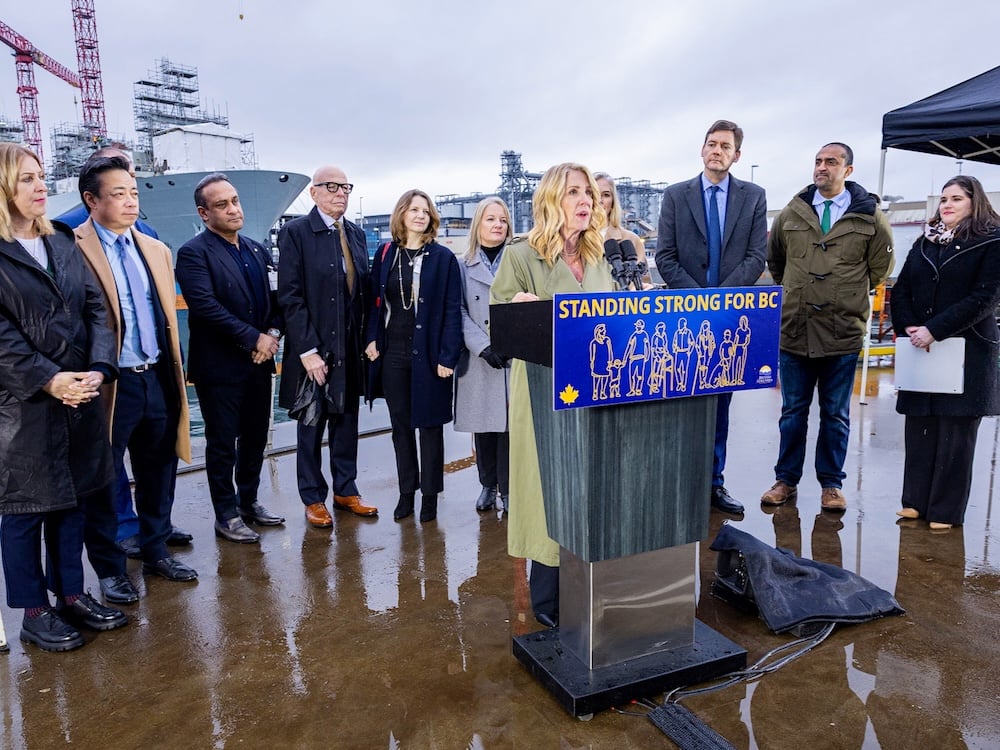
British Columbia Premier David Eby is leading an initiative to establish Vancouver as the headquarters for the proposed Defence, Security and Resilience Bank. This new financial institution aims to provide loans to fund military projects in member countries. The initiative has garnered support from various business leaders, but it also faces significant opposition and skepticism regarding its feasibility and implications.
The Defence, Security and Resilience Bank Development Group is actively promoting this concept and plans to dissolve once the bank is operational. President Kevin Reed asserts that approximately 40 countries, including some NATO members and Indo-Pacific allies, are anticipated to collaborate on this project. The goal is for the bank to be fully functional by the end of the year, with the need for a suitable headquarters being a critical factor.
Bridgitte Anderson, CEO of the Greater Vancouver Board of Trade, emphasized the strategic advantages of Vancouver during a recent press conference. According to Anderson, the city offers a secure environment conducive to attracting global talent. She stated, “Vancouver is ready to accelerate the bank’s operations and deliver immediate results for our collective security.” The provincial government estimates that the bank could generate around 3,500 jobs in finance, research, and international business, transforming the city into a hub for global security discussions.
While Vancouver positions itself as the prime candidate, other Canadian cities, including Ottawa, Toronto, and Montreal, are also in contention to host the bank. Economist Marc Lee expressed doubts about Vancouver’s chances, likening the bid to a “Hail Mary pass.” He criticized the provincial government for lacking a coherent economic strategy, suggesting that the move may not yield substantial benefits for local industries.
Opposition to the bank is mounting, particularly from peace advocacy groups like World Beyond War. The organization argues that the establishment of the bank will contribute to a “war economy” and facilitate financing for conflicts globally. Tyler Delmore, a representative from the group, cautioned against the potential consequences of having financial institutions incentivized to invest in military endeavors.
The proposed bank, which aims to emulate the functions of established institutions like the World Bank, intends to raise US$135 billion for military projects across member nations. Notably, both Germany and Britain have previously indicated that they will not support the bank, with Germany’s finance ministry stating that it will not provide further funding for the military sector.
Vancouver’s proponents argue that its unique geographical position offers unparalleled access to both Asian and European markets. The Pacific Security Bank Bid Committee, which includes representatives from major local organizations, underscores the city’s connectivity and existing talent pool in finance and cybersecurity as key advantages in their bid. The committee’s document highlights Vancouver’s proximity to allies in the Indo-Pacific region, including Korea, Singapore, and Japan.
Eby reinforced the idea that situating the bank in Vancouver would enhance Canada’s relationships with various countries. “We are the sole candidate city that can offer same business day access to the EU, the Arctic, and the Asia-Pacific governments that are going to be participating in this bank,” he stated.
Economic analysts like Lee suggest that while the prospect of creating 3,500 jobs is appealing, it may not significantly alter the employment landscape. He cautioned that the focus on military financing could divert attention from other vital economic sectors. Additionally, Lee posited that larger Canadian cities such as Toronto or Montreal might ultimately be favored due to their existing financial infrastructures.
Delmore from World Beyond War expressed concerns about the implications of hosting the bank for Canada’s future. He argued that a reliance on the military industry could lead to deeper entanglements with multinational financial institutions, potentially complicating efforts to divest from problematic companies.
As the discussions surrounding the Defence, Security and Resilience Bank continue, the decision on its location remains pending. The Canadian government will ultimately determine which city will become the bank’s headquarters, a choice that could have far-reaching implications for both local economies and international relations.

Meta Plans Major Layoffs as AI Costs Surge

Alberta’s Referendum Could Pave Way for U.S. Statehood

Minooka District 201 Plans Enhanced Bilingual Support for Students

Canmore Approves Multiple Development Permits for New Projects

Remembering Bradly Castillo Shearsmith: A Life of Friendship and Joy

BIS Urges Watchdogs to Integrate Synthetic Risk Transfers in Stress Tests

Teva Transforms: Shifting Focus from Generics to Branded Success

Apple Launches AirPods Max 2 with Enhanced Audio Features

Ontario Ends Funding for Seven Supervised Injection Sites

Toyoake City Proposes Daily Two-Hour Smartphone Use Limit

Pedestrian Fatally Injured in Esquimalt Collision on August 14

B.C. Review Reveals Urgent Need for Rare-Disease Drug Reforms

Dark Adventure Game “Bye Sweet Carole” Set for October Release

Konami Revives Iconic Metal Gear Solid Delta Ahead of Release

Victoria’s Pop-Up Shop Shines Light on B.C.’s Wolf Cull

Jimmy Lai’s Defense Challenges Charges Under National Security Law

Snapmaker U1 Color 3D Printer Redefines Speed and Sustainability

Apple Expands Self-Service Repair Program to Canada
-
 Science11 months ago
Toyoake City Proposes Daily Two-Hour Smartphone Use Limit
-
 Top Stories11 months ago
Pedestrian Fatally Injured in Esquimalt Collision on August 14
-
 Health11 months ago
B.C. Review Reveals Urgent Need for Rare-Disease Drug Reforms
-
 Technology11 months ago
Dark Adventure Game “Bye Sweet Carole” Set for October Release
-
 Technology11 months ago
Konami Revives Iconic Metal Gear Solid Delta Ahead of Release
-
 Lifestyle11 months ago
Victoria’s Pop-Up Shop Shines Light on B.C.’s Wolf Cull
-
 World11 months ago
Jimmy Lai’s Defense Challenges Charges Under National Security Law
-
 Technology11 months ago
Snapmaker U1 Color 3D Printer Redefines Speed and Sustainability
-
 Technology11 months ago
Apple Expands Self-Service Repair Program to Canada
-

 Technology11 months ago
AION Folding Knife: Redefining EDC Design with Premium Materials
-

 Technology11 months ago
Solve Today’s Wordle Challenge: Hints and Answer for August 19
-

 Business11 months ago
Gordon Murray Automotive Unveils S1 LM and Le Mans GTR at Monterey