
World
IOC Bans Ukrainian Athlete Over Helmet, Sparking Controversy

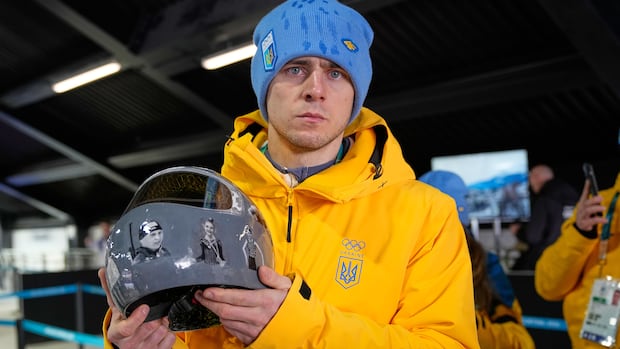
The International Olympic Committee (IOC) has banned Ukrainian skeleton athlete Vladyslav Heraskevych from wearing his helmet decorated with images of war victims. This decision has reignited discussions on the IOC’s strict enforcement of its rules regarding political statements during the Olympic Games. The ban, announced on February 9, 2024, has drawn both support and criticism, highlighting the complexities surrounding what constitutes political interference in sports.
Heraskevych’s helmet featured portraits of Ukrainian athletes who have lost their lives due to the ongoing conflict with Russia, which has been excluded from the Olympics since its invasion of Ukraine in 2022. While IOC president Kirsty Coventry acknowledged the emotional weight of the helmet’s message, she stated that it violated the organization’s regulations. During her announcement, Coventry expressed her personal conflict, stating, “It is a powerful statement, but it breaks our rules.”
The IOC’s Rule 50 restricts athletes from making political statements on the field of play or during ceremonies, intending to create an environment free from political interference. This has led to varied interpretations and applications of the rule, creating discrepancies in enforcement. Olympic historian Bruce Kidd, a former athlete and professor emeritus at the University of Toronto, explained the nuances involved: “On the one hand, it’s a memorial to fallen comrades. It’s also a pretty explicit political statement about the nature of that war.”
Despite the backlash against the ban, some athletes have found ways to express their political views outside of competition. For instance, American athletes have utilized platforms like social media and press conferences to voice criticisms regarding their own government policies.
The IOC’s decision has been met with disapproval from Heraskevych’s teammates, who argue that the enforcement of such rules is inconsistent. The athlete pointed to past instances where political statements have been tolerated. For example, Israeli skeleton competitor Jared Firestone wore a kippah inscribed with the names of the 11 Israeli athletes murdered during the 1972 Munich Games, without facing similar repercussions.
In contrast, the IOC instructed a two-person Haitian team to remove imagery of Toussaint Louverture, a leader in the Haitian Revolution, from their opening ceremony attire, showcasing the selective nature of political expression allowed within the Olympic framework. Kidd emphasized that the enforcement of these rules often lacks clarity and consistency.
The origins of the IOC’s prohibition on political expressions date back to the founding of the modern Olympic Games by Baron Pierre de Coubertin in the late 19th century. His vision was to promote peace and unity among nations through sports. Any political critique risks undermining that mission. Throughout Olympic history, numerous athletes have challenged these boundaries, with some subtlety and others more overtly.
One notable example occurred at the 1968 Summer Games in Mexico City when American sprinters Tommie Smith and John Carlos famously raised their fists in a Black Power salute on the podium, leading to their suspension from the U.S. team. Such acts of defiance continue to resonate, raising questions about the balance between personal expression and the IOC’s political neutrality.
In recent years, the IOC has allowed some forms of political expression deemed less contentious. In the 2020 Tokyo Olympics, German field hockey player Nike Lorenz was permitted to wear a rainbow-colored band in support of LGBTQ+ rights, indicating a shift towards accepting statements that do not directly challenge nation-state politics.
As the Olympic Games continue, the challenge remains for the IOC to navigate the tension between fostering an inclusive environment and enforcing rules that prevent political disputes from overshadowing the spirit of competition. Kidd noted the difficulty of maintaining respect and understanding in a world rife with conflicts, stating, “Trying to include the entire world of sport is complicated enough.”
The ongoing debate surrounding the IOC’s political expressions will likely persist, especially as athletes continue to seek ways to honor their causes and beliefs while adhering to the governing body’s regulations.

Meta Plans Major Layoffs as AI Costs Surge

Alberta’s Referendum Could Pave Way for U.S. Statehood

Minooka District 201 Plans Enhanced Bilingual Support for Students

Canmore Approves Multiple Development Permits for New Projects

Remembering Bradly Castillo Shearsmith: A Life of Friendship and Joy

BIS Urges Watchdogs to Integrate Synthetic Risk Transfers in Stress Tests

Teva Transforms: Shifting Focus from Generics to Branded Success

Apple Launches AirPods Max 2 with Enhanced Audio Features

Ontario Ends Funding for Seven Supervised Injection Sites

Toyoake City Proposes Daily Two-Hour Smartphone Use Limit

Pedestrian Fatally Injured in Esquimalt Collision on August 14

B.C. Review Reveals Urgent Need for Rare-Disease Drug Reforms

Dark Adventure Game “Bye Sweet Carole” Set for October Release

Konami Revives Iconic Metal Gear Solid Delta Ahead of Release

Victoria’s Pop-Up Shop Shines Light on B.C.’s Wolf Cull

Jimmy Lai’s Defense Challenges Charges Under National Security Law

Snapmaker U1 Color 3D Printer Redefines Speed and Sustainability

Apple Expands Self-Service Repair Program to Canada
-
 Science11 months ago
Toyoake City Proposes Daily Two-Hour Smartphone Use Limit
-
 Top Stories11 months ago
Pedestrian Fatally Injured in Esquimalt Collision on August 14
-
 Health11 months ago
B.C. Review Reveals Urgent Need for Rare-Disease Drug Reforms
-
 Technology11 months ago
Dark Adventure Game “Bye Sweet Carole” Set for October Release
-
 Technology11 months ago
Konami Revives Iconic Metal Gear Solid Delta Ahead of Release
-
 Lifestyle11 months ago
Victoria’s Pop-Up Shop Shines Light on B.C.’s Wolf Cull
-
 World11 months ago
Jimmy Lai’s Defense Challenges Charges Under National Security Law
-
 Technology11 months ago
Snapmaker U1 Color 3D Printer Redefines Speed and Sustainability
-
 Technology11 months ago
Apple Expands Self-Service Repair Program to Canada
-

 Technology11 months ago
AION Folding Knife: Redefining EDC Design with Premium Materials
-

 Technology11 months ago
Solve Today’s Wordle Challenge: Hints and Answer for August 19
-

 Business11 months ago
Gordon Murray Automotive Unveils S1 LM and Le Mans GTR at Monterey