
Business
Gulf Oil Industry Faces Severe Disruption Amid Ongoing Conflict

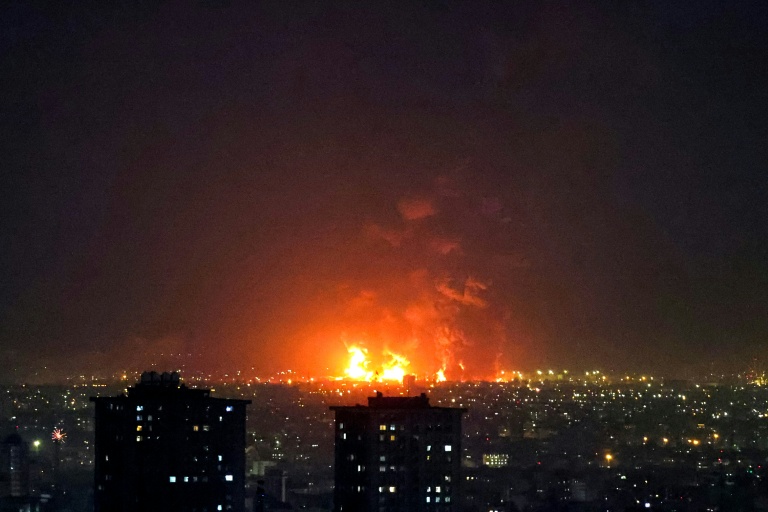
The ongoing conflict in the Middle East has severely disrupted the Gulf region’s vital oil industry, which has encountered numerous attacks and an export blockade. Since hostilities escalated following the US-Israeli strikes on Iran on February 28, 2023, energy infrastructure has become a primary target, leading to a drastic reduction in oil production.
Impact of Strikes on Oil Production
According to an assessment by Agence France-Presse (AFP), at least 33 strikes or attempted strikes have targeted energy facilities in the Middle East, with 13 of these strikes executed by the United States and Israel against Iran. The remaining 20 strikes, attributed to Iran, affected seven Gulf countries. Key installations impacted include the significant Ras Tanura refinery in Saudi Arabia, the Ras Laffan gas processing base in Qatar, and the complex housing the Ruwais refinery in the United Arab Emirates.
The conflict has also effectively blocked the Strait of Hormuz, a critical shipping lane for approximately 20 percent of the world’s oil and liquefied natural gas output. This blockade has compounded the challenges facing Gulf oil producers.
Production Levels Decline
The International Energy Agency (IEA) reports that Gulf oil output has significantly decreased, plummeting from 30 million barrels per day last year, excluding Oman, to just 10 million barrels per day currently. The IEA further indicated that the volume of oil passing through the Strait of Hormuz has fallen to under 10 percent of pre-war levels.
Some infrastructure has sustained damage, while other facilities have reduced operations or closed entirely as a precautionary measure. The near-total closure of the strait has exacerbated the situation. An industry insider highlighted that the primary issue relates to full storage facilities, stating, “Since there aren’t enough ships to empty the storage facilities and export the product, suppliers have to stop production.”
Pankaj Srivastava, a commodities expert at Rystad Energy, warned that the stranded supply of crude oil in the Gulf might soon compel refiners to adjust their operations, potentially limiting outputs solely to domestic markets.
Challenges in Restarting Production
Restarting production will not be straightforward. According to the industry insider, refineries might take one to two weeks to reach full output, depending on how they were shut down. For oil wells, the process is simpler—“You just reopen the valve.” However, the IEA cautions that “upstream production will take weeks and, in some cases, months, to return to pre-crisis levels,” depending on the specific site.
Moreover, the return of shipping traffic to the Strait of Hormuz will require robust security measures, including armed escorts for vessels. The IEA has indicated that a traffic management system may need to be established to manage the backlog when traffic resumes, estimating that it could take “several days to weeks” to clear once operations restart.
As the conflict continues, the Gulf oil industry remains in a precarious state, with significant implications for global energy markets. The situation demands continued monitoring as geopolitical tensions evolve.

Meta Plans Major Layoffs as AI Costs Surge

Alberta’s Referendum Could Pave Way for U.S. Statehood

Minooka District 201 Plans Enhanced Bilingual Support for Students

Canmore Approves Multiple Development Permits for New Projects

Remembering Bradly Castillo Shearsmith: A Life of Friendship and Joy

BIS Urges Watchdogs to Integrate Synthetic Risk Transfers in Stress Tests

Teva Transforms: Shifting Focus from Generics to Branded Success

Apple Launches AirPods Max 2 with Enhanced Audio Features

Ontario Ends Funding for Seven Supervised Injection Sites

Toyoake City Proposes Daily Two-Hour Smartphone Use Limit

Pedestrian Fatally Injured in Esquimalt Collision on August 14

B.C. Review Reveals Urgent Need for Rare-Disease Drug Reforms

Dark Adventure Game “Bye Sweet Carole” Set for October Release

Konami Revives Iconic Metal Gear Solid Delta Ahead of Release

Victoria’s Pop-Up Shop Shines Light on B.C.’s Wolf Cull

Jimmy Lai’s Defense Challenges Charges Under National Security Law

Snapmaker U1 Color 3D Printer Redefines Speed and Sustainability

Apple Expands Self-Service Repair Program to Canada
-
 Science11 months ago
Toyoake City Proposes Daily Two-Hour Smartphone Use Limit
-
 Top Stories11 months ago
Pedestrian Fatally Injured in Esquimalt Collision on August 14
-
 Health11 months ago
B.C. Review Reveals Urgent Need for Rare-Disease Drug Reforms
-
 Technology11 months ago
Dark Adventure Game “Bye Sweet Carole” Set for October Release
-
 Technology11 months ago
Konami Revives Iconic Metal Gear Solid Delta Ahead of Release
-
 Lifestyle11 months ago
Victoria’s Pop-Up Shop Shines Light on B.C.’s Wolf Cull
-
 World11 months ago
Jimmy Lai’s Defense Challenges Charges Under National Security Law
-
 Technology11 months ago
Snapmaker U1 Color 3D Printer Redefines Speed and Sustainability
-
 Technology11 months ago
Apple Expands Self-Service Repair Program to Canada
-

 Technology11 months ago
AION Folding Knife: Redefining EDC Design with Premium Materials
-

 Technology11 months ago
Solve Today’s Wordle Challenge: Hints and Answer for August 19
-

 Business11 months ago
Gordon Murray Automotive Unveils S1 LM and Le Mans GTR at Monterey