
Business
Building Pipelines: A Path to Strengthen Canadian Unity

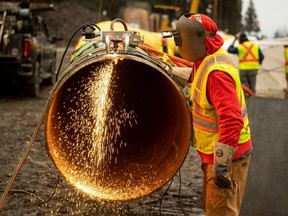
Recent discussions surrounding the development of pipelines from Alberta’s oilsands to the coastline of British Columbia have reignited debates about national unity in Canada. British Columbia Premier David Eby has suggested that stronger support for such infrastructure projects could be a more effective way to foster unity than accusing Alberta separatists of treason for their meetings with U.S. officials.
This week, a memorandum of understanding was signed between Prime Minister Mark Carney and Alberta Premier Danielle Smith, outlining plans for new pipelines. While Smith indicated on Thursday that one proposed route to Kitimat, B.C., is too complex, she remains open to other possibilities, stating she is “willing to go in every direction.” The ongoing dialogue emphasizes the importance of these projects in not only facilitating economic growth but also addressing regional tensions.
Addressing Separatist Sentiments
In light of recent provocations from U.S. President Donald Trump and his administration, which included discussions of Alberta’s potential independence, both Carney and Smith have stressed the necessity of Canadian sovereignty. The sentiment among Canadian leaders is clear: the best response to separatist rhetoric is to enhance Alberta’s economic prospects, which in turn benefits the entire country.
According to Carney, the energy sector is crucial to Canada’s economic strength. Alberta’s oil and natural gas resources play a significant role in establishing Canada as an energy superpower. However, Pierre Poilievre, leader of the Conservative Party, highlighted a critical issue: Canada is at a disadvantage if it relies heavily on the United States for oil and gas exports, often selling at substantial discounts due to the lack of pipeline access to global markets.
The impact of federal policies over the past decade, particularly under former Prime Minister Justin Trudeau, has contributed to a sense of alienation in western provinces like Alberta. Critics argue that the emphasis on green energy has stalled the development of Alberta’s resources, which could otherwise bolster both provincial and national economies.
The Economic Argument for Pipelines
Opponents of Alberta’s separation argue that such a move would introduce economic uncertainty, discouraging business investment and ultimately hindering growth. By investing in infrastructure that supports the oil and gas industry, Canada can better position itself in the global energy market. Enhanced pipeline connectivity not only serves Alberta’s interests but also fortifies Canada’s overall economic framework.
As discussions continue, the emphasis remains on collaboration between provinces and the federal government. The construction of new pipelines is seen as vital to ensuring that Canadian resources can reach international markets, thus maximizing their economic potential. The pathway to national unity, according to leaders like Eby, Carney, and Smith, lies in the pursuit of policies that foster economic interdependence rather than division.
In conclusion, the future of Canada’s energy landscape and its implications for unity hinge on the development of strategic pipeline projects. Engaging in constructive dialogue and addressing the economic needs of all provinces may prove essential in countering separatist sentiments and reinforcing national cohesion.

Meta Plans Major Layoffs as AI Costs Surge

Alberta’s Referendum Could Pave Way for U.S. Statehood

Minooka District 201 Plans Enhanced Bilingual Support for Students

Canmore Approves Multiple Development Permits for New Projects

Remembering Bradly Castillo Shearsmith: A Life of Friendship and Joy

BIS Urges Watchdogs to Integrate Synthetic Risk Transfers in Stress Tests

Teva Transforms: Shifting Focus from Generics to Branded Success

Apple Launches AirPods Max 2 with Enhanced Audio Features

Ontario Ends Funding for Seven Supervised Injection Sites

Toyoake City Proposes Daily Two-Hour Smartphone Use Limit

Pedestrian Fatally Injured in Esquimalt Collision on August 14

B.C. Review Reveals Urgent Need for Rare-Disease Drug Reforms

Dark Adventure Game “Bye Sweet Carole” Set for October Release

Konami Revives Iconic Metal Gear Solid Delta Ahead of Release

Victoria’s Pop-Up Shop Shines Light on B.C.’s Wolf Cull

Jimmy Lai’s Defense Challenges Charges Under National Security Law

Snapmaker U1 Color 3D Printer Redefines Speed and Sustainability

Apple Expands Self-Service Repair Program to Canada
-
 Science12 months ago
Toyoake City Proposes Daily Two-Hour Smartphone Use Limit
-
 Top Stories12 months ago
Pedestrian Fatally Injured in Esquimalt Collision on August 14
-
 Health12 months ago
B.C. Review Reveals Urgent Need for Rare-Disease Drug Reforms
-
 Technology12 months ago
Dark Adventure Game “Bye Sweet Carole” Set for October Release
-
 Technology12 months ago
Konami Revives Iconic Metal Gear Solid Delta Ahead of Release
-
 Lifestyle12 months ago
Victoria’s Pop-Up Shop Shines Light on B.C.’s Wolf Cull
-
 World12 months ago
Jimmy Lai’s Defense Challenges Charges Under National Security Law
-
 Technology12 months ago
Snapmaker U1 Color 3D Printer Redefines Speed and Sustainability
-
 Technology12 months ago
Apple Expands Self-Service Repair Program to Canada
-

 Technology12 months ago
AION Folding Knife: Redefining EDC Design with Premium Materials
-

 Technology12 months ago
Solve Today’s Wordle Challenge: Hints and Answer for August 19
-

 Business12 months ago
Gordon Murray Automotive Unveils S1 LM and Le Mans GTR at Monterey